
U.S.-Iran 14-Point Memorandum Released, Calls for Ceasefire and 60-Day Negotiation Period
U.S. administration officials released a 14-point memorandum on June 17, 2026, outlining a ceasefire and a 60-day negotiation window aimed at resolving the U.S.-Iran confrontation.
The White House disclosed on June 17, 2026 that U.S. and Iranian negotiators had agreed to a 14-point memorandum addressing immediate steps to halt hostilities and open talks toward a broader settlement. President Trump announced the contents at a press conference held at the Group of Seven summit in Évian, France, calling the memorandum a comprehensive accord that meets U.S. objectives. The release makes the U.S.-Iran 14-point memorandum the focus of diplomatic attention as governments and markets assess its implications.
Agreement Announced at G7 Summit in Évian
President Trump publicly presented the memorandum during a news briefing at the G7 meeting in Évian, asserting that the document delivered on the aims set by his administration. The announcement came as leaders of the world’s major economies were concluding the summit, drawing immediate scrutiny from foreign ministries and regional observers. Trump framed the memorandum as a step toward ending recent hostilities and restoring stability to key maritime routes.
Signatures and Legal Status
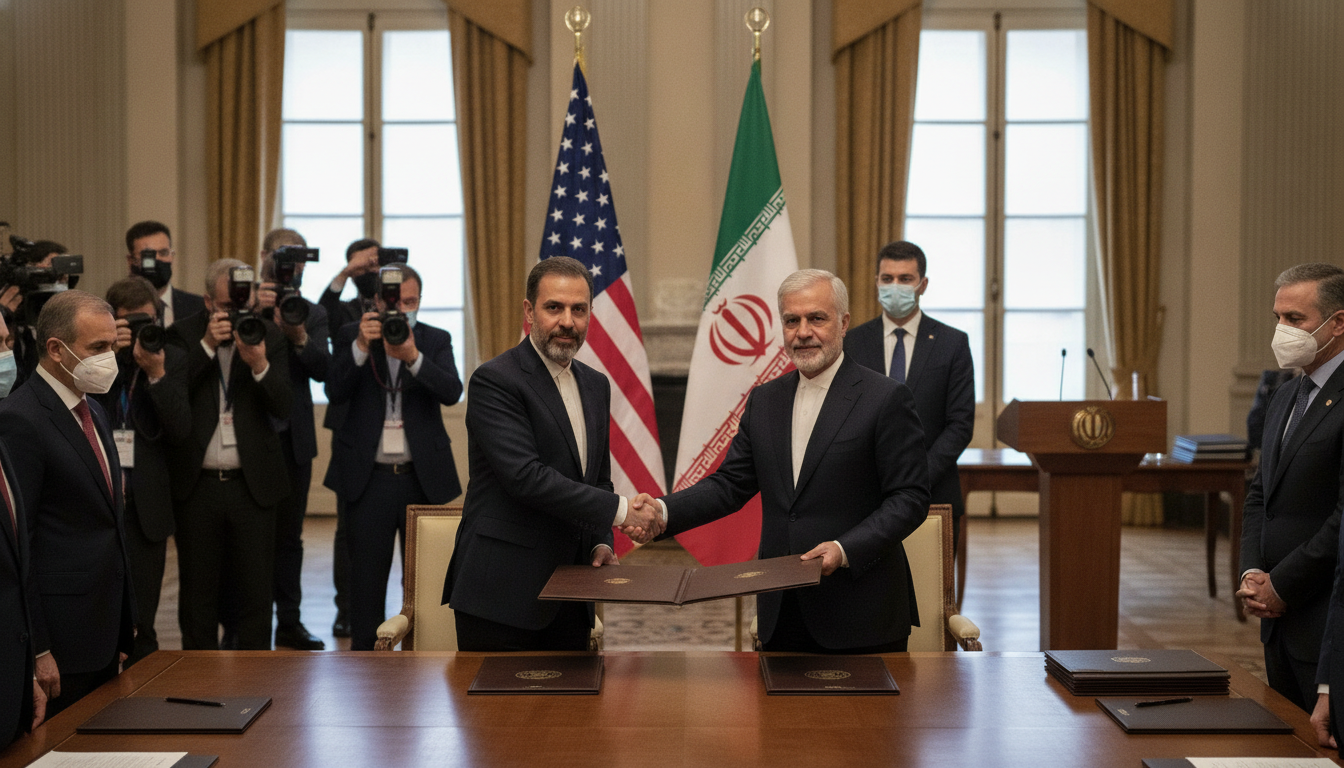
U.S. officials said the memorandum was signed on June 17, 2026, by representatives of both governments, and Iran’s state-linked Tasnim news agency reported that President Pezeshkian also signed the document and that it had taken effect. U.S. aides previously indicated that an electronic signature had been appended earlier in the week, and there had been reports of a planned formal signing ceremony in Switzerland on June 19. The administration characterized the published document as an agreed memorandum rather than a final treaty, leaving space for further negotiations and formalization.
Principal Provisions: Ceasefire, 60 Days, and Navigation Rights
The published 14-point memorandum identifies several core commitments, chief among them an immediate ceasefire and the initiation of a 60-day negotiation period intended to produce a definitive settlement. The memorandum also affirms freedom of navigation through the Strait of Hormuz, a strategically vital artery for global energy shipments, which both sides agreed must remain open to commercial traffic. Administration officials said the document is largely consistent with earlier draft language reported by international news organizations.
U.S. and Iranian Public Positions
At the Évian press conference, President Trump described the memorandum as accomplishing the goals the administration had pursued, portraying it as a diplomatic breakthrough. Iranian state media reported that President Pezeshkian’s endorsement of the memorandum meant it was in force, though Iranian officials have not provided a detailed public account of Tehran’s interpretation of each clause. Both capitals have so far limited disclosure to the memorandum’s headline points, leaving technical implementation and verification arrangements to subsequent talks.
Next Steps and Diplomatic Implications
Under the memorandum’s timetable, the 60-day negotiation window beginning June 17, 2026 would extend through August 16, 2026, during which diplomats are expected to work toward a comprehensive accord. Officials from other governments have not yet issued detailed responses, but the agreement is likely to prompt consultations among allies and partners about logistics, verification mechanisms, and the presence of international monitors. The memorandum’s emphasis on maritime freedom aims to reassure commercial and energy markets that shipping lanes will not be constrained while negotiations proceed.
Practical Challenges to Implementation
Translating the memorandum’s commitments into a durable settlement will require clear verification mechanisms, timelines for de-escalation, and agreement on enforcement steps should one party renege. Analysts note that ceasefires often depend on local commanders and proxy actors, which can complicate an immediate end to violence. The memorandum’s brevity and the limited public detail to date mean that negotiators will face a complex task in filling gaps on inspections, sanctions relief, and confidence-building measures.
The publication of the U.S.-Iran 14-point memorandum marks a notable shift from open confrontation to a negotiated pause and a defined timeline for diplomacy. As the 60-day period progresses toward mid-August 2026, the effectiveness of the memorandum will hinge on both sides’ willingness to translate headline commitments into concrete, verifiable steps that reduce tensions and restore regional stability.

