
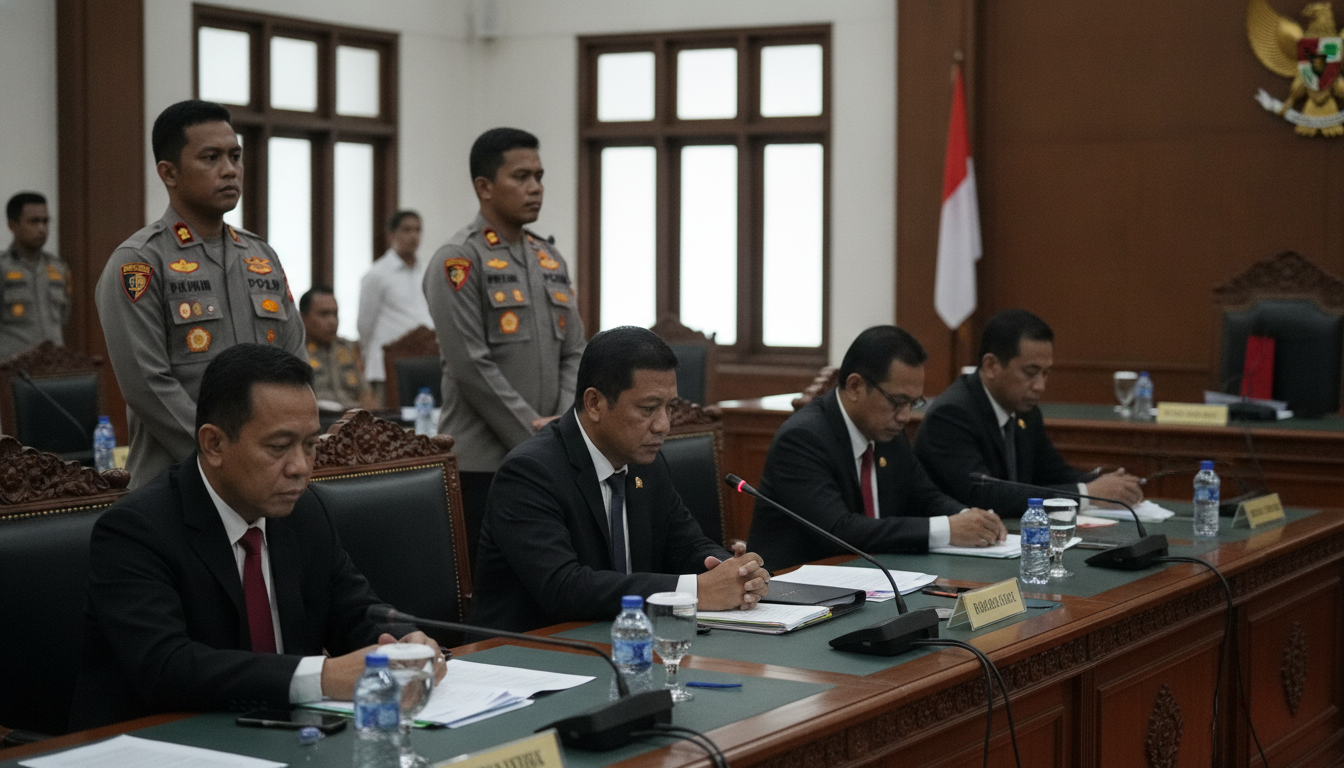
Jakarta Court Jails Four in Tanihub Corruption Case Over $25M Venture Investment
Jakarta court convicts four former state venture-cap executives in the Tanihub corruption case for approving a $25 million investment in the failed agricultural startup, sparking concern across Indonesia’s finance and startup sectors.
Strong opening: verdict and sentences
On Thursday, June 18, 2026, a Jakarta court found four former executives guilty of corruption in what prosecutors described as a flawed $25 million investment in the agricultural startup Tanihub.
The defendants were sentenced to prison terms ranging from two to five years, according to court summaries released after the ruling.
The verdict, widely reported in local and international outlets, has amplified scrutiny of state-linked venture capital activity in Indonesia.
Executives and firms involved
Among the convicted were Donald Wihardja, the former chief executive of MDI Ventures, and Nicko Widjaja, the former chief executive of BRI Ventures, both named in court records.
The other two convicted individuals were former senior executives at the same state-associated venture programs, whose identities were detailed in the court filings.
All four had been charged in connection with investment decisions made on behalf of Indonesian state-owned venture capital arms.
The $25 million investment and Tanihub’s collapse
Prosecutors said the $25 million funding was directed to Tanihub, an agriculture-focused startup that later failed to meet business milestones and collapsed.
Court documents described lapses in due diligence and decision-making processes that prosecutors said amounted to corruption under Indonesian law.
The company’s failure left public funds exposed and became the central fact pattern in the corruption indictment.
Legal grounds and court findings
The court found evidence that the defendants abused their positions in approving and facilitating the investment, characterizing certain actions as breaches of fiduciary duty and corrupt conduct.
Sentencing ranged from two to five years in prison, reflecting the judges’ assessments of each defendant’s role and level of culpability.
The ruling set a legal precedent for how conduct by state-linked investment managers may be judged under anti-corruption statutes.
Market and startup community reaction
The verdict has unsettled investors and entrepreneurs in Indonesia, with market participants citing increased legal and reputational risk for collaborations with state-backed venture funds.
Several venture capital firms and startup groups have indicated privately that they expect tighter scrutiny of deals involving state institutions, as well as more conservative investment terms.
Observers warn that while greater accountability can be beneficial, an atmosphere of heightened legal risk could slow deal flow and make foreign partners more cautious about Indonesia’s fintech and agritech sectors.
State-owned capital and governance scrutiny
Analysts say the case is likely to prompt internal reviews at state-owned financial entities and may accelerate governance reforms across public investment units.
Regulatory and parliamentary committees in Jakarta have in the past signaled interest in stronger oversight of state-linked funds, and the verdict may intensify calls for formalized due-diligence standards and transparency requirements.
How regulators and state owners respond will influence whether the ruling drives substantive reform or merely reshapes risk perception among market participants.
Broader implications for Southeast Asia’s financing ecosystems
Legal actions of this scale can reverberate beyond Indonesia, given the country’s role as Southeast Asia’s largest economy and a major destination for venture capital in the region.
Investors and regional policymakers will watch developments closely to assess any shift in the balance between accountability and investment encouragement.
The Tanihub corruption case may therefore become a reference point in discussions about how emerging-market governments manage public participation in high-risk, high-reward startup finance.
The court’s decision in Jakarta on June 18, 2026, underscores a growing emphasis on accountability in state-affiliated investment activities, and it will test how Indonesia balances the objectives of fostering innovation, protecting public funds, and maintaining investor confidence.

