
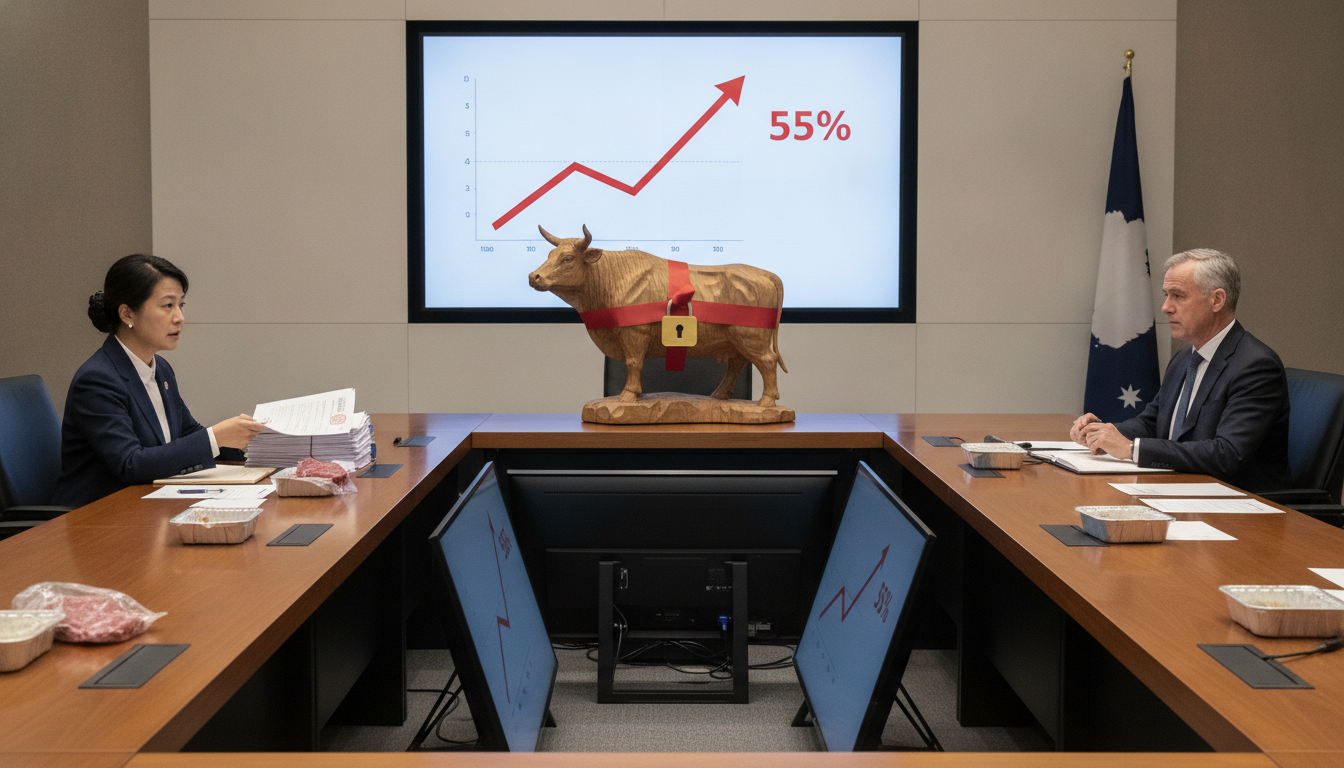
China Imposes 55% Tariff as Australian Beef Import Quota Is Reached
China has imposed a 55% tariff after declaring the Australian beef import quota filled, a move that took effect on June 20, 2026 and will hit Australian beef exporters and regional supply chains.
Immediate announcement and effective date
The Chinese government announced on June 19, 2026 that the import quota for Australian beef had been reached, triggering an automatic tariff of 55% which began on June 20, 2026. The measure applies to shipments entering China after the quota reached its limit, according to the government notice released on Friday. The policy change marks an abrupt shift for traders who had relied on China as a major market for Australian beef.
Market reaction in Shanghai supermarkets
Retailers in Shanghai reported a rapid response to the announcement, with some stores adjusting shelf orders and prices within hours of the government statement. Photographs from supermarket displays show Australian beef still on sale but with inventory and promotional decisions under review. Consumers may face narrower choice or higher retail prices as importers and distributors reassess stock that arrived before the tariff took effect.
Immediate impact on Australian exporters
Exporters in Australia now confront an immediate cost shock as the 55% tariff raises the landed cost of new shipments destined for China. Companies with contracts for future deliveries will need to renegotiate terms or absorb significant margin pressure if they continue to sell into the Chinese market. Smaller producers, who depend on thin margins and steady volumes, are likely to feel the impact first and may find it difficult to redirect existing supply quickly.
Supply chain and price implications in China
The tariff is expected to filter through the supply chain, from importers to wholesalers and ultimately to consumers, changing price dynamics for beef across Chinese markets. Importers holding bonded stock that cleared customs before June 20 should be exempt, but fresh consignments will face the higher duty. Logistic planners said the timing pressures could create short-term disruptions as firms manage inventory and cash-flow implications from unpaid or delayed shipments.
Pressure on producers to find alternative buyers
Industry observers say producers will now face pressure to seek alternative markets and adjust production plans to avoid accumulating unsold inventory. Markets in Southeast Asia, the Middle East and domestic consumption programs could absorb some excess supply, but shifting export channels typically requires time, certification and new commercial relationships. For some exporters, redirecting shipments will also necessitate changes to labeling, traceability documentation and transport routes.
Trade relations and potential policy responses
The quota closure and tariff imposition heighten attention on broader trade relations between China and Australia, which have seen periodic disruptions in recent years. Australian industry groups and government trade officials are expected to assess options, including diplomatic engagement and appeals to dispute-resolution mechanisms, to protect market access. Chinese policy statements framed the action as a quota-based tariff adjustment rather than a comprehensive ban, leaving room for future negotiations or quota revisions.
Short-term financial and operational risks
Financial analysts caution that the 55% levy creates immediate revenue risk for exporters who cannot re-route cargo or renegotiate contracts, and could prompt price volatility in both countries. Banks and insurers handling trade finance may tighten terms for shipments to China until market stability is restored. Logistics operators will also need to manage a potential spike in rerouting requests and customs reclassification as traders seek to minimise the tariff’s impact.
Australian beef remains a key export commodity for producers accustomed to predictable trade flows, and the sudden quota closure underscores vulnerabilities in relying on a single large market. Producers, importers and retailers will now be watching closely for further government guidance, industry statements and any sign of quota adjustments that could ease the immediate pressure on cross-border trade.
The coming weeks are likely to determine whether exporters pivot quickly to new buyers or whether the tariff leads to longer-term shifts in production and market strategy.

