
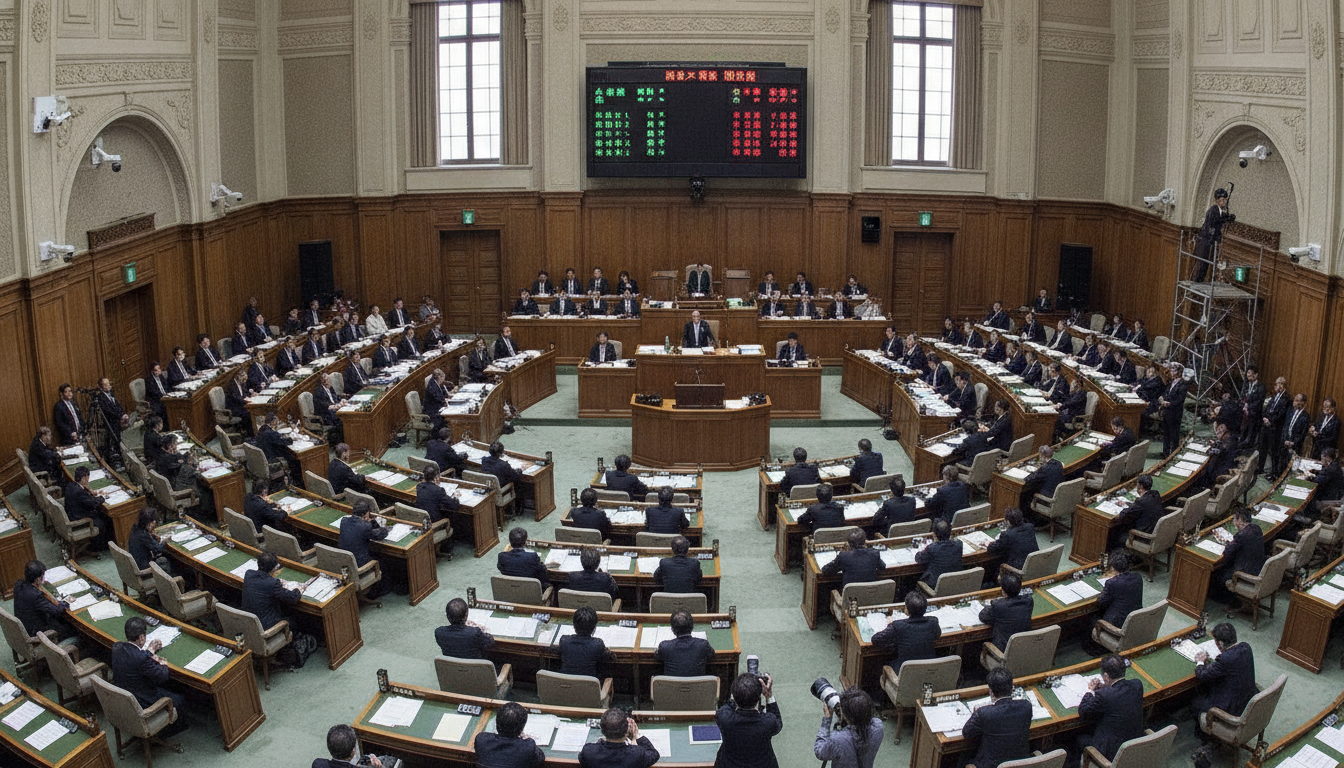
House of Representatives security cameras to be installed inside Diet building after unanimous vote
Japan’s lower house will add security cameras inside the Diet building, aiming to include installation costs in the FY2027 budget after a unanimous June 19 decision.
The police subcommittee of the House of Representatives’ Rules and Administration Committee voted unanimously on June 19 to install House of Representatives security cameras inside the Diet building, a move that would mark the first time cameras are placed within the chamber’s interior. Officials said the measure also includes plans to increase the number of external cameras around the complex, and that the secretariat will seek funds in the 2027 fiscal year budget.
Lower House Panel Votes to Install Cameras
The decision came at a meeting attended by representatives from the ruling Liberal Democratic Party and multiple opposition groups, including Nippon Ishin and the Democratic Party for the People. Lawmakers agreed that enhanced surveillance is necessary to prevent and respond to crimes that occur on parliamentary premises.
House officials told reporters that there are currently no surveillance cameras inside the main Diet buildings, and that any interior installation would be unprecedented. The vote was described as unanimous by the subcommittee, signaling cross-party recognition of security concerns.
Planned Coverage and Locations
The House secretariat said the main targets for installation will be the House of Representatives main building and the adjacent annex. Specific placement points, the total number of cameras, and technical specifications will be determined in follow-up planning sessions.
Outside the buildings, several dozen cameras already cover the grounds and entrances, officials noted, and the new plan aims to complement that external network with interior coverage focused on public corridors and shared spaces rather than private areas.
Budget Targeted for Fiscal 2027
Committee members directed the secretariat to pursue including installation costs in the government’s 2027 fiscal year budget proposal. Secretariat officials said they will prepare cost estimates and a project plan for submission during the budget drafting process.
Lawmakers emphasized that securing funding through the regular budget cycle is intended to ensure transparency and parliamentary oversight of the procurement and installation process. Final approval of appropriations will depend on further deliberations within the Diet’s budget committees.
Background: Incidents and Debate
Momentum for the decision grew following incidents that raised alarm about safety within the Diet complex, including a recent toilet voyeurism case that prompted public and parliamentary concern. Earlier discussions about adding cameras to the Diet interior date back to at least 2021, when an incident inside the House main building prompted debate over surveillance measures.
Those past deliberations failed to reach a conclusion because of unresolved questions over where cameras should be placed and how to balance monitoring with lawmakers’ rights. The June 19 vote represents a renewed consensus to move forward while addressing those unresolved issues.
Privacy and Parliamentary Activity Concerns
Opponents of interior surveillance have historically warned that cameras could infringe on privacy or interfere with lawmakers’ freedom to conduct political activity within parliamentary spaces. During the latest discussions, committee members said these concerns remain key considerations in planning.
The secretariat and lawmakers signaled they will adopt measures to protect privacy and political expression, such as avoiding cameras in private offices and restrooms, defining strict retention and access rules for footage, and establishing clear protocols for use in investigations. Legal advisers are expected to review the technical and operational safeguards before installation begins.
Implementation Process and Timeline
Officials said the next steps include selecting specific camera locations, drafting procurement specifications, and consulting legal and privacy specialists on data handling and storage. The plan calls for detailed proposals to be drafted ahead of the 2027 budget submission so funding can be requested in time.
If the budget request is approved, procurement and phased installation would follow under parliamentary oversight, with further announcements on timing and scope to be made after technical plans are finalized. Committee members stressed that transparency about the process will be essential to maintain public trust.
The unanimous vote marks a significant policy shift for the House of Representatives, reflecting growing concern among lawmakers about safety on parliamentary premises while committing to safeguards that aim to balance security with privacy and political freedoms.

