
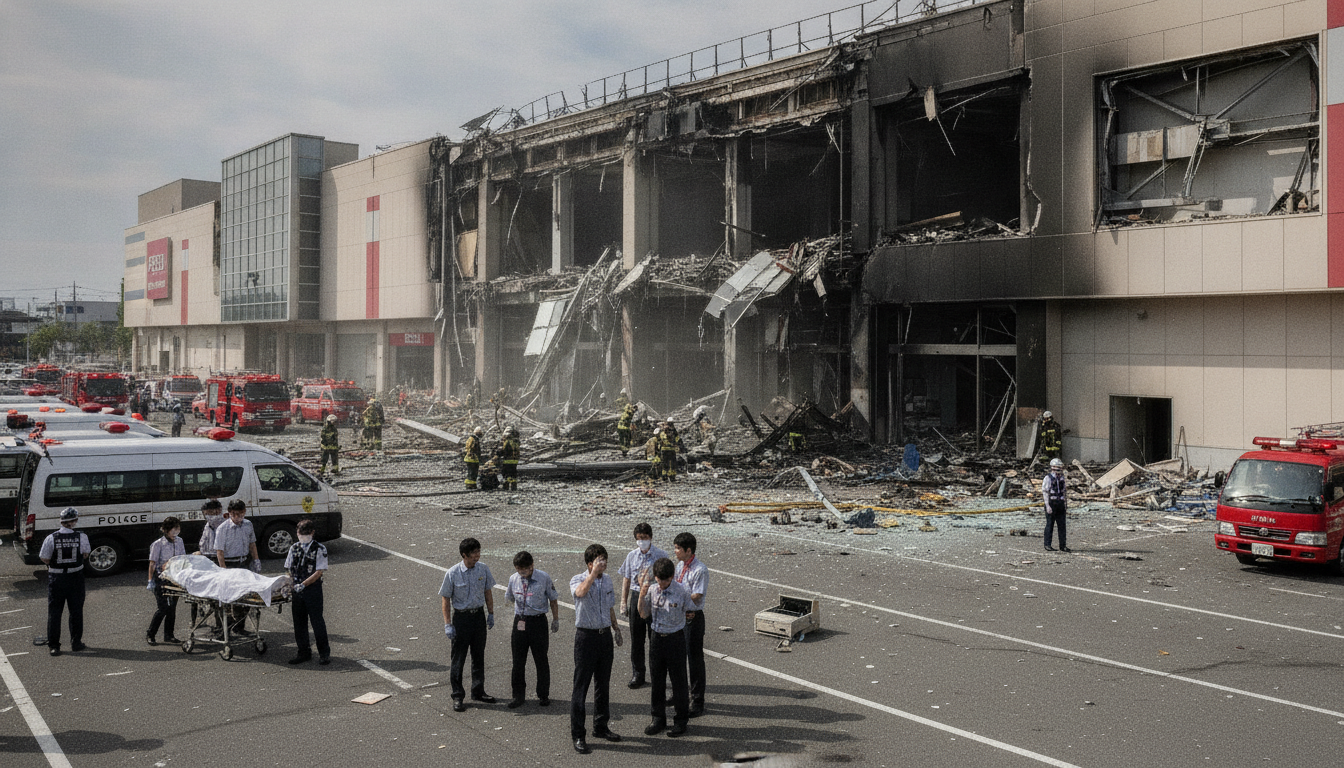
Aeon Mall Kumamoto explosion: Habita executive apologizes after two employees killed
Habita director admits he asked staff to return to the store to secure cash after the July 28 earthquake, saying the Aeon Mall Kumamoto explosion claimed two lives and that evacuation orders must come first.
A company director for Habita, which operates a small chain of雑貨 stores in Kyushu, has apologized after two employees were killed in the Aeon Mall Kumamoto explosion that followed a powerful earthquake on July 28, 2026. The director, Goji Yuse (湯瀬剛二), told reporters he had phoned the store manager and asked that cash receipts be moved to the safe if staff could safely return after an initial evacuation. Those instructions were relayed by the manager to two employees who had briefly evacuated to the mall parking lot and then re-entered the building, where they were caught in the blast.
Executive account of calls and instructions
Goji Yuse, 64, said he made three calls to the Aeon Mall Kumamoto store after the earthquake to confirm the safety of staff and then spoke to the store manager at 5:10 p.m. He said the manager initially reported that two employees had evacuated outside and were unharmed, prompting a follow-up call when the mall was later reported closed.
Yuse said he asked the manager to check whether employees had left any belongings inside and to request, if it was possible, that the staff secure the day’s takings in the store safe. He characterized the request as permissive—“if they could return, please put the cash in the safe; if not, do what they can”—but acknowledged the message was relayed to employees who then went back inside.
Timeline of evacuation and return
On July 28, 2026, at around 4:30 p.m., a strong earthquake with a maximum seismic intensity of 7 struck Kumamoto Prefecture, prompting immediate evacuations across the region. Staff at the Habita outlet in Aeon Mall Kumamoto initially left the interior and gathered in the mall parking area, according to the director and relatives.
After the director’s instruction was conveyed, two employees returned to the store alongside a colleague and were subsequently caught in an explosion inside the mall. The sequence of events from the return to the blast remains a central focus for inquiries, and the director has accepted responsibility for issuing the directive that encouraged re-entry.
Victim details and family accounts
Relatives identified one of the deceased as Kurumi Otake (大竹玖瑠美), 22, who had briefly evacuated to the parking area before telling a family member she would return because the company had asked staff to secure the cash. According to those relatives, Otake left the parking lot with a coworker and re-entered the mall, after which the explosion occurred.
Habita confirmed that two employees died in the incident. The store typically employed three staff members on shift: the store manager, who was off duty that day, and the two employees who were present when the earthquake struck.
Company apology and corrective pledge
In a statement to reporters on August 3, Yuse expressed remorse, saying, “I am truly sorry that two precious lives were lost in this incident.” He described his request to have staff return as a mistake and said the company would change its procedures to make evacuation the absolute priority in future emergencies.
Yuse said Habita will instruct all managers and staff to prioritize personal safety over securing property, adding that there will be clearer internal guidance to prevent any repeat of the decision to ask employees to re-enter a potentially dangerous environment.
Scope of Habita operations and the directive’s reach
Habita, founded in 1976 and based in Minami Ward, Kumamoto City, operates Freizeit-style雑貨 outlets across five Kyushu prefectures, including Kumamoto, Fukuoka and Miyazaki. Yuse told reporters that similar instructions to secure cash were given for staff at three other stores in the prefecture after the quake.
Company officials did not state whether any staff at those other locations attempted to return to their stores or whether those outlets sustained damage. Habita’s acknowledgement that the instruction was issued broadly drew immediate attention to corporate crisis protocols for small retailers operating in disaster-prone regions.
Safety implications and calls for procedural reform
Workplace safety experts and emergency-management advocates stress that employees should never be asked to re-enter buildings after strong seismic events until structures are declared safe by qualified authorities. The director’s admission highlights the tension some businesses face between protecting assets and protecting people during chaotic moments after a disaster.
Legal and labor specialists say companies may face scrutiny over whether instructions to re-enter constituted negligent direction, particularly if those directives contributed directly to fatalities. Observers say clearer legal guidance and stronger enforcement of evacuation-first policies could reduce such tragedies in future disasters.
Habita’s director insisted the company would now enforce a strict “evacuate and stay out” rule, saying managers will be told explicitly never to encourage staff to re-enter premises after an evacuation. He also pledged to review training and disaster protocols across all Habita outlets and to cooperate with any official inquiries into the blast.
The Aeon Mall Kumamoto explosion has underscored the human cost when emergency decisions prioritize property over people, prompting a broader debate about corporate responsibilities during natural disasters. Authorities and company officials continue to piece together the detailed timeline and communications that preceded the blast as families and communities seek answers and assurances that such losses will not recur.

