
Trafficked workers stranded in Cambodia and scam hubs unable to return home
Trafficked workers stranded in Cambodia and Southeast Asian scam hubs are languishing in detention or sleeping on streets after being unable to pay for flights, facing confiscated documents and bureaucratic hurdles that block repatriation.
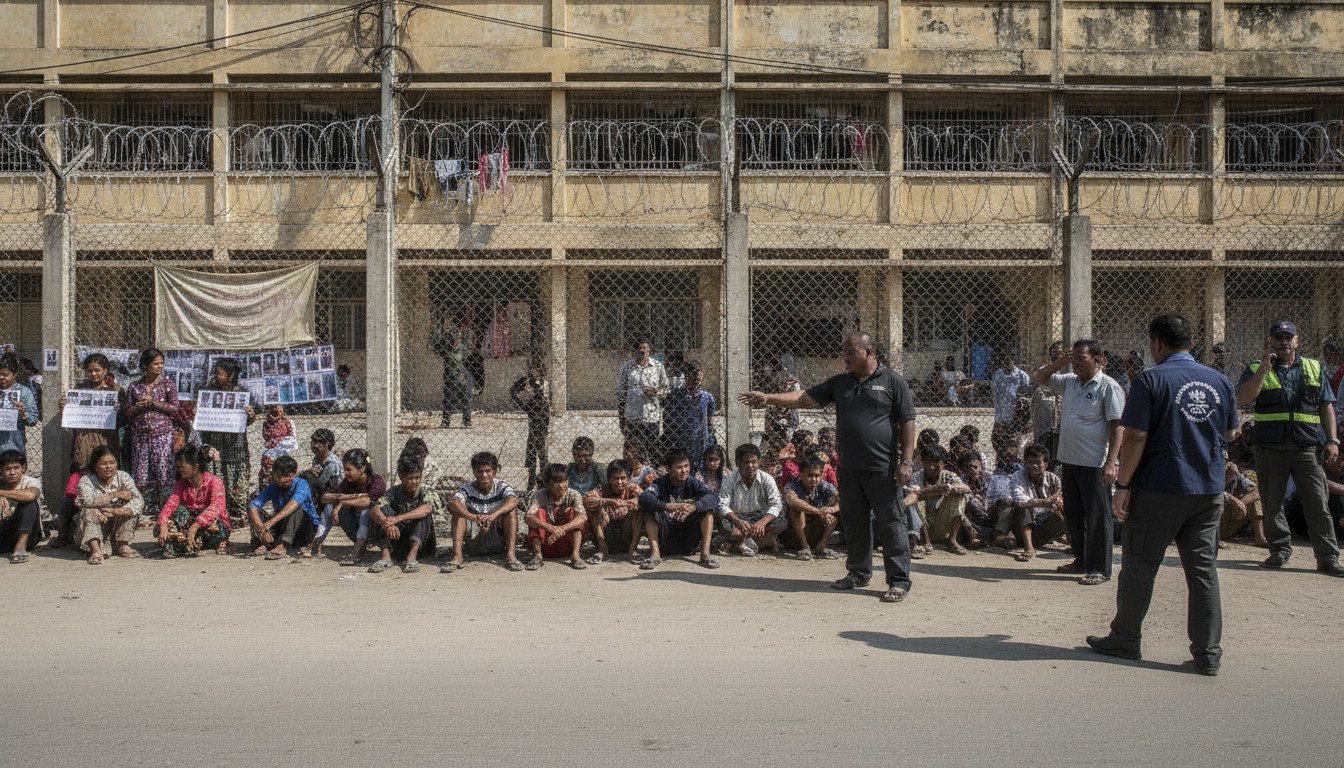
Inside a Phnom Penh immigration detention facility, former migrant workers who say they were trafficked into online scam centers live in cramped conditions and subsist on minimal food, according to interviews and eyewitness reports. Many of the detainees lack money, have had passports seized by traffickers, and cannot secure the flights or exit permits required to return home. The crisis stretches across borders, with compounds near the Thailand–Myanmar frontier and other scam hubs holding thousands of foreign nationals in legal and humanitarian limbo.
Detention conditions in Phnom Penh
Detention blocks in Phnom Penh house dozens of foreign nationals in makeshift sleeping arrangements, with people sharing mats on concrete floors and relying on a single simple meal each day. Detainees report limited access to medical care and legal counsel, and overcrowding has raised concerns among aid groups about health and hygiene.
Officials in Cambodia say some people are held for immigration or visa violations, while others are identified as potential victims of trafficking and await formal repatriation processes. In practice, those pathways are slow or stalled when individuals lack travel documents or funds, leaving many to remain inside the centres for weeks or months.
Scam hubs across the Thailand–Myanmar border
Scam operations clustered near Myanmar’s border with Thailand, including compounds such as KK Park, have been identified as sites where workers were coerced or deceived into jobs running fraud networks. Survivors describe being transported across borders, held under guard, and forced to work long shifts contacting potential victims or processing illicit transactions.
When such sites are disrupted by authorities or traffickers abandon operations, workers are often left without support or the means to travel home. Reports indicate thousands of foreign nationals remain trapped in and around these scam hubs, unable to access consular services that would allow their return.
Financial and bureaucratic barriers to repatriation
A central obstacle to repatriation is cost: many trafficked workers lack the funds for airline tickets, exit fees or temporary travel documents issued by their home countries. Traffickers commonly confiscate passports to prevent escape, which forces survivors to seek emergency travel papers that can take weeks to issue.
Even when consulates and aid agencies intervene, bureaucratic requirements and intergovernmental coordination can be slow. Airlines and immigration authorities may require documentation that victims cannot quickly obtain, prolonging detention or leaving individuals to sleep in public spaces while they wait for paperwork and funding.
Humanitarian response and NGO efforts
Non-governmental organizations operating in the region provide legal aid, emergency shelter and mental health support to survivors, and have helped finance a limited number of repatriation flights. Aid workers also facilitate identification interviews and liaise with consulates to accelerate travel documents for those willing to return.
However, NGOs say their resources are strained and demand far exceeds capacity. Groups warn that ad hoc assistance cannot substitute for systematic, well-funded repatriation programs and stronger cross-border cooperation to dismantle trafficking networks and protect victims.
Government actions and gaps in enforcement
Governments in Cambodia, Thailand and Myanmar have conducted raids, arrested suspected traffickers and taken steps to investigate scam rings, but prosecution and victim protection remain uneven. Authorities sometimes treat victims as immigration offenders rather than as people exploited by criminal networks, complicating access to services and protection.
Diplomatic channels have facilitated some voluntary returns, yet officials acknowledge a backlog of cases and the logistical challenge of processing individuals from multiple nationalities. Observers say a clearer framework for identifying victims, issuing emergency travel documents and sharing costs among states is urgently needed.
Calls for regional coordination and private-sector measures
Advocates and international organizations are urging a regional strategy that combines stronger law enforcement against transnational fraud operations, dedicated funding for repatriation flights, and improved victim identification protocols. They also call on airlines and travel intermediaries to streamline emergency booking and waive fees when governments or NGOs arrange returns.
Business networks that advertise or facilitate labor placements have been urged to adopt due-diligence standards to prevent deception and to cooperate with authorities when trafficking is uncovered. Experts say preventing exploitation upstream — at recruitment and transit stages — is essential to reduce the number of trafficked workers who later become stranded.
Survivors’ accounts and aid-group assessments paint a stark picture of people caught between criminal networks, patchy state responses and the high cost of leaving the countries where they were exploited. Until states, airlines and international agencies agree on predictable, funded repatriation pathways and tougher measures against scam networks, trafficked workers will continue to face detention, destitution or prolonged uncertainty.

