
Imperial Household Law revision: Government to allow adoptions from former princely houses as an “exception”
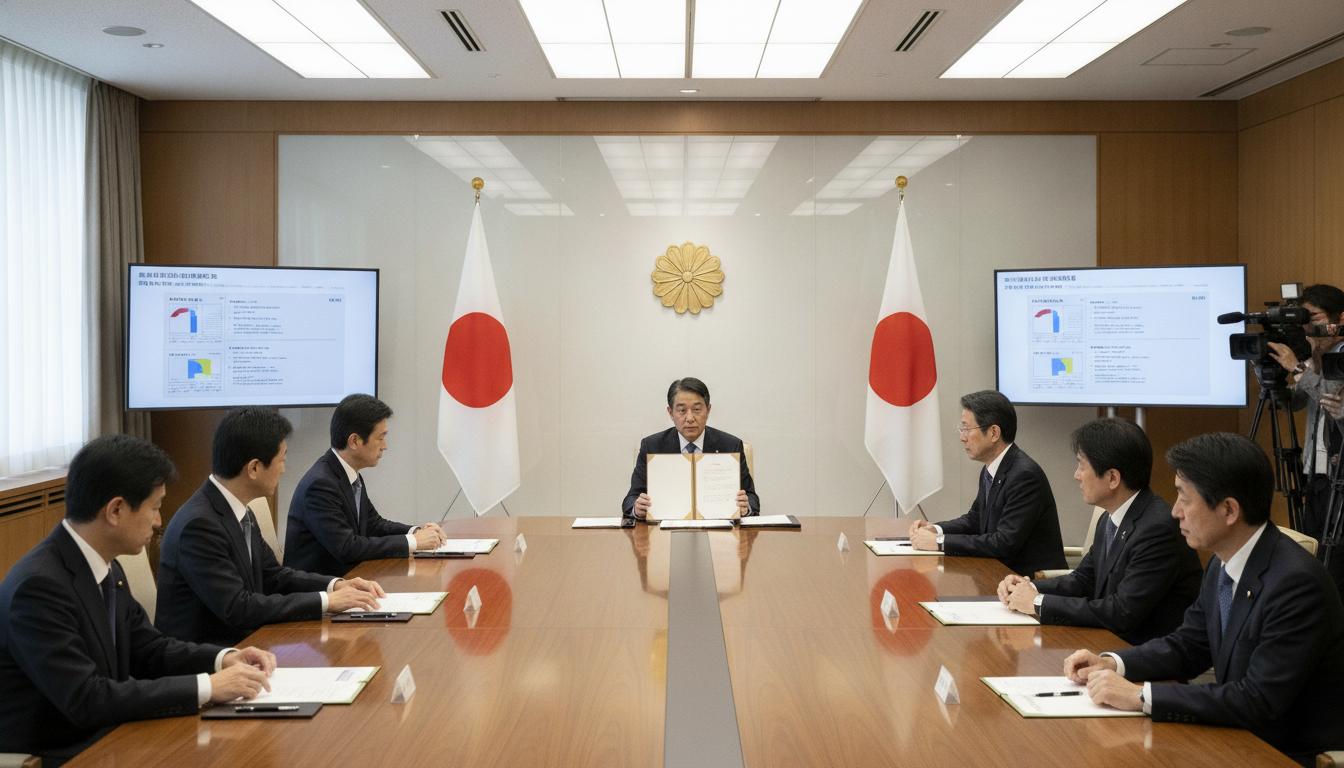
Japan on June 24, 2026 set an outline for an Imperial Household Law revision to permit limited adoptions from former princely houses as an exception in Tokyo.
The government on June 24, 2026 adopted an outline for an Imperial Household Law revision that would permit the adoption of male-line members from former princely houses as an “exception” to the existing ban on adoption. The move is intended to shore up the shrinking number of imperial family members while keeping the current Article 9 prohibition largely intact. Officials said the outline will be presented to the presiding officers of both Diet chambers and to all-party representatives on June 25 before further deliberations.
Outline retains Article 9 while creating a new exception
The draft outline keeps Article 9 of the Imperial Household Law, which bars imperial family members from taking in adoptees, but adds a new chapter explicitly designating a narrow exception. Under the proposal the adoption measure would be a special, limited pathway rather than a general change to the adoption ban. Government sources said this formulation is meant to balance legal continuity with a pragmatic response to demographic pressures on the imperial household.
Eligibility conditions for adoptees from former princely houses
The outline specifies that eligible adoptees would be drawn from the 11 former princely houses that lost imperial status in 1947 under the postwar reforms. Candidates must be male-line members aged 15 or older who do not have a spouse or children, and the measure would make clear they would not acquire an immediate claim to the Chrysanthemum Throne. Officials indicated the restrictions aim to prevent expansion of succession claims while increasing the pool of male-line persons available to be registered as imperial family members.
Amendment to Article 12 to address female imperial members
Separately, the package proposes revising Article 12 of the Imperial Household Law to allow female imperial family members to retain their imperial status after marriage if the law so permits. As part of the bill’s supplementary provisions, current female members would be granted a transitional option to voluntarily relinquish their imperial status at marriage if they prefer. The government said this dual-track approach is designed to address competing proposals that have split public opinion and party positions.
Rationale and political pushback in Diet consultations
The decision follows intensive consultations among Diet presiding officers and all-party representatives, where some opposition figures pressed for a special-law approach or clearer limitations. Democratic Party for the People leader Yuichiro Tamaki and others argued the adoption route should be framed as narrowly as possible to avoid broader legal ripple effects. The government’s choice to label the measure an “exception” reflects an attempt to respond to those demands and to secure buy-in ahead of Cabinet approval.
Historical context and demographic pressures
The 1947 removal of 11 princely houses weakened the pool of male-line members available to the imperial household, a structural outcome of postwar legal reforms. Over recent decades, the imperial family’s numerical decline has prompted repeated policy reviews and expert panel recommendations on succession and status. The current package seeks to reconcile those historical steps with contemporary concerns over the sustainability of imperial duties and ceremonial obligations.
Procedure and expected timetable for legislation
Officials said the outline will be presented to the chairs and vice-chairs of both Diet chambers and to all-party representatives on June 25, 2026, after which the government intends to pursue Cabinet approval of a formal draft within the month. If the Cabinet endorses the bill, the measure would be submitted to the Diet for debate and possible amendment, opening a period of parliamentary scrutiny and public discussion. Lawmakers and legal scholars are likely to examine the constitutional and symbolic implications as the bill moves forward.
The government’s proposal aims to expand the pool of imperial family members while keeping the existing adoption ban intact in principle, and it signals an effort to manage a sensitive constitutional and cultural issue with narrowly tailored legal language. Debate is expected to continue in the Diet and among the public as legislators weigh legal precision, historical precedent, and the symbolic meaning of any change to the Imperial Household Law.

