
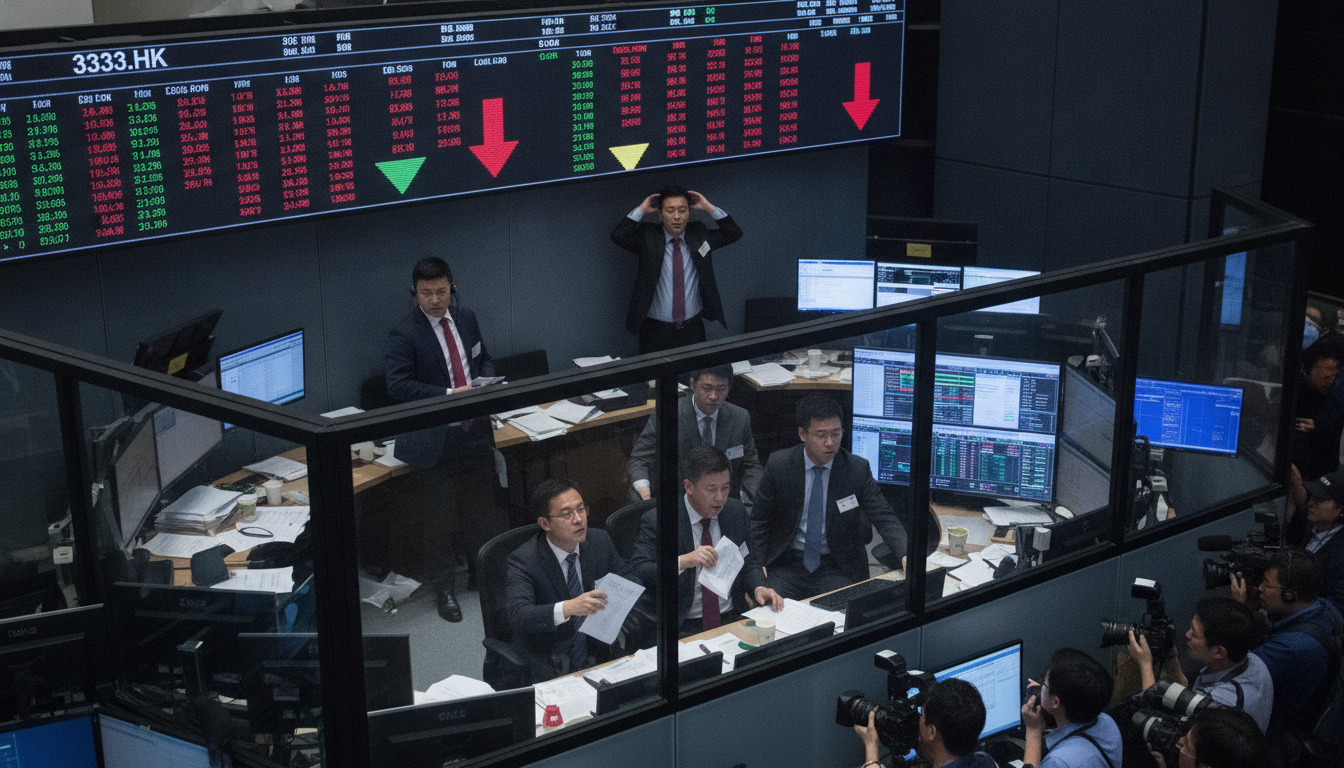
Evergrande Unit Shares Plunge After Majority-Stake Sale Talks Collapse
Evergrande unit shares plunged after talks to sell a majority stake were scrapped, dealing a blow to liquidators seeking funds and heightening creditor concerns.
Shares Plunge After Sale Talks Collapse
Shares of the Hong Kong-listed unit of China Evergrande Group tumbled sharply on Thursday following the announcement that negotiations to sell a controlling stake had been called off. The trading decline underscored investor disappointment and uncertainty about the unit’s ability to secure near-term financing. Market participants said the failed talks further dim the prospects for a quick resolution to the unit’s ownership and capital shortfalls.
For many investors, the collapse of a potential buyer removed a prominent path for cash to flow into the business, exacerbating fears over liquidity and operational continuity. The drop in share price reflected both the immediate loss of a rescue option and renewed scrutiny of the unit’s longer-term viability.
Sale Negotiations Abandoned by Company
Company statements indicated that discussions aimed at transferring majority ownership did not reach a conclusive agreement and were therefore discontinued. The termination of talks followed what sources described as a mismatch on valuation and transaction structure, though the company did not disclose detailed reasons. Stakeholders were left without clarity on whether new suitors would emerge or if alternative transaction structures might be pursued.
The aborted negotiations highlight the complexities involved in disposing of assets tied to a highly indebted, previously state-influential property group. Potential buyers often weigh legal, financial and reputational risks associated with acquiring businesses connected to large-scale insolvencies.
Immediate Market Reaction and Investor Sentiment
The market response was swift, with investors repricing the unit’s equity on the prospects of protracted restructuring or further dilution. Broker notes and trading floors reflected heightened nervousness, and analysts signaled that volatility could persist in the absence of fresh catalysts. The sell-off also prompted closer attention to bond markets and other Evergrande-linked securities, as contagion concerns remained alive among cautious creditors.
Retail shareholders voiced frustration at the sudden reversal of expectations, while institutional holders flagged the need for transparent timelines from administrators and company management. Overall sentiment shifted toward a more conservative stance pending concrete announcements on funding or formal restructuring milestones.
Setback for Liquidators and Creditors
Liquidators tasked with recovering assets and maximizing returns for creditors view the failed sale discussions as a setback to their recovery strategy. A major disposal would have provided immediate cash to satisfy some creditor claims and simplify the insolvency process, but that route is now uncertain. Creditors could face longer waits and potentially lower recovery rates if alternative asset realizations prove slower or yield less value.
Bondholders and suppliers are likely to press liquidators and the company for a revised plan, seeking clearer timelines and potential intermediate measures such as asset sales, operational carve-outs, or creditor-led restructurings. The dynamics of creditor committees and legal proceedings will be pivotal in shaping how recovery efforts proceed.
Regulatory and Policy Context in China
The episode arrives against a backdrop of heightened regulatory scrutiny of the property sector and a broader policy focus on financial stability. Authorities have in recent years tightened financing channels for highly leveraged developers and encouraged orderly resolution of distressed assets. Observers note that any large-scale transactions involving such firms typically attract regulatory review, complicating deal timetables.
At the same time, policymakers have signalled an interest in preventing widespread contagion while preserving market discipline, leaving market actors to navigate a narrow corridor between facilitating solutions and enforcing accountability. The regulatory environment therefore remains an important variable for any potential restructuring or sale.
What Comes Next for Restructuring Efforts
With the majority-stake sale off the table, stakeholders will likely explore alternative avenues including smaller asset disposals, targeted equity injections, or creditor-led reorganizations. Liquidators may revisit valuation and marketing strategies to attract new bidders, or consider breaking up the business into more saleable components. Any path forward will require careful coordination among creditors, administrators and regulators to balance speed with value preservation.
Analysts caution that the process may be drawn out, and outcomes will depend on the availability of willing buyers, the legal framework governing insolvency recoveries, and the unit’s underlying operational performance. In the interim, transparency from administrators and regular updates to creditors will be critical to manage expectations and reduce market speculation.
The collapse of the sale talks underscores the fragility that can persist long after a headline bankruptcy, and it reiterates how contingent recoveries are on deal execution and favorable market conditions. Stakeholders will now be watching for concrete steps from the unit’s managers and liquidators that could stabilize markets and provide a clearer path for creditor recoveries.

