
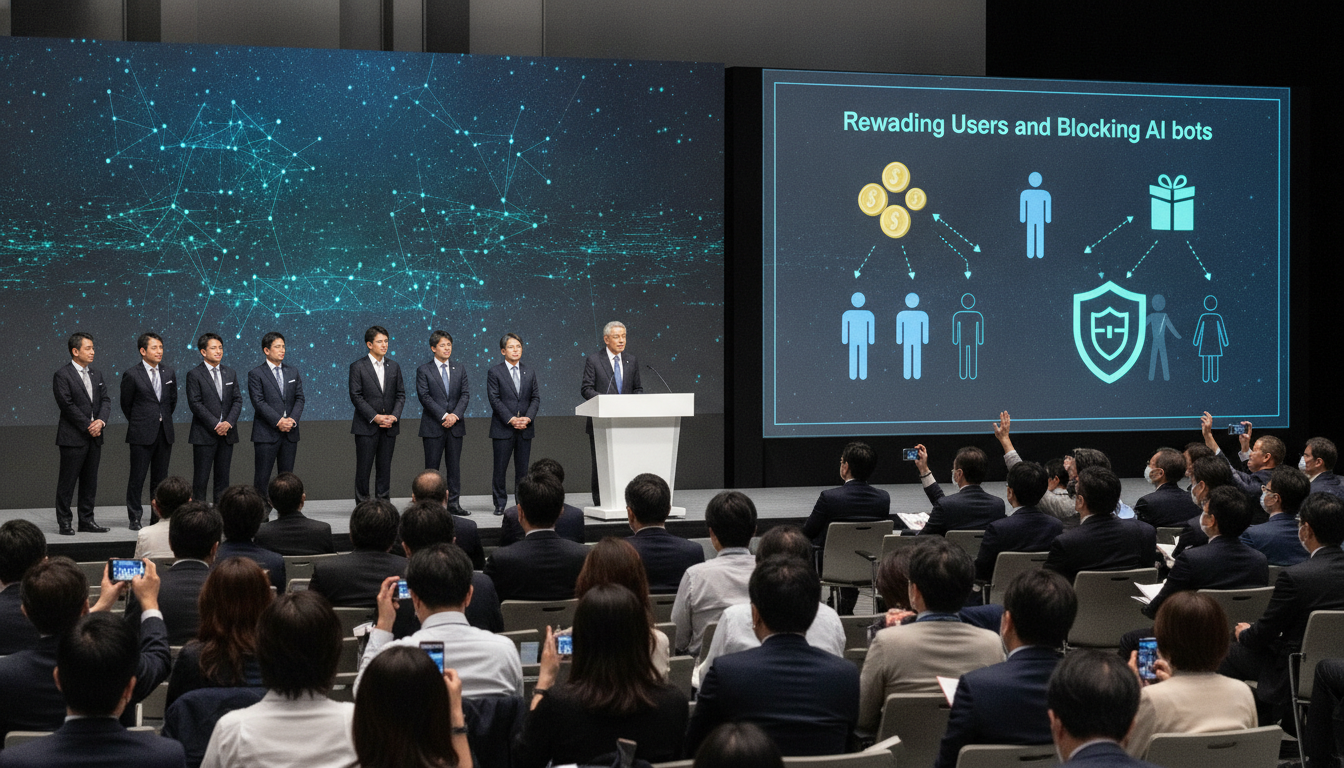
Hakuhodo launches human verification ad service to block AI bots and roll out reward app
Hakuhodo launches human verification ad service to block AI bots and protect genuine impressions; new unit Ads for Humanity will trial a reward app in Japan.
Hakuhodo to create Ads for Humanity and human verification service
Hakuhodo DY Holdings said it will establish a new company to deliver an advertising service that requires human verification to qualify ad impressions. The initiative, dubbed Ads for Humanity, is based in Tokyo and is intended to distinguish real human views from those generated by automated programs. The move represents a direct response to rising concern among advertisers about AI-driven bot traffic inflating reach and wasting media spend.
Service aims to block AI-driven ad impressions
The planned service will apply human verification to ad delivery so that impressions generated by artificial intelligence bots are excluded from billing and campaign metrics. Hakuhodo has framed the system as a way to ensure that advertisers pay for genuine attention and measurable human engagement. The company has not disclosed full technical details but said the offering will prevent AI agents from being credited with watching or interacting with ads.
Motivation: advertisers and programmatic ad fraud
Industry executives have long warned that programmatic markets are vulnerable to automated fraud, and the rise of synthetic media and AI agents has heightened those concerns. Advertisers have pushed for stronger verification after campaigns showed inflated view and click numbers that did not translate into human actions. By placing human verification at the point of ad delivery, Hakuhodo is seeking to rebuild trust with clients that demand cleaner supply and greater accountability.
How the verification will be implemented and measured
Hakuhodo has indicated the verification process will occur prior to counting an impression for billing or performance reporting, but the company has so far limited technical disclosures. Industry observers expect the system to combine device signals, server-side checks and on-device tests to distinguish automated traffic from human users. Independent measurement and third-party audits are likely to be necessary for advertisers and publishers to accept the new inventory as reliable.
Advertisers, agencies and publishers weigh the trade-offs
For advertisers, the main appeal is clearer measurement and reduced waste, which could increase the value of verified inventory and justify higher prices. Agencies and media buyers may have to adjust campaign targeting and optimization practices to the new metric set, and some programmatic trading strategies could require reconfiguration. Publishers and ad platforms face potential revenue disruption if large portions of their automated traffic are uncovered as non-human and removed from eligible impressions.
User-facing app to reward verified viewers
The new Tokyo-based company, Ads for Humanity, will also release an app that lets users earn points primarily by watching ads, according to materials shared by the agency. The reward-based model is designed to attract verified human viewers and provide advertisers with a clearer path to engaged audiences. By offering incentives, the app could increase user participation while simultaneously supplying advertisers with inventory that has been authenticated as human.
Potential privacy and compliance questions
Requiring human verification at scale raises questions about user privacy, data handling and regulatory compliance in Japan and beyond. Hakuhodo will need to balance the verification measures with data minimization and transparent consent practices to avoid running afoul of privacy rules. Industry stakeholders warn that verification systems must be auditable and privacy-preserving to gain acceptance from both users and regulators.
Market impact and competitive responses
If the service proves effective, other agencies and ad tech providers may accelerate similar offerings to protect clients from AI-driven fraud. Platforms that rely heavily on automated traffic could feel pressure to improve transparency or risk losing advertiser budgets to verified channels. The initiative could also prompt faster adoption of standardized verification tools and cross-industry protocols that make it easier to measure human attention across different digital environments.
The launch of a human verification ad service by Hakuhodo caps a period of growing scrutiny over how AI affects digital advertising metrics. As brands demand clearer assurance that campaigns reach real people, solutions that combine verification with user incentives may become an increasingly prominent part of the media landscape.
Industry players will be watching closely as Ads for Humanity begins trials, assessing whether the toolset can be scaled without unduly raising costs or compromising privacy. The effectiveness of the verification and the willingness of buyers to pay a premium for authenticated impressions will determine whether the initiative reshapes buying behaviors in Japan’s advertising market.

