
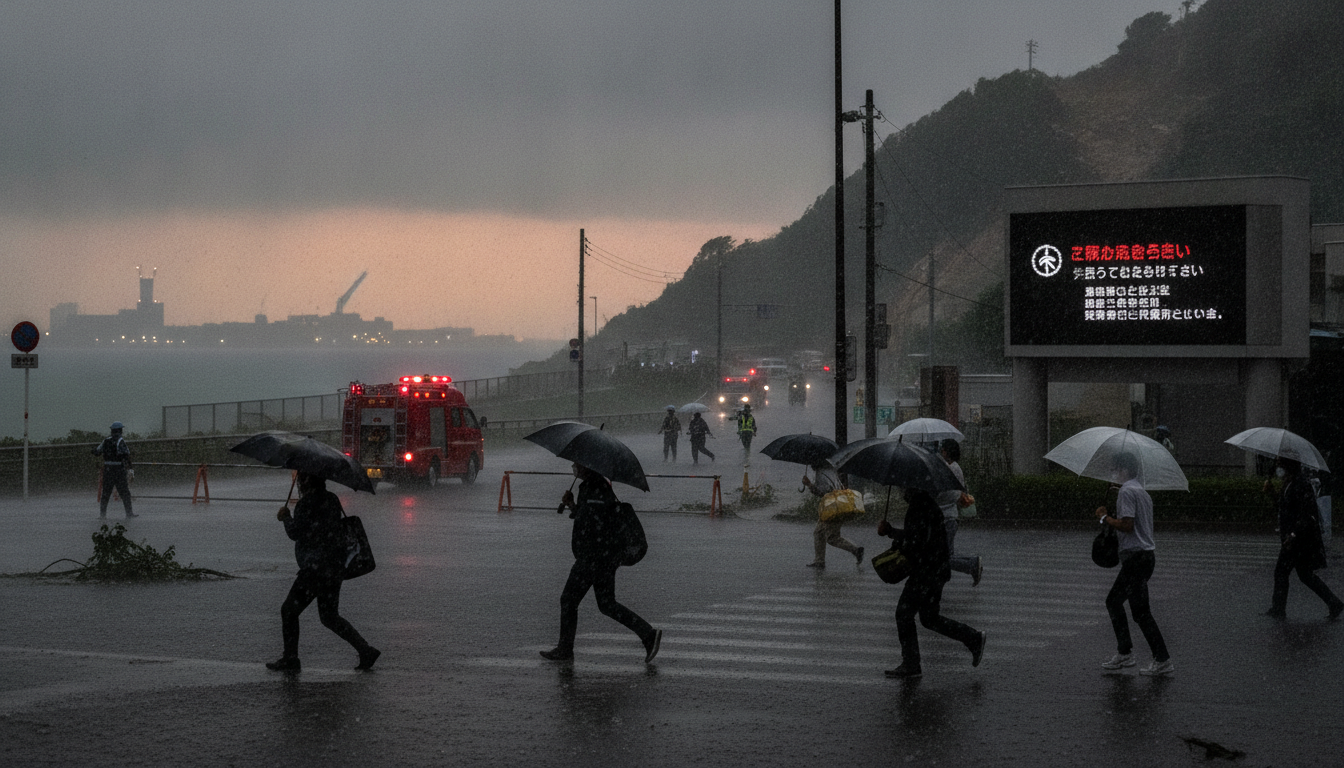
Typhoon 7 Threatens Pacific Coast from Kinki to Kanto; Landslide Warnings Issued
Typhoon 7 is approaching the Pacific coast from Kinki (Kansai) to Kanto-Koshin and is expected to pass east of Japan late on June 27 into the early hours of June 28, 2026, raising heavy rain and landslide concerns.
Japan’s Meteorological Agency (JMA) warned on June 27, 2026, that Typhoon 7 is moving northeast off the coast of Kochi and is forecast to approach the Pacific-facing prefectures from the Kinki region through Kanto-Koshin later that day. The agency advised residents in vulnerable areas to remain alert for rapidly changing conditions and to follow local evacuation instructions.
Typhoon 7 Approaching Kinki–Kanto Pacific Coast
As of 10:00 a.m. on June 27, 2026, JMA maps showed Typhoon 7 and nearby weather systems tracking northeastward, with the center expected to draw near the Pacific seaboard from western Honshu toward the Tokyo region by late afternoon and evening. Forecasts indicate the system will move past Japan and exit eastward overnight, transitioning to a frontal or extratropical system by the early morning of June 28.
Local governments along the projected path have already issued advisories and urged residents to prepare for strong winds, intense rainfall and possible storm surge along exposed coastlines. The agency emphasized that even areas not directly beneath the storm’s center can experience severe weather due to the typhoon’s broad rain bands.
Forecast Track and Timing
Meteorologists expect Typhoon 7 to maintain a northeastward course through the day on June 27, bringing heaviest impacts to the Pacific-side prefectures from the Kinki region through Shizuoka and into southern Kanto. The critical window for severe weather is forecast from the afternoon of June 27 into the early hours of June 28, when the system is closest to the archipelago.
After passing east of Japan, the typhoon is expected to weaken and become extratropical as it moves over cooler waters, but the JMA warned that the transition will not immediately eliminate hazardous conditions. Forecasters cautioned that frontal enhancement could sustain heavy rains and strong winds even as the storm loses its tropical characteristics.
Heavy Rain and Landslide Alerts Issued
Authorities underscored the risk of torrential rainfall capable of triggering landslides and sudden flooding, particularly in steep, rural terrain and river basins. Municipalities in the projected path have raised landslide alert levels and prepared evacuation centers for residents in designated danger zones.
Residents in hillside communities, river valleys and areas with a recent history of slope failure were urged to move to safer locations without delay if evacuation orders or advisories are issued. Officials also stressed checking notifications from local governments and the JMA for updates on hazard levels and evacuation routes.
Coastal and Marine Hazards Expected
Coastal areas facing the Pacific are likely to see elevated waves, high surf and localized storm surge, with fishing ports and low-lying harbor districts at particular risk. The JMA and port authorities advised vessels to stay in port or seek sheltered waters and warned small craft to avoid heading out to sea until conditions improve.
Harbor and marine operators were instructed to secure equipment, monitor tide forecasts and coordinate with local disaster response teams. Beachfront communities were asked to avoid coastal promenades and to heed barricade and closure notices issued by prefectural authorities.
Transport Disruptions and Event Cancellations
Rail, air and ferry services are likely to face delays or suspensions in affected regions, with operators already preparing contingency plans for the late June 27 to early June 28 period. Commuters and travelers were advised to check schedules and contact carriers for the latest service information before setting out.
Local governments and organizers of outdoor events signaled readiness to postpone or cancel gatherings as necessary to protect public safety. Road closures due to flooding, debris or landslide risk remain a strong possibility, and motorists were urged to avoid driving in heavy rain and to follow emergency traffic advisories.
Emergency Preparedness and Local Guidance
Authorities recommended preparing emergency kits with food, water, flashlights, batteries and essential medications, and urged households to secure loose outdoor items and reinforce windows where possible. Residents were also reminded to have multiple channels for receiving real-time alerts, including mobile notifications, local government bulletins and JMA advisories.
The central and prefectural disaster management agencies reiterated that swift action can save lives and that people should not wait for formal evacuation orders if conditions deteriorate rapidly. Those living alone, elderly residents and people with mobility challenges were advised to seek assistance early and confirm evacuation plans with neighbors or municipal support services.
As Typhoon 7 moves closer, the public is urged to stay tuned to official JMA updates and local government communications for precise, time-stamped instructions and to prioritize safety over property when evacuation is advised.

