
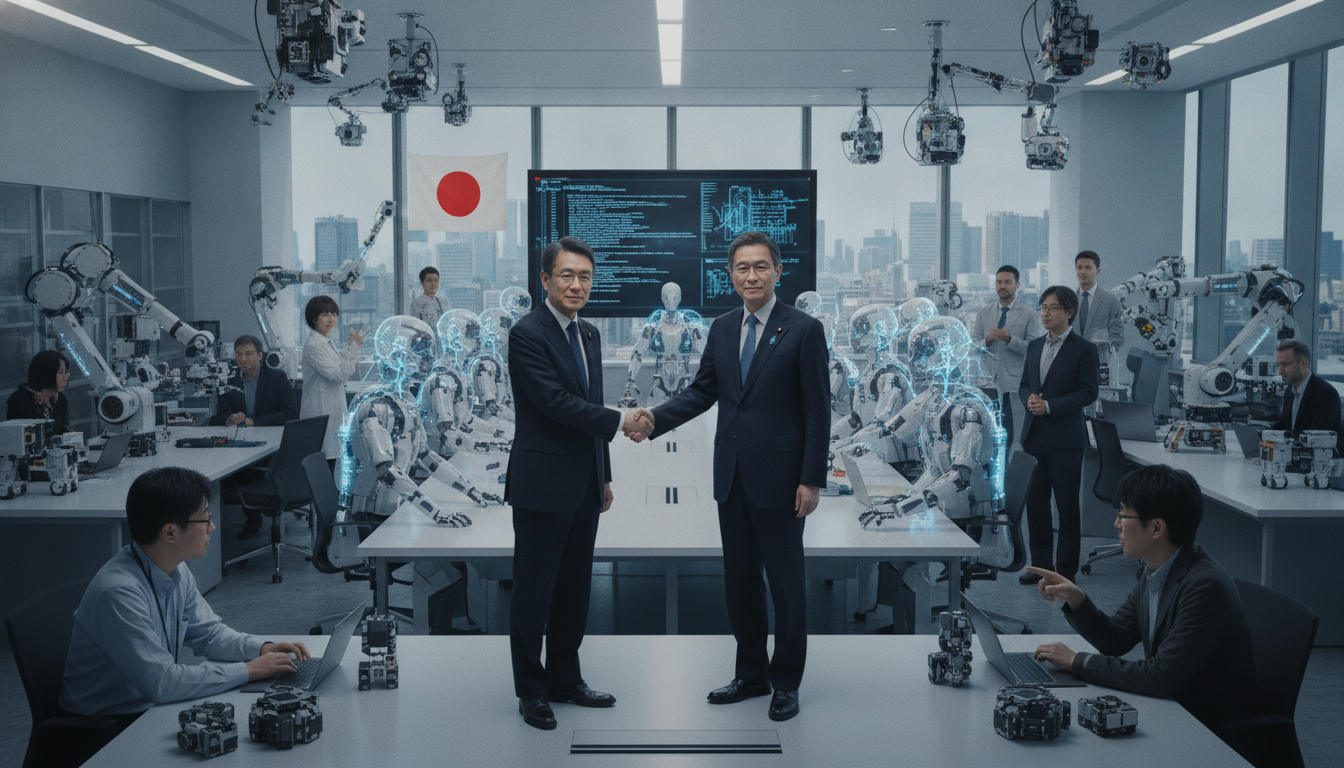
Japanese industrial robots pivot to AI and open collaboration as Yaskawa unveils new factory
Japanese industrial robots shift toward AI and open collaboration as Yaskawa opens an AI-powered factory, aiming to reclaim global manufacturing leadership.
TOKYO — Yaskawa Electric has opened a new factory that places artificial intelligence at the center of robot production, signaling a strategic push by Japanese industrial robots makers to regain global market ground. Company officials say roughly one-third of machines on the new line incorporate AI-driven functions, reflecting a broader shift from hardware-focused automation to software-enabled, collaborative systems. The move underscores an industry pivot toward combining advanced sensing, adaptive control and partner ecosystems to meet evolving factory demands.
Yaskawa inaugurates AI-focused production facility
Yaskawa’s new plant is designed to integrate machine learning and real-time sensing into routine assembly and testing processes. The company has reconfigured production lines so robots can be reprogrammed and updated more quickly, shortening development cycles for new models.
About a third of robots deployed at the facility are equipped with onboard AI capabilities, according to company descriptions, enabling tasks that require more dynamic responses than traditional pre-programmed motion. Yaskawa positions the factory as a prototype for broader industrial rollout and as a statement of intent to modernize Japan’s robotics supply chain.
AI-enabled functions and factory workflows
The AI-enabled robots at the factory perform a mix of perception, path-planning and adaptive control tasks that improve efficiency and reduce manual commissioning. Engineers at the plant use data collected from sensors to refine algorithms and tailor robot behavior to specific customer environments.
This emphasis on software-driven performance reduces the need for labor-intensive programming for each deployment, allowing integrators to customize robots through iterative learning and cloud-assisted updates. The approach aims to shorten lead times and lower total cost of ownership for manufacturers adopting automation.
Open collaboration with partners and developers
Yaskawa and other Japanese manufacturers are pursuing more open collaboration with software firms, startups and system integrators to accelerate innovation. The strategy includes shared development platforms, joint research initiatives and more permissive interfaces to encourage third-party applications.
Industry executives say open ecosystems can bring faster improvements in areas such as vision systems, simulation tools and human-robot interfaces. By welcoming external developers, makers hope to expand the functional breadth of their machines without shouldering all R&D internally.
Competitive pressures and market context
Japanese industrial robot makers once dominated global automation markets but have faced intensifying competition from European, South Korean and Chinese manufacturers. Rivals have invested heavily in AI, software services and local production, eroding some of Japan’s historical advantages in precision machinery and control systems.
The new factory is a direct response to those pressures, intended to showcase Japan’s capacity to marry high-quality manufacturing with modern AI capabilities. Analysts note that the outcome will depend on how quickly companies can integrate software ecosystems and scale commercially viable services.
Policy signals and industry incentives
Policymakers and industry groups in Japan have flagged advanced manufacturing and digital transformation as national priorities, offering programs that encourage automation adoption and workforce reskilling. Those incentives aim to help domestic firms modernize plants while addressing labor shortages and productivity challenges.
Public-private cooperation has focused on common technical standards, testbeds and funding for collaborative projects, which manufacturers say can reduce barriers to deploying more intelligent automation across SMEs. Supportive policies are expected to accelerate pilot projects and broader market acceptance of AI-enhanced robots.
Analyst perspectives and adoption hurdles
Market watchers welcome the technological pivot but caution that integration, reliability and cybersecurity remain significant hurdles for wider adoption. Enterprises must manage system interoperability, update pathways and the implications of learning-enabled machines operating in mixed human and machine environments.
Workforce transition is another challenge, as companies must train technicians to manage software-rich robots and analytics-driven maintenance programs. Successful adoption will likely hinge on clear business cases, accessible developer ecosystems and demonstrable returns on investment.
Yaskawa’s factory opening marks a clear strategic shift for Japanese industrial robots toward a future in which AI and collaborative partnerships play central roles. The effectiveness of that strategy will be judged by how quickly the industry converts prototypes and pilot projects into scalable solutions that meet manufacturers’ demands for flexibility, cost efficiency and safe human-robot collaboration.

