
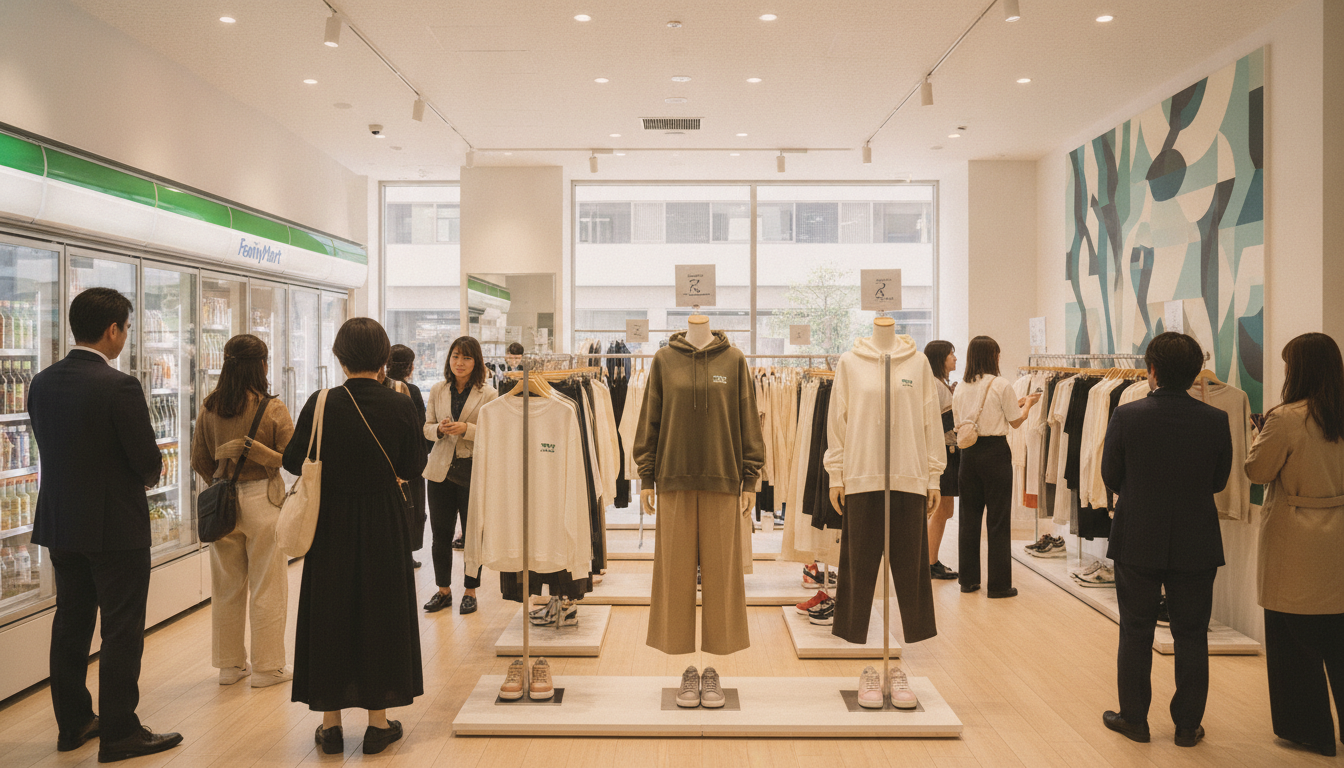
Convenience stores in Japan pivot to fashion and community services
Japanese convenience stores pivot to fashion and community services: FamilyMart opens Famima Park Azabudai with Nigo; Lawson extends support to depopulated towns.
Japanese convenience stores are widening their remit, blending apparel, culture and local services as operators chase new demand in an intensely saturated market. FamilyMart’s Famima Park Azabudai, which opened in July with streetwear mogul Nigo as creative director, is one high-profile example of this shift. At the same time, Lawson is refocusing part of its network toward supporting depopulated towns and regional needs, signaling a strategic push beyond traditional grab-and-go retail.
FamilyMart’s flagship embraces streetwear and lifestyle retail
FamilyMart’s new-format flagship, Famima Park Azabudai, opened in July and has repositioned the convenience store experience around design, apparel and curated goods. The company enlisted the streetwear designer Nigo as creative director to oversee the store’s aesthetic and product collaborations. The result is a hybrid space that mixes typical convenience items with limited-edition apparel, branded merchandise and lifestyle offerings aimed at attracting urban shoppers and brand-conscious visitors.
Convenience stores testing apparel as a growth vector
Across Japan, convenience store operators are experimenting with clothing and wearable goods to diversify revenue streams as food and beverage sales plateau. These experiments range from exclusive capsule collections to in-store pop-ups and tie-ups with fashion labels. For chains facing slowing same-store growth, apparel provides a higher-margin category and a way to draw foot traffic that might otherwise bypass the chain.
Lawson’s community-focused initiatives in depopulated regions
While some retailers chase urban lifestyle customers, Lawson is deploying resources to address demographic challenges in regional Japan. The chain has announced measures to support depopulated towns through expanded service offerings, local product partnerships and logistics solutions tailored to aging communities. Such initiatives aim to keep essential services within reach where traditional retail footprints have shrunk, and they position convenience stores as civic actors as well as commercial outlets.
Market pressures driving format innovation across operators
Japan’s convenience store market is densely developed, with competition among major operators intensifying and consumer habits evolving. Industry observers say margin pressure, labor shortages and a demographic shift toward older customers in rural areas are prompting companies to rethink store formats. Operators are therefore pursuing both urban experiential concepts and rural service models in parallel, attempting to sustain growth while addressing local social needs.
Design, partnerships and brand storytelling as differentiation tools
Retail design and high-profile collaborations have become central to how convenience stores tell their brand story. Famima Park Azabudai’s merchandising and interior choices illustrate a deliberate move to create Instagram-friendly environments and cultural cachet. Collaborations with designers and brands can amplify a chain’s visibility and create limited-time demand that regular convenience product assortments rarely achieve.
Balancing innovation with convenience fundamentals
As chains expand into apparel and community services, they must preserve the fast, reliable transactions that define convenience stores. Customers still expect quick access to ready meals, banking, parcel delivery and everyday staples, and any new format must integrate those functions smoothly. Operators must also weigh costs tied to larger store footprints, curated stock and staffing against uncertain returns in unfamiliar categories.
The evolving strategies of Japan’s convenience store operators reflect a broader search for relevance in a mature market. By blending fashion-led flagship experiments in urban centers with targeted support for depopulated towns, chains are testing a dual approach that seeks both new audiences and deeper local roots. Whether these efforts will produce sustained revenue growth or simply shift where and how consumers engage with convenience stores will become clearer as more pilots move from concept to scale in the months ahead.

