
Maldives Coral Bleaching Forces Resorts into Reef Restoration and Sustainability Shift
Maldives coral bleaching threatens tourism; resorts adopt reef restoration, cooling tech and community conservation to safeguard luxury travel and livelihoods.
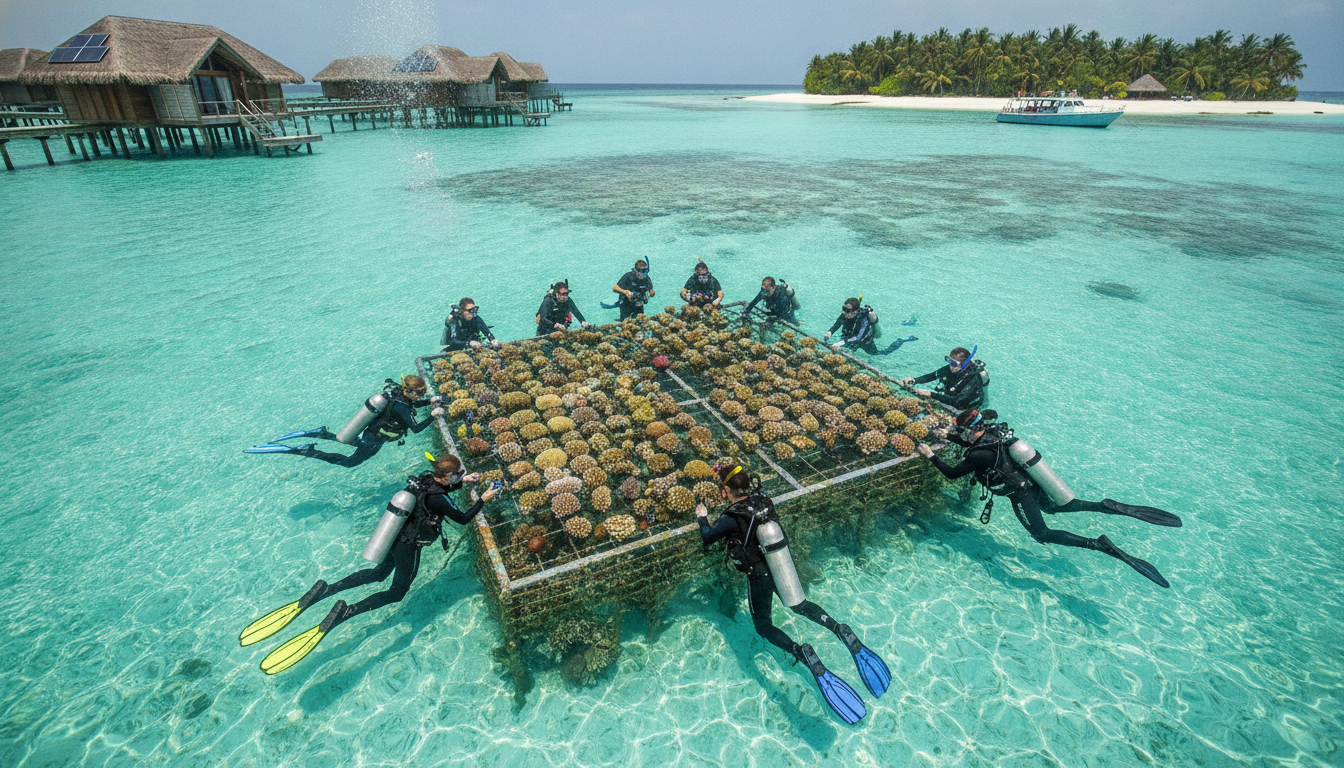
The Maldives is confronting accelerating coral loss as warming seas trigger repeated bleaching events, prompting luxury resorts to shift toward active reef restoration and new engineering measures. Maldives coral bleaching has become central to discussions among hoteliers, conservationists and local authorities who see reefs as both natural heritage and the economic backbone of island tourism. Resorts are increasingly funding coral nurseries, altering coastal designs and collaborating with scientists to protect shallow reefs that support snorkeling, diving and shoreline stability.
Rapid warming blamed for repeated bleaching
Ocean temperature records show higher-than-average sea surface temperatures in the Indian Ocean during recent summers, a trend scientists link to more frequent mass bleaching. Bleached corals lose the algae that provide food and color, and prolonged heat stress can lead to large-scale mortality. In the Maldives, reef systems that once brimmed with fish and corals are showing widespread paling and patchy die-offs, undermining marine biodiversity and scenic value.
Resorts invest in reef restoration projects
A growing number of resort operators now fund coral nurseries and outplanting efforts as part of their sustainability commitments. These programs grow heat-tolerant coral fragments in controlled nurseries, then transplant them to degraded reef areas to accelerate recovery. Management executives say restoration is not a silver bullet but a way to buy time for coral populations while addressing the underlying threat of warming seas.
Engineering solutions and climate-smart design
Beyond biological restoration, resorts are adopting engineering measures to reduce local thermal stress and physical damage to reefs. Some properties are experimenting with shaded lagoons, modified water circulation and low-impact mooring systems to prevent anchor damage. Architects and resort planners are also redesigning beachfronts to reduce erosion and sediment runoff, which can smother fragile corals and compound bleaching impacts.
Community livelihoods and fisheries under pressure
The health of coral reefs is tightly tied to local livelihoods, including artisanal fishing and guest experiences that sustain island economies. When reefs decline, fish abundance and diversity often fall, affecting food security for island communities and income for local fishermen. Resorts report efforts to integrate community training, alternative livelihood programs and revenue-sharing initiatives to help reduce pressure on reef resources.
Economic stakes for tourism and insurance
Tourism revenues in the Maldives are highly sensitive to reef condition because snorkeling and diving attract high-spending visitors. Industry analysts warn that prolonged reef degradation could shift travel patterns and raise long-term economic risks for island operators. Insurers are increasingly scrutinizing climate exposure for coastal assets, prompting some resorts to factor reef health into their risk assessments and contingency planning.
Scientific monitoring and international collaboration
Researchers emphasize the need for systematic monitoring to track reef recovery and the effectiveness of restoration methods. Collaborative projects now pair resort funding with academic expertise to deploy sensors, conduct regular reef surveys and map thermal stress events. Data-driven approaches are guiding which coral species to cultivate, where to outplant, and how to prioritize areas for protection.
Local authorities and environmental groups stress that adaptation at the resort level must be paired with stronger national and global climate action. Coral restoration and innovative engineering can improve local resilience but will not halt bleaching if global temperatures continue to rise. Policymakers in the Maldives are exploring regulatory frameworks to ensure restoration efforts meet scientific standards and deliver measurable conservation outcomes.
Tour operators and guest-facing staff are also changing messaging to educate visitors about reef fragility and responsible snorkeling practices. Many resorts now include briefings on no-touch policies, reef-safe sunscreen, and guided snorkeling to minimize human impacts. These measures aim to balance visitor access with stewardship, helping to preserve the marine experiences that underpin the Maldives’ premium tourism brand.
The shift in resort strategies reflects a broader recalibration of priorities: sustaining natural capital while maintaining luxury service standards. As Maldives coral bleaching episodes recur with increasing frequency, the interplay among science, industry and community responses will shape the archipelago’s environmental and economic future. Continued monitoring, investment in restoration, and coordinated climate mitigation remain essential to protect reefs and the livelihoods that depend on them.

