
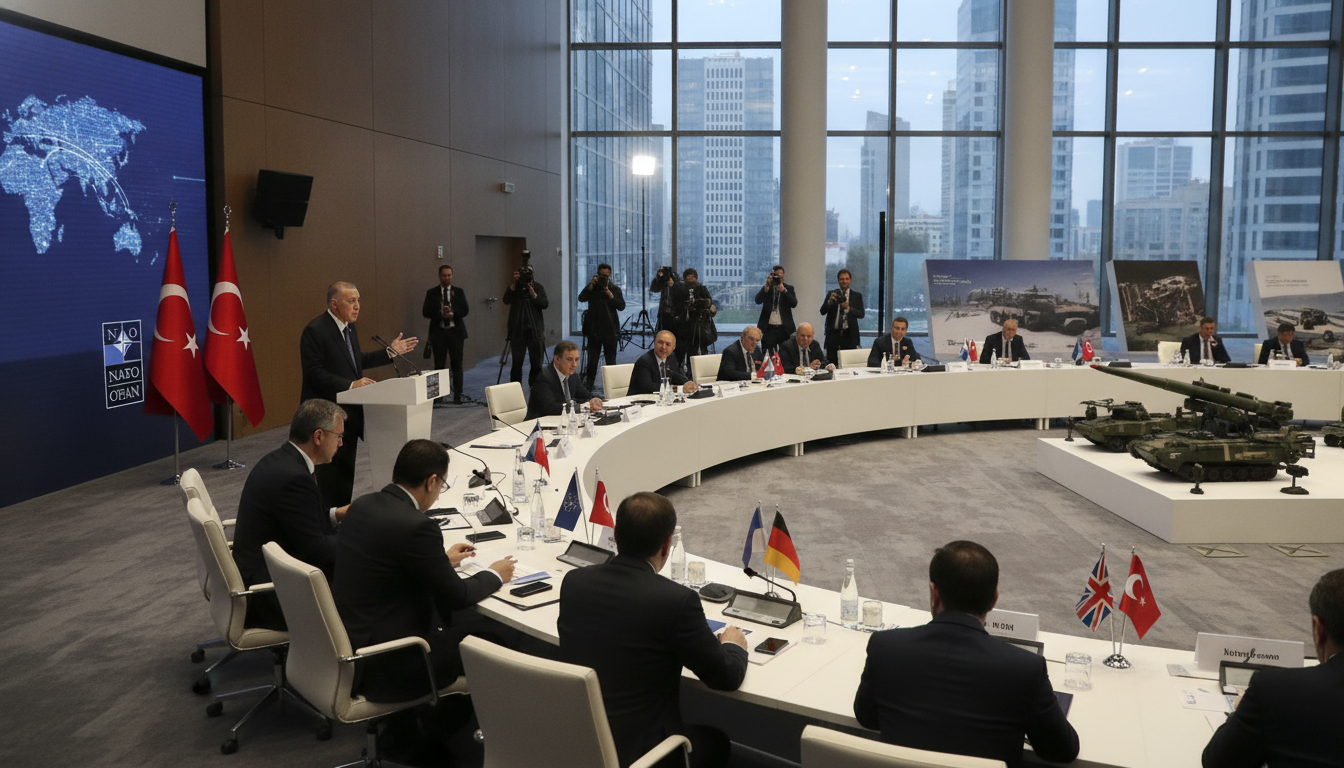
Turkey Emerges as a Major Turkish Arms Supplier as NATO Summit Shifts Spotlight to Ankara
Ankara’s rise as a Turkish arms supplier is on display at this year’s NATO Summit in Ankara, where defense exports and diplomatic outreach are taking center stage. The summit has cast Turkey’s defense industry into the global spotlight, highlighting new ship deliveries, growing export contracts, and expanding security ties with allies across Europe, Asia and North America.
Turkey’s hosting of the summit comes as Turkish defense manufacturers move from domestic suppliers to internationally sought-after vendors. That transition is influencing alliance procurement choices and reshaping Turkey’s role as both a security partner and an arms producer.
NATO Summit in Ankara Raises Profile of Turkish Defense Industry
The NATO meeting in Ankara has given Turkey a platform to showcase recent deliveries and capabilities, including offshore patrol vessels and unmanned systems that NATO partners are increasingly evaluating. Military diplomats and procurement officials are using the summit to discuss interoperability, maintenance, and potential co-production arrangements with Turkish firms.
Global attention on Ankara is also driven by high-level visits and ceremonies tied to defense cooperation, reinforcing the perception that Turkey now supplies hardware and services that meet alliance standards.
Rising Arms Exports to NATO and European Partners
In recent months Turkey has broadened sales to NATO members and European clients, offering naval vessels, drones and air defense systems at competitive prices. Several allied governments have cited cost, delivery speed, and willingness to transfer technology as reasons to consider Turkish platforms for their forces.
This trend has encouraged procurement offices to compare lifecycle costs and local-industrial benefits, with some countries exploring Turkish-built platforms as stopgap or complementary capabilities to existing Western arsenals.
Strengthening Ties with the United States and Western Suppliers
Despite occasional political tensions, Turkey is pursuing a pragmatic path toward closer defense ties with the United States and other Western suppliers, emphasizing interoperability and joint development where interests align. Meetings on the sidelines of the summit have focused on logistics, maintenance pipelines, and shared training to ensure Turkish systems can integrate into allied operations.
Officials say these dialogues aim to reduce friction in combined operations and open the door to industrial partnerships that blend Turkish manufacturing capacity with Western technology and standards.
Expanding Markets in Asia, Africa and the Indo-Pacific
Turkish manufacturers are actively courting buyers in Asia and Africa, marketing cost-effective naval vessels, border security platforms, and unmanned aerial vehicles to governments modernizing their forces. The commercial pitch stresses rapid production timelines, flexible financing, and local industrial participation that can bolster recipient countries’ own defense supply chains.
Analysts note that as Ankara deepens ties in the Indo-Pacific, its role as a supplier could influence regional security dynamics by offering an alternative to traditional Western and East Asian vendors.
Industrial Investment and Technology Transfer at Home
Turkey’s defense sector has benefitted from sustained domestic investment, government procurement programs, and an emphasis on higher-value manufacturing and avionics. The rise of joint ventures and public-private partnerships has accelerated technology transfer and allowed Turkish firms to scale production for export markets.
Education and vocational programs targeted at the defense supply chain have helped fill skilled labor needs, while investments in testing facilities and certification processes aim to meet the regulatory requirements of international buyers.
Diplomatic Leverage and Mediation Roles in Regional Conflicts
Beyond sales, Ankara is leveraging its manufacturing clout to strengthen its diplomatic position, offering to mediate disputes while supplying hardware to partners and clients. This dual role as mediator and supplier gives Turkey strategic influence in negotiations and peace processes across nearby regions.
The combination of defense exports and diplomatic engagement allows Ankara to build networks of dependence and cooperation that reach beyond pure commercial relationships.
The implications of Turkey’s evolution into a prominent Turkish arms supplier extend to alliance procurement strategies, regional balance-of-power calculations, and the global defense market. As NATO meets in Ankara, allies and competitors alike are reassessing how Turkish platforms fit into broader security architectures and what deeper industrial ties with Ankara might mean for defense planning in Europe and Asia.

