
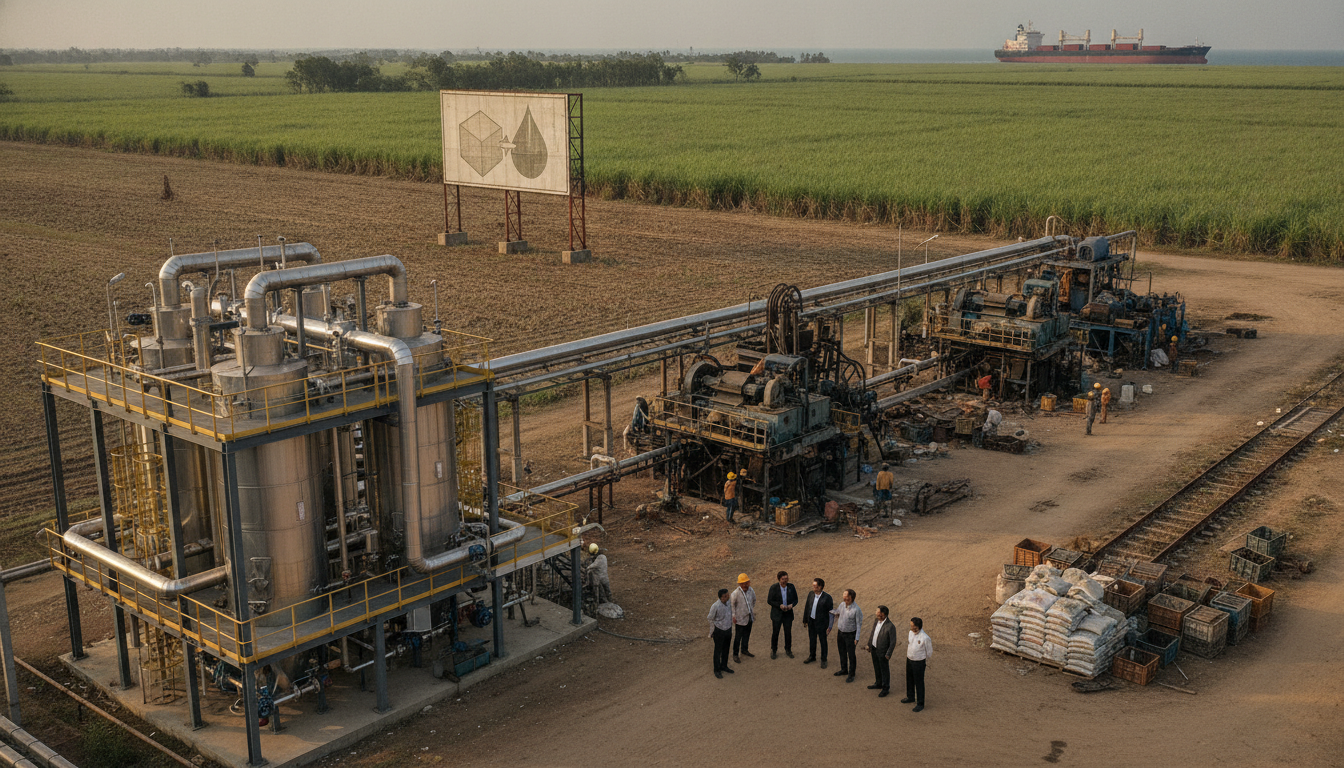
India sugar industry pivots to ethanol amid climate stress and export squeeze
India sugar industry pivots to ethanol as biofuel policy and climate-driven shortfalls shrink exportable sugar, forcing mills to invest in ethanol capacity.
India’s sugar industry is undergoing a rapid transformation as government-driven ethanol mandates and worsening climate conditions cut the country’s available exportable sugar, industry sources say. Mills across key producing states are redirecting cane into ethanol distilleries, a shift that analysts and executives expect will leave little or no surplus sugar for international markets for multiple upcoming seasons. The change is reshaping domestic processing, trade flows and price dynamics in what was until recently the world’s second-largest sugar exporter.
Ethanol Drive Cuts Sugar Output
India’s push to blend higher shares of ethanol into gasoline has accelerated the diversion of sugarcane to fuel rather than sugar production. Officials have increased blending targets and offered incentives that make ethanol a more attractive revenue stream for mills, particularly when sugar prices are volatile. As a result, many factories are running distilleries at higher utilization rates and scheduling crushes to meet ethanol procurement, reducing the amount of cane processed into crystalline sugar.
Industry executives say the commercial logic is clear: ethanol yields from molasses and direct cane sugar can be more profitable and provide steady government contracts. This economic incentive has shifted investment decisions toward fuel-grade alcohol production, a trend that is now reducing the traditional sugar output baseline across major producing regions.
Mills Shift Investment Toward Ethanol
Investment patterns at cooperative and private mills reflect the pivot: new distillation units, retrofitted fermentation plants and expanded storage for ethanol are being prioritized. Smaller mills, historically reliant on sugar sales, are entering joint ventures or contracting with distillery specialists to hedge against low sugar margins. Larger corporate groups are accelerating capital expenditure on integrated sugar-ethanol complexes that can switch production according to market signals.
Technological upgrades focused on co-generation and ethanol-making efficiency are also being fast-tracked, enabling plants to convert more cane into biofuel while capturing electricity revenue from bagasse. That dual-income model is reducing the incentive to maintain high sugar production volumes, making lower exportable surpluses a structural feature rather than a temporary aberration.
No Exportable Surplus Expected for Several Seasons
Multiple industry sources say India is preparing for little or no exportable sugar surplus over the next few production seasons, a reversal from earlier years when India supplied substantial volumes to global markets. Exporters and traders are already recalibrating contracts and seeking alternative origins to meet buying commitments. Global buyers that previously relied on Indian shipments will face tighter supplies and higher competition in the coming months.
The expectation of constrained exports has immediate implications for world sugar inventories and pricing, particularly for markets in Asia, Africa and the Middle East that have been major recipients of Indian sugar. Trade analysts warn that reduced Indian availability could amplify price volatility if weather or crop developments elsewhere fall short of expectations.
Heat, Drought and Water Limits Reduce Yields
Compounding the ethanol-driven diversion is a pattern of adverse weather that has reduced cane yields in several key states. Heatwaves, uneven monsoon rains and localized droughts have stressed crops and limited irrigation access, eroding the per-acre sugar output that mills rely upon. Farmers and cooperative managers report lower sucrose recovery rates and shortened harvesting windows, both of which compress the volume of cane available for sugar manufacture.
Water scarcity in traditionally irrigated districts has forced growers to make crop choices based on water intensity, with some shifting away from sugarcane toward less thirsty alternatives. These agronomic pressures are reinforcing the industry’s move into ethanol, since fuel production can be achieved from lower-sucrose cane and from molasses, offering a degree of resilience against fluctuating field performance.
International Buyers and Policy Fallout
The contraction of India’s exportable sugar supply is prompting importers to revisit sourcing strategies and forward-covering practices. Countries that previously depended on steady Indian volumes are exploring producers in Brazil, Thailand and elsewhere, while regional price spreads are beginning to reflect increased competition. Commodity desks and food manufacturers are also monitoring India’s domestic policy signals, as export restrictions or changes to procurement rates could further disturb trade flows.
On the policy front, New Delhi’s emphasis on energy security and cleaner transport fuels has made ethanol expansion a sustained priority, even as it interacts with food and agricultural policy objectives. This intersection of energy and farm policy will likely remain a key determinant of how much sugar the country produces for domestic use versus fuel blending, and whether exportable surpluses re-emerge in future seasons.
India’s structural shift from sugar to biofuel production comes at a delicate moment for global sugar markets, which are already sensitive to weather, logistics and geopolitical developments. The industry’s reorientation is creating winners and losers: mills with flexible processing capacity and integrated operations stand to benefit, while exporters, some farmers and dependent buyers face adjustment costs.
Market participants will be watching upcoming crush reports, government blending announcements and monsoon developments closely, as these factors will signal whether the current squeeze is temporary or a longer-term redefinition of India’s role in the global sugar trade.

