
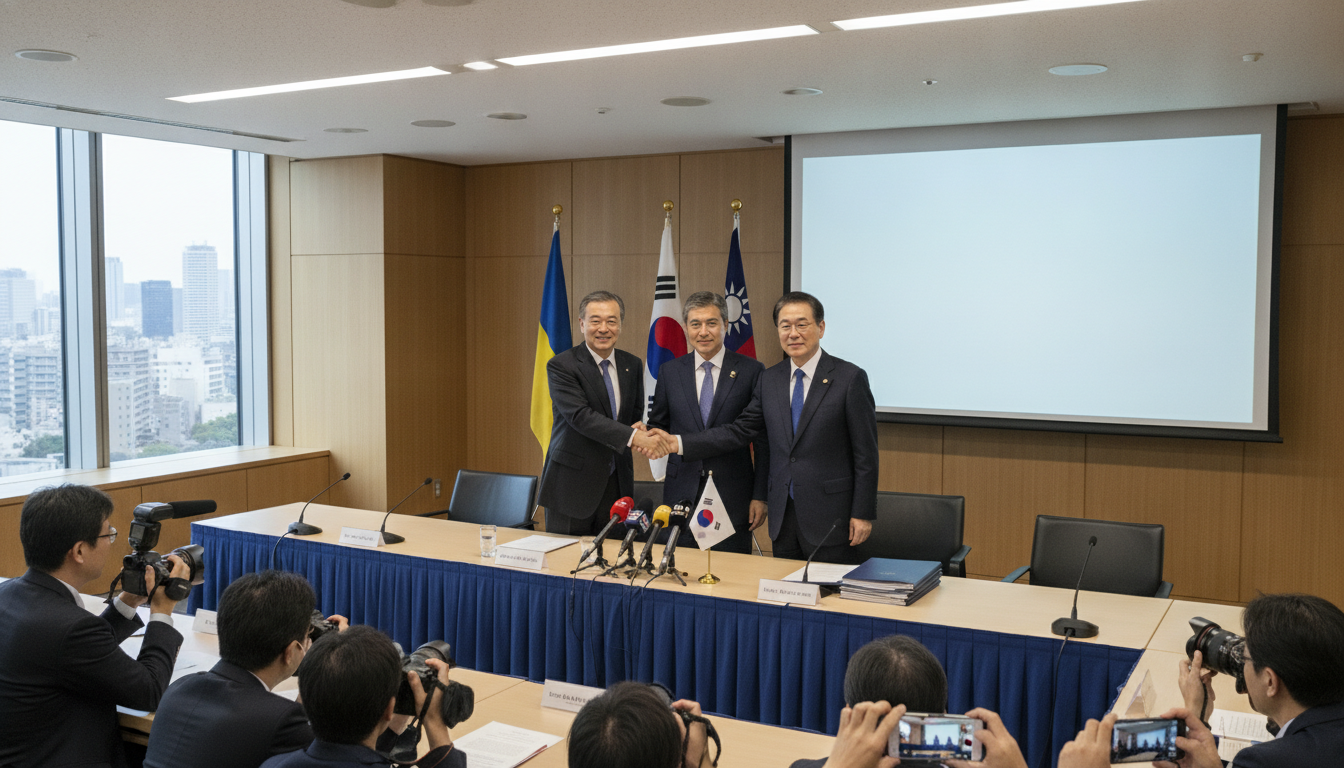
Ukrainian Chamber in Japan Pushes Civil Drones Collaboration with Japanese and Regional Firms
Tokyo-based initiative seeks joint development and exports of civil drones, aiming to pair Ukrainian technology with Japanese industry and partners across Asia.
The Ukrainian Chamber of Commerce in Japan announced on Monday a new initiative to promote collaboration on civil drones and related technologies with companies in Japan and regional partners. The effort, aimed at linking Ukrainian manufacturers with firms in Taiwan, South Korea and several Southeast Asian states, is positioned as a push for civilian applications, commercial ties and technology transfers. Organizers say the programme will focus on reconnaissance, mapping, agriculture and disaster-response drones while navigating export controls and security concerns.
Ukrainian Chamber announces outreach to Japanese industry
The chamber outlined plans to host business-to-business meetings, technical demonstrations and joint research programmes with Japanese corporations and startups. Officials described the push as part of a broader campaign to diversify Ukraine’s industrial partnerships and open markets for its domestic drone sector. The announcement emphasized civil drones as the primary focus, framing cooperation around humanitarian and commercial use cases rather than military deployment.
Japanese companies weigh technical and market opportunities
Several Japanese firms in robotics, aviation components and software have expressed guarded interest in exploring the initiative, industry sources said. Companies see potential to combine Ukraine’s experience in long-endurance unmanned aircraft with Japan’s strengths in electronics, sensors and quality manufacturing. Negotiations are expected to center on certification, interoperability with existing systems and the commercial viability of joint products for the Asia-Pacific market.
Technology priorities: mapping, agriculture and disaster response
Organizers identified mapping, precision agriculture and post-disaster assessment as priority application areas for civil drones in regional cooperation. Ukrainian platforms known for endurance and low-cost reconnaissance could be adapted with Japanese payloads such as high-resolution cameras, LiDAR and advanced data analytics. Proponents argue that these combined capabilities would address pressing needs across Southeast Asia and Japan, from crop monitoring to rapid damage surveys after earthquakes and typhoons.
Regulatory and security frameworks under discussion
Both Ukrainian and Japanese stakeholders acknowledge legal and security hurdles, including export controls, airspace regulations and dual-use concerns. Officials said transparency measures and strict licensing would be central to any collaboration to ensure that civil drone transfers comply with national and international rules. Japanese regulators will also assess how to align safety certification and privacy protections with partner countries’ regimes before large-scale trade or joint production proceeds.
Regional partnerships to extend beyond Japan
The initiative targets cooperation with Taiwan, South Korea and selected Southeast Asian states to build a regional supply and support chain for civil drones. Taiwan and South Korea are expected to be attractive partners for electronics, manufacturing and advanced software, while Southeast Asian nations offer immediate operational markets for agricultural and disaster-response applications. The chamber indicated plans to stage demonstrations and pilot projects in partner countries to validate concepts and show commercial potential.
Economic implications for Japanese supply chains
Experts say that carefully structured partnerships could create new export opportunities for Japanese component makers and systems integrators. Joint ventures or licensing arrangements could enable Japanese firms to supply high-value avionics, guidance systems and industrial sensors while sharing costs of research and certification. At the same time, companies will weigh competitive risks, intellectual property arrangements and the long-term balance of manufacturing roles between partners.
The initiative also carries diplomatic overtones, aligning economic ties with broader political support for Ukraine from countries in the region.
If implemented, the programme would test Japan’s ability to balance trade, technology cooperation and security considerations while supporting a wartime economy seeking peacetime markets. Ukrainian officials have framed the effort as a way to stabilize employment in the country’s aerospace sector and to showcase civilian spin-offs of wartime innovation.
Industry analysts say early pilots and memoranda of understanding will be crucial to establish trust and technical compatibility. They expect initial agreements to emphasize non-sensitive components and services, with more advanced collaboration contingent on regulatory clearances.
Observers note that civil drone markets in Asia are growing rapidly, driven by smart agriculture, infrastructure inspection and emergency response needs. Successful partnerships could accelerate product development timelines and give participating firms a foothold in regional procurement.
The coming months will likely see technical exchanges, workshops and feasibility studies as the chamber seeks to convert interest into formal partnerships and concrete contracts.

