
Pacific Nations Condemn China Missile Test in the South Pacific
Pacific leaders denounce China missile test in the South Pacific nuclear-free zone on June 6, 2026, prompting calls for stronger regional security and diplomacy.
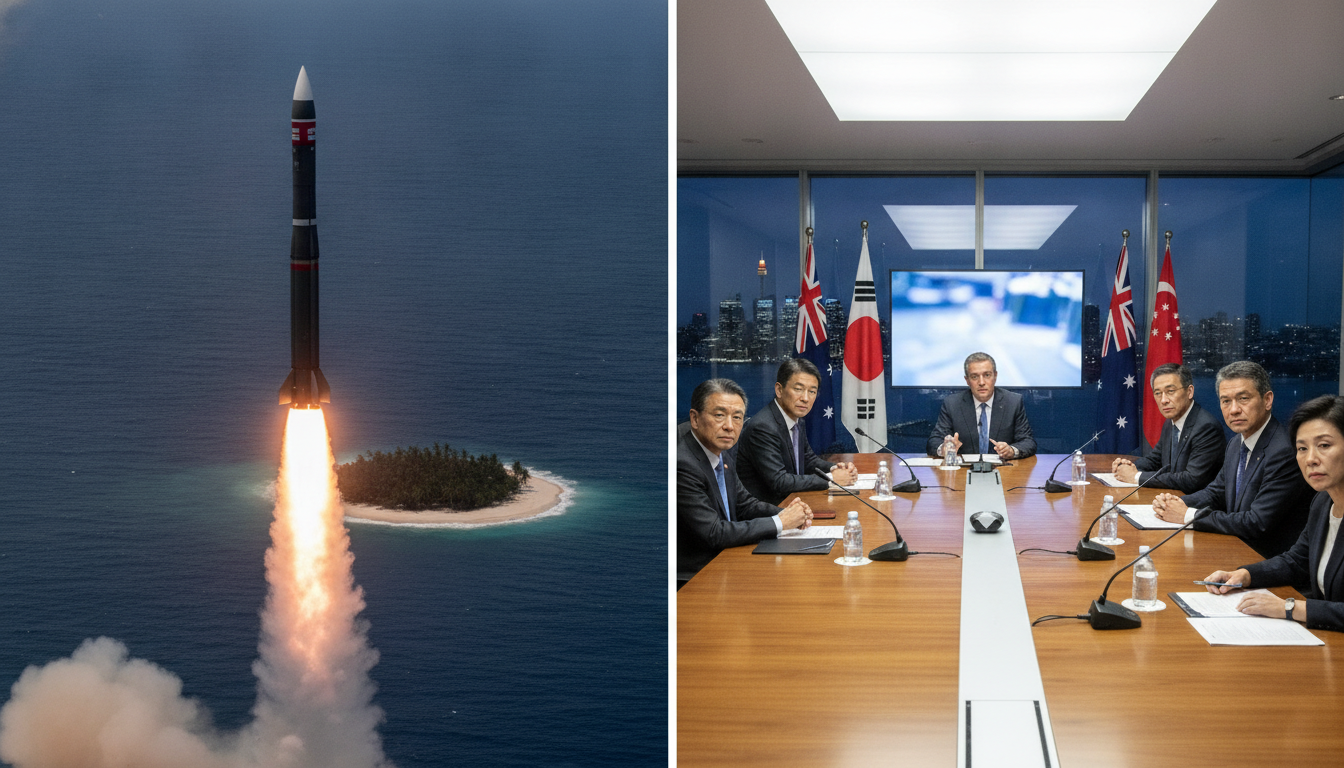
The governments of Pacific island states and regional organizations condemned a China missile test in the South Pacific after a Chinese naval submarine launched a missile with a dummy warhead toward the region on June 6, 2026.
Officials said the flight crossed into the South Pacific nuclear-weapon-free zone established under the Treaty of Rarotonga, raising alarm among island capitals that prize the pact as a cornerstone of regional security.
The incident has spurred immediate demands for investigations and fresh talks on how to bolster defense partnerships and diplomatic measures to prevent future breaches.
Pacific leaders condemn missile launch
Pacific governments issued unified statements of concern, with leaders emphasizing the importance of the nuclear-weapon-free zone and the norms that sustain it.
The reaction came from a wide range of capitals that rely on the treaty to guarantee a regional environment free from nuclear threats, and officials said the launch undermined trust and heightened anxiety among small island states.
Several governments urged calm while pressing for clear explanations from Beijing and for international mechanisms to clarify whether the incident violated existing agreements.
Alleged breach of South Pacific nuclear-weapon-free zone norms
Regional authorities framed the launch as a potential breach of accepted norms protecting the South Pacific from nuclear-capable deliveries and related activities.
The Treaty of Rarotonga, in force since 1986, bans the stationing or testing of nuclear weapons within the zone and is central to the security architecture of many island nations.
Leaders warned that even the testing of a missile capable of carrying a nuclear warhead, regardless of the payload used during the flight, challenges the treaty’s spirit and risks eroding the legal and political safeguards that island states have long defended.
Details of the PLA exercise and missile trajectory
Available imagery and official accounts indicate the missile was launched from a Chinese naval platform near Hainan Island and flew toward the South Pacific before splashing down in prearranged waters.
Chinese state media and military social platforms described the activity as part of scheduled exercises meant to test capabilities and simulate realistic conditions, while other governments noted the timing and trajectory carried political as well as military significance.
Analysts say such displays are designed to demonstrate reach and deterrent capacity, but they also increase the chance of miscalculation when conducted near sensitive zones upheld by international treaties.
Pressure to strengthen security partnerships
In the wake of the launch, several Pacific governments signaled they would intensify consultations with security partners and explore measures to protect maritime and territorial integrity.
Calls grew for deeper cooperation with Australia, New Zealand, the United States and other like minded states on surveillance, maritime domain awareness and emergency response.
Officials stopped short of announcing new pacts, but spokespeople said the episode would likely figure in upcoming bilateral and multilateral discussions aimed at closing capability gaps and deterring future provocations.
Diplomatic options and calls for a formal inquiry
Diplomats in the region urged a measured response that balances investigation with de escalation, proposing formal requests for information and transparency from Beijing.
Some Pacific ministers said they would ask for clarification through established diplomatic channels and consider referral to broader international fora if answers proved unsatisfactory.
Legal advisers to island governments are said to be reviewing whether the missile flight met the treaty threshold for a formal violation, a determination that could shape subsequent diplomatic and legal steps.
Implications for regional stability and treaty credibility
The incident exposed strains in regional security at a moment of intensifying great power competition in the Indo Pacific, and observers warned it could prompt an acceleration of defense planning across the Pacific.
If unresolved, breaches perceived as tolerable may weaken the normative force of the nuclear-weapon-free zone and pressure smaller states to reassess their security arrangements.
Island leaders reiterated their commitment to the treaty while seeking practical measures that would reinforce both legal protections and on the ground capabilities to monitor and respond to incidents.
Regional capitals said they will proceed cautiously but with renewed urgency, balancing the need to defend treaty principles with the priority of avoiding escalation.
Many officials signaled readiness to use diplomacy first while preparing contingency options, and they emphasized that any long term solution will require sustained engagement among Pacific states and their external partners.

