
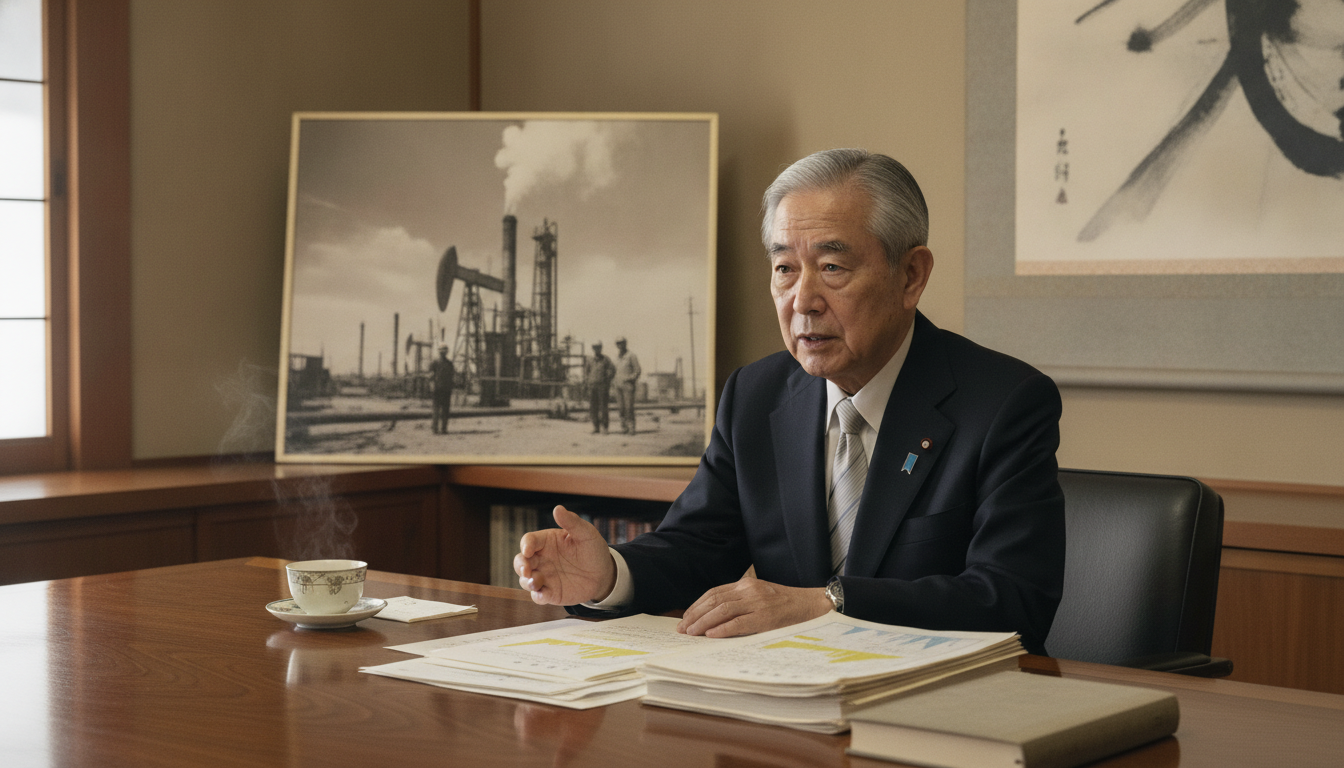
Yasuo Fukuda Oil Shock Memories: Former Prime Minister Reflects on 1973 Crisis
Yasuo Fukuda recalls the 1973 oil shock in detail, drawing on his early work in Japan’s nascent oil industry to outline lessons for the nation’s energy security and policy today.
TOKYO — Former prime minister Yasuo Fukuda, who led Japan from 2007 to 2008, has recounted his experiences during the 1973 oil shock while working at an oil company, offering a rare industry perspective on a defining moment for modern energy policy. Fukuda’s reflections, referencing his time in the sector decades before entering politics, link past disruptions to contemporary debates over supply resilience. His comments revive discussion on how historical shocks continue to shape Japan’s strategic planning and diplomatic posture.
Fukuda’s first-hand account of the 1973 oil shock
Fukuda described entering the oil sector in the early 1970s as Japan was still building its postwar industrial base and energy networks. He said the 1973 embargo and resulting price surge exposed vulnerabilities in supply chains and national preparedness that were not fully appreciated at the time. That period, he recalled, prompted urgent operational changes at oil companies and accelerated government policies on strategic reserves and diversification.
The former prime minister emphasized that the shock created a new sense of urgency across industry and government. Companies had to rethink procurement, storage and logistical arrangements, while policymakers moved to develop emergency stockpiles and international partnerships. Those measures, he noted, laid groundwork for later energy policy decisions.
Early career at an oil company and transition to public life
Before entering politics, Fukuda’s early career provided him with direct exposure to the commercial pressures of energy markets. He said working inside an oil company during the crisis taught him practical lessons about risk management and the limits of market solutions in times of acute shortage. This background, Fukuda observed, later informed his pragmatic approach to governance and crisis response as prime minister.
Fukuda’s trajectory from industry to politics culminated in his term as prime minister in 2007–2008 and his retirement from politics in 2012. He has since spoken intermittently about the intersection of economic policy and national security, arguing that energy considerations must remain central to strategic planning.
How the 1973 shock influenced Japan’s energy architecture
The 1973 disruption prompted a fundamental policy shift in Tokyo, including the establishment of statutory oil reserves and stronger ties with supplier nations. Fukuda credited those moves with helping Japan weather subsequent supply interruptions and price volatility. He also pointed to accelerated investment in energy efficiency and alternative fuels that arose from the crisis-era policy debate.
Industry sources say the shock changed corporate behavior as well, pushing firms to build longer-term contracts, diversify suppliers and improve logistical resilience. Fukuda’s remarks reinforce the view that systemic change often follows acute shocks, not incremental forecasting, and that institutional memory is a critical asset in managing future risks.
Implications for Japan’s contemporary energy strategy
Fukuda linked his 1973 experience to present-day challenges, urging policymakers to maintain robust stockpiles, diversify energy sources and strengthen regional cooperation. He highlighted the importance of combining domestic measures—such as renewables deployment and storage capacity—with diplomatic efforts to secure stable import routes. The former prime minister warned that complacency could leave Japan exposed to similar shocks amid geopolitical uncertainty and rapid price swings.
Experts say Japan’s energy landscape has evolved considerably since the 1970s, with greater penetration of renewables and a changing role for nuclear power after the 2011 Fukushima crisis. Still, they agree with Fukuda that a multifaceted approach—spanning infrastructure, markets and foreign policy—is necessary to manage contemporary vulnerabilities.
Reflections on leadership, crisis memory and policy continuity
Fukuda framed the 1973 oil shock as a formative episode that shaped his views on leadership and governance. He argued that crises test institutional capacity and political will, and that leaders must be willing to adopt both short-term fixes and long-term reforms. His reflections stressed the value of lessons learned in one sector being applied across government planning and national security frameworks.
He also urged successive administrations to preserve hard-won institutional knowledge and to periodically reassess preparedness measures. According to Fukuda, continuity in policy design and investment is essential to translating past experience into durable resilience.
In recent interviews and public remarks, Fukuda has maintained that historical perspective should inform contemporary policy choices rather than be relegated to archives. His accounts of the 1973 oil shock serve as a reminder that industrial experience can enrich public debate and policy formulation.
Japan’s energy discourse continues to balance economic competitiveness, environmental goals and supply security. Fukuda’s memories from the oil industry provide a direct link between a seminal crisis and ongoing efforts to safeguard the nation’s energy future.

