
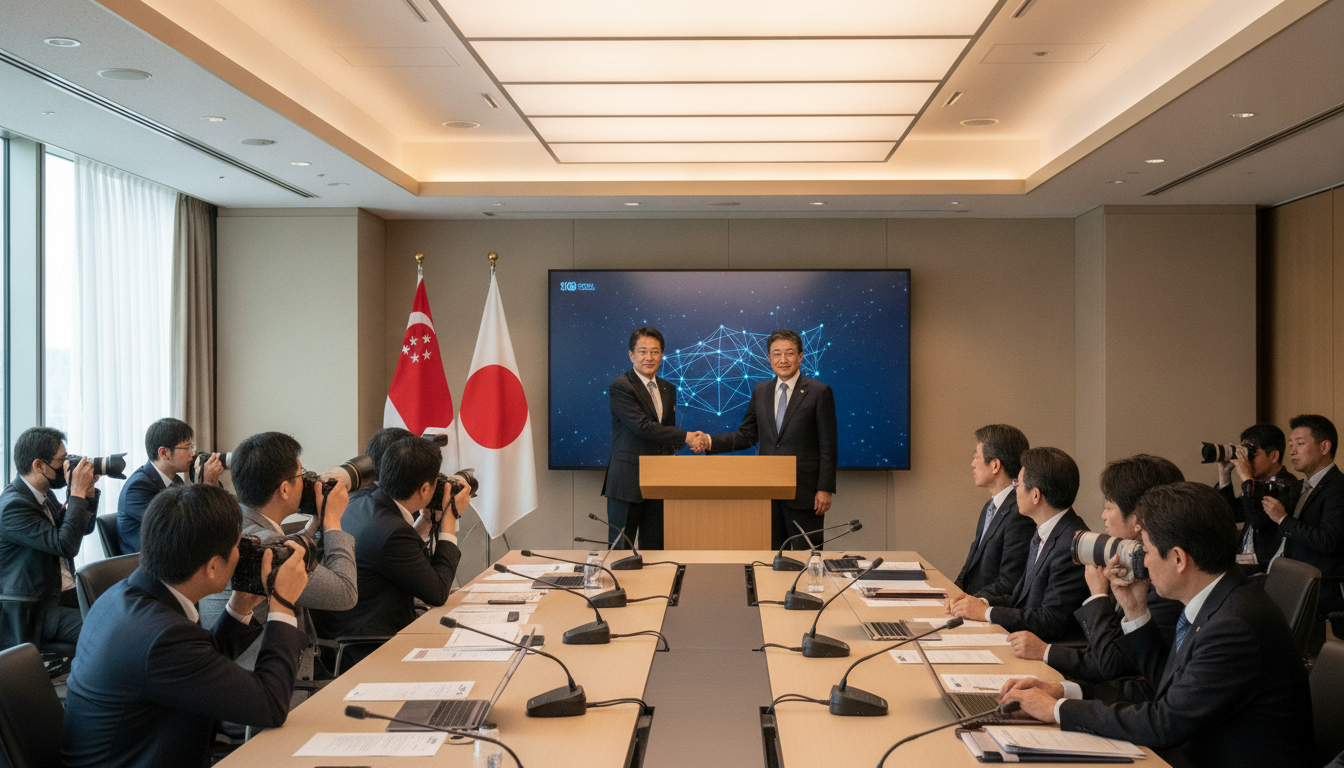
SBI and Daiwa to Launch Blockchain Settlement System for Security Tokens, Targeting Singapore Clients
Japan’s SBI and Daiwa to offer security tokens for foreign investors via a jointly built settlement platform, initially targeting clients in Singapore for access to Japanese firms and real estate.
SBI Securities and Daiwa Securities are developing a shared blockchain-based settlement system designed to let foreign investors buy stakes in Japanese companies and real estate through security tokens. The initiative, which industry sources say is being coordinated between the two brokers, will initially focus on tapping clients based in Singapore as the first market for the new platform. Company officials have signaled the arrangement could later expand to broader investor groups and additional digital asset offerings.
Partnership and platform structure
SBI and Daiwa are building the settlement infrastructure together, combining their brokerage and custody capabilities to support token issuance and secondary trading. The joint system will handle token minting, transfers, and settlement on a distributed ledger while linking to traditional custody and compliance systems. By pooling resources, the firms aim to reduce development costs and accelerate time to market compared with pursuing separate platforms.
The platform is expected to support tokenized equity and asset-backed securities tied to Japanese corporate shares and real estate projects. Initial rollouts will prioritize functions that meet investor demand and regulatory expectations, such as identity verification, anti-money‑laundering screening, and settlement finality.
Singapore as the initial market choice
Industry sources indicate the platform will initially target clients in Singapore, a hub for cross-border wealth management and a jurisdiction with a growing regulatory framework for digital securities. Focusing on a single foreign market first allows the partners to pilot operations under a clear supervisory environment and refine onboarding, custody and trading processes. Singapore’s established private banking and family office networks are seen as a strategic entry point to reach high-net-worth and institutional investors interested in Japan.
The partners view Singapore’s custody and licensing landscape as conducive to experimenting with security tokens while maintaining channels to repatriate capital into Japanese assets. If the pilot proves successful, the platform could expand to other markets in Asia and beyond.
How the security tokens will function
Security tokens will represent ownership interests in underlying assets such as corporate equity or specific real estate properties, recorded on a blockchain to enable more efficient settlement and fractional ownership. Investors will buy and hold tokens through digital wallets linked to the platform’s custody layer, while the system records transactions and enforces transfer restrictions embedded in token code. The arrangement is intended to shorten settlement cycles and widen access to illiquid markets by allowing smaller ticket sizes.
Issuers will be responsible for the legal and regulatory structuring of token offers, while the platform will provide distribution, custody and secondary trading services. Market participants say smart-contract automation could streamline dividend payments, investor communications and corporate actions tied to tokenized assets.
Regulatory and compliance considerations
Regulators in Japan and Singapore require careful mapping of tokenized securities to existing securities laws, and both issuers and intermediaries must ensure investor protections and disclosure standards are met. The joint platform will need to navigate licensing requirements, cross-border transfer rules and tax treatment for tokenized holdings. Compliance with anti-money‑laundering and know‑your‑customer rules will be central to the platform’s operational design.
SBI and Daiwa will likely engage with regulators and custodians to clarify obligations around settlement finality and investor recourse. Market observers note that clear regulatory guidance in both home and target markets will be critical to building investor confidence.
Potential impact on Japanese real estate and corporate finance
Tokenization could unlock new pools of foreign capital for Japanese real estate and mid-sized corporations by lowering minimum investment thresholds and enabling fractional ownership. For real estate developers and property owners, security tokens may open alternative financing channels and increase liquidity for assets that traditionally have been illiquid. Corporates could use tokenized equity to reach a broader investor base while streamlining shareholder management.
However, experts caution that meaningful market depth will depend on investor demand, secondary trading activity and robust governance structures for tokenized issuances. The success of the platform will hinge on its ability to attract reputable issuers and maintain transparent pricing and custody arrangements.
Market response and strategic positioning
Financial industry players are watching the collaboration as a strategic move by two established Japanese brokers to position themselves in the nascent digital securities market. By combining SBI’s early digital-asset initiatives with Daiwa’s corporate and institutional distribution network, the partnership aims to offer an integrated service that spans issuance, distribution and custody.
Competitors and custodians will be monitoring the pilot for signs of regulatory acceptance and operational reliability. If the Singapore rollout gains traction, it may spur further tokenization efforts in the region and prompt other domestic players to form alliances or accelerate their own digital-asset strategies.
The success of the joint platform will depend on managing regulatory requirements, establishing secure custody arrangements, and proving that security tokens can deliver tangible benefits to both issuers and investors while preserving investor protections.

