
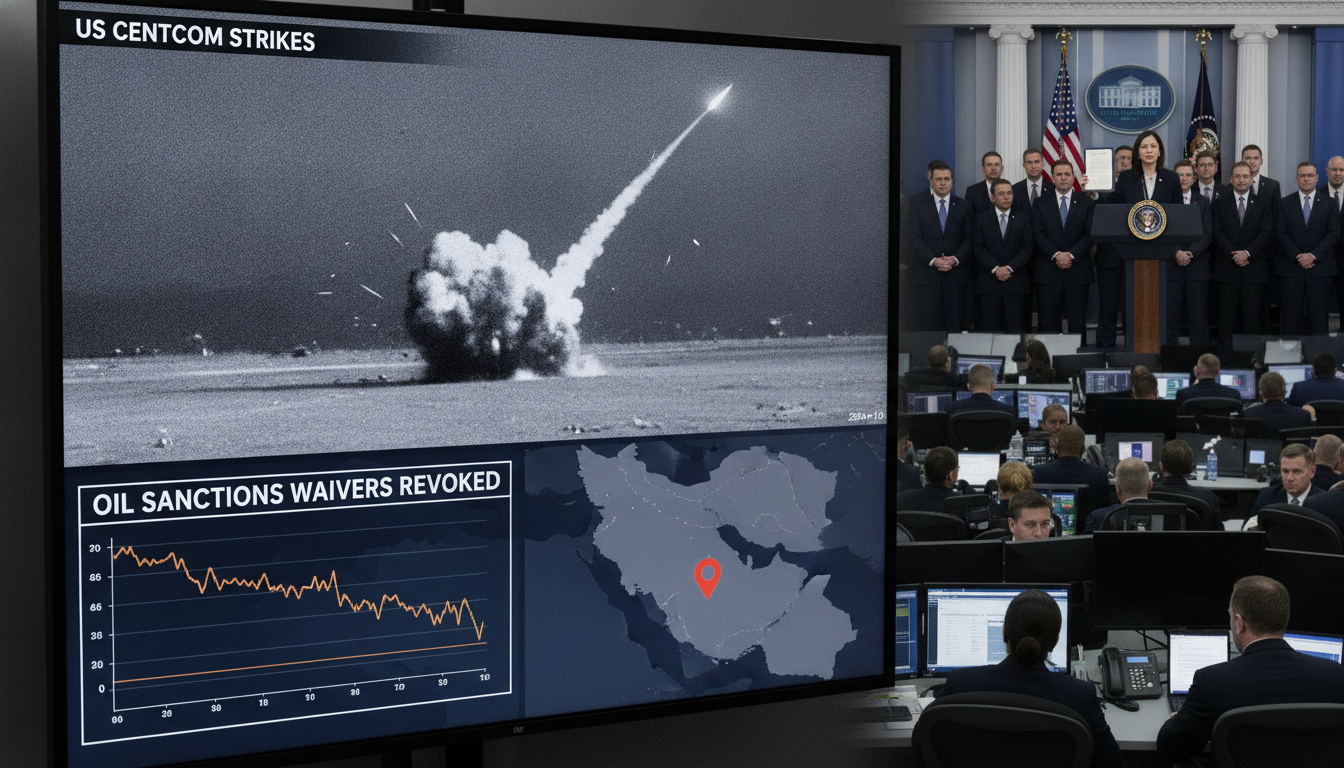
US launches strikes on Iran after attacks on three commercial vessels in Strait of Hormuz
U.S. Central Command announced a series of strikes on Iran after Tehran reportedly attacked three commercial vessels transiting the Strait of Hormuz, escalating tensions and prompting Washington to revoke recent oil sanctions relief. (apnews.com)
CENTCOM Announces ‘Powerful Strikes’
U.S. Central Command said its forces had “begun launching a series of powerful strikes” intended to punish Iran for targeting commercial shipping in an international waterway. The military framed the action as a measure to “impose heavy costs” on what it described as unlawful and dangerous attacks on civilian-crewed vessels. (apnews.com)
U.S. officials and news reports said the strikes targeted Iranian air-defence systems, coastal surveillance installations and sites used to launch missiles and unmanned aerial vehicles. The actions were described as calibrated to degrade Tehran’s ability to threaten merchant shipping while avoiding a broader escalation, according to officials briefed on the operation. (axios.com)
Details of the Vessel Attacks in the Strait
U.S. authorities said three commercial ships were struck in separate incidents while transiting the Strait of Hormuz, a choke point for global energy shipments. Shipping advisories and maritime tracking showed at least one tanker caught fire off the coast of Oman after being hit by an unidentified projectile or unmanned aerial vehicle. (gcaptain.com)
Maritime security organisations reported multiple suspicious strikes and drone activity around the strait in the days leading up to the U.S. response. The incidents revived fears that commercial traffic through the narrow channel could be disrupted again after weeks of tenuous calm and interim arrangements intended to safeguard passage. (gcaptain.com)
Treasury Revokes Sanctions Relief for Iranian Oil
In parallel with the military action, the U.S. Treasury moved to revoke a recent general license that had temporarily authorised certain Iranian oil production and sales under an interim memorandum. The Office of Foreign Assets Control replaced the earlier licence with a narrower authorisation and set a wind‑down period for already authorised transactions. (ca.investing.com)
U.S. officials said the revocation was a direct response to the renewed attacks on merchant shipping and reflected the administration’s view that Tehran had violated the performance conditions of the memorandum. The rollback removes what had been described as the largest immediate economic gain for Iran under the deal and is expected to heighten diplomatic frictions. (axios.com)
Maritime Centres Raise Threat Level to Severe
Regional maritime safety bodies reacted swiftly, with the Joint Maritime Information Center and other agencies raising the threat level for the Strait of Hormuz to “severe.” The advisory warned that deliberate hostile action against commercial shipping was increasingly likely and urged vessel operators to exercise extreme caution. (seatrade-maritime.com)
The elevated advisory follows a cluster of incidents that have complicated efforts by states and commercial operators to restore normal navigation patterns in the corridor. Shipping firms and insurers are likely to reassess routing and cover as the immediate risk environment deteriorates. (gcaptain.com)
Impact on Ceasefire Talks and Regional Diplomacy
The strikes and the sanctions rollback pose a fresh test to diplomatic efforts aimed at converting a provisional memorandum into a permanent cessation of hostilities. Negotiations that had sought to reopen the strait and stabilise the wider conflict now face the prospect of collapse if reciprocal attacks continue. (apnews.com)
Regional capitals and allies are likely to intensify diplomatic engagement, but the speed and scale of the latest military measures reduce the room for cautious confidence-building. Observers warned that both sides risk a cycle of retaliation that could widen the conflict beyond its current bounds. (investing.com)
Market and Commercial Ramifications
Global energy markets reacted to the developments, with oil prices moving higher on news of renewed strikes and the revocation of licences permitting Iranian exports. Market participants cited shipping disruption risks and the removal of temporary export authorisations as factors that could tighten supplies. (au.investing.com)
Commercial operators face immediate operational decisions on routing, crewing and insurance that could raise costs and delay deliveries. Analysts said that, even if disruptions prove short‑lived, the economic ripple effects will be felt across supply chains reliant on energy and maritime transit through the region. (gcaptain.com)
The exchange of strikes and the withdrawal of oil sanctions relief on July 7, 2026, mark a critical juncture in a conflict that has repeatedly imperilled commercial navigation in one of the world’s busiest maritime corridors. The coming days will determine whether the moves force Iran and the United States back to the negotiating table under new terms or set the stage for a broader, more sustained confrontation.

