
Tokyo to Kyoto: Best Ways to Travel, Times, Prices and Practical Tips
Plan the fastest, cheapest, and most comfortable routes for Tokyo to Kyoto travel, with updated times, fares and booking tips for Japanese and international visitors.
Quick summary: why travel options matter for Tokyo to Kyoto
Kyoto remains one of the most visited destinations from Tokyo, and choosing the right mode of transport shapes your time in the city. The Tokyo to Kyoto journey can be completed in as little as about 2 hours 15 minutes on the fastest bullet-train services, or stretched into an overnight bus trip for budget travellers. Cost, comfort, travel time and luggage needs should all influence your choice.
Train travel is the most popular balance of speed and convenience for Tokyo to Kyoto travel, but low-cost flights, highway buses, regular JR trains and driving each have distinct trade-offs. Seasonal demand, seat reservations and transfer times to airports or stations can significantly affect the overall experience. Read on for specifics on timings, fares, and practical tips to plan your trip.
Shinkansen remains the fastest and most convenient option
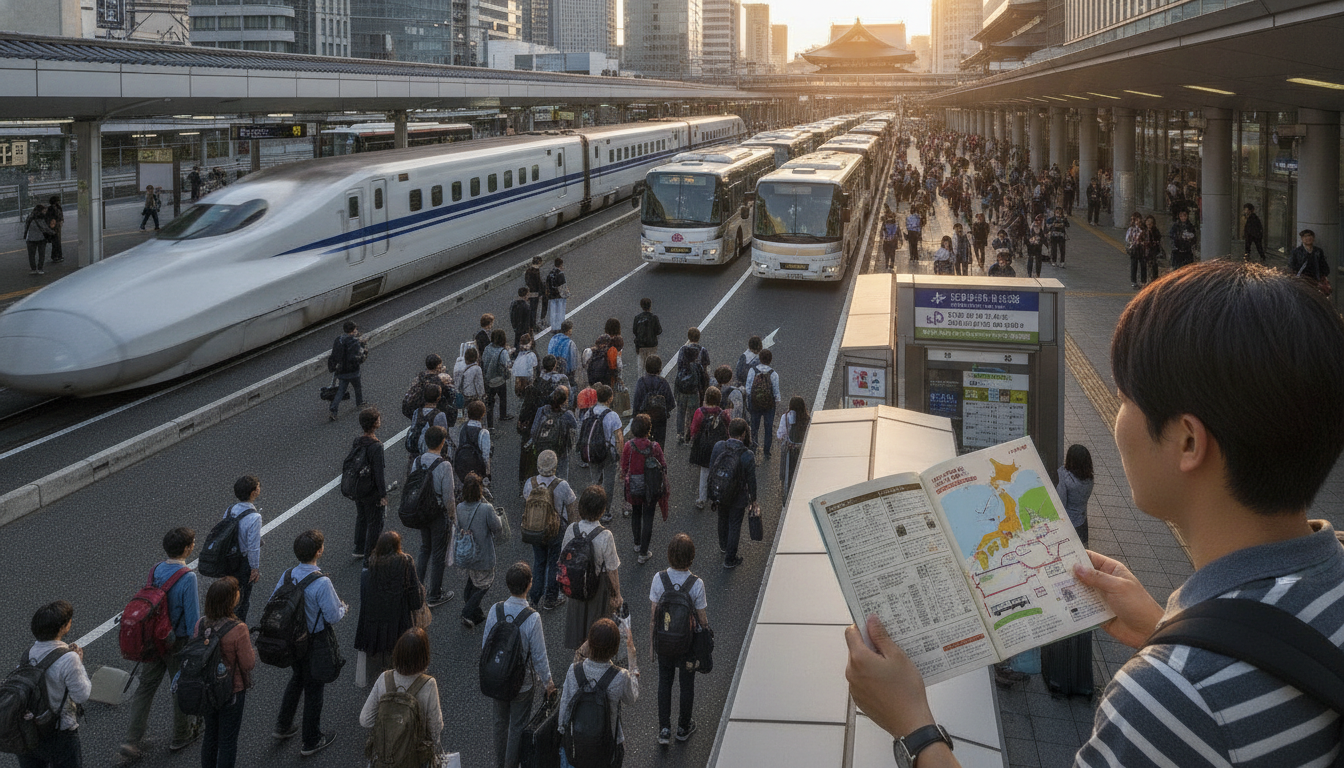
The Tōkaidō Shinkansen connects central Tokyo with central Kyoto on a direct route and is the quickest door-to-door option for most travellers. The fastest Nozomi trains complete the trip in roughly 2 hours 15 minutes, while Hikari services take around 2 hours 40 minutes and Kodama services can take up to about 3 hours 40 minutes. Travel time is predictably short and reliable compared with road or air.
Ticket prices for standard one-way seats typically start around ¥13,320 for non-reserved seating, with reserved seats and seasonal variations pushing fares higher. Reserving a seat costs only slightly more and delivers guaranteed space and a more relaxed journey, especially during peak travel weeks such as spring blossom season and year-end holidays. For many visitors the time saved and the convenience of arriving directly into Kyoto’s central station justifies the fare.
The Shinkansen also offers practical onboard amenities that matter on medium-length trips: luggage areas, clean restrooms and frequent departures. Trains between Tokyo and Kyoto run very frequently — often about every ten minutes during the day — which reduces planning stress and gives travellers flexibility if schedules change.
How and where to board Shinkansen trains in Tokyo
You can board Tōkaidō Shinkansen services bound for Kyoto at Tokyo Station, Shinagawa Station, or Shin-Yokohama Station. Ticket prices are generally the same whether you depart from Tokyo or Shinagawa, while Shin-Yokohama may be marginally cheaper on some services. Boarding at Tokyo Station offers the convenience of being at the route origin, which can help you secure a seat in non-reserved cars during busy periods.
Nozomi services make fewer stops and call at major hubs like Nagoya before Kyoto, while Hikari and Kodama stop more often and thus take longer. If your itinerary includes side visits—such as a stop in Odawara to visit Hakone—choosing a Kodama or Hikari that stops at intermediate stations can be useful, albeit slower. Check departure boards and platform markings carefully; lines form on the platforms at the designated car positions.
If you plan to travel without a seat reservation, arrive early to queue in the non-reserved car lines, particularly during morning and evening rush hours. Ticket offices and automated machines at major stations will sell reserved-seat tickets and can help with questions about connections and luggage space.
Flights trade airtime for transfers and extra steps
Low-cost carriers and legacy airlines operate flights between Tokyo area airports and Kansai International Airport (KIX), the closest major international gateway to Kyoto. Flight time itself is short—often about 90 minutes—but total travel time grows once you factor in transfer time to and from Narita or Haneda airports and onward transit from KIX to Kyoto. Transfer times can add one to two hours or more at either end.
Promotional one-way fares start from roughly ¥5,000 on budget carriers when available, but fares vary with sales and booking windows. Haneda departures are faster to reach from central Tokyo than Narita, but many low-cost flights operate from Narita, which requires additional time and cost to access from the city center. Factor in baggage fees and arrival-terminal procedures when comparing flight versus rail.
Once you land at Kansai International Airport, the JR Haruka limited express links KIX to Kyoto in about 75 minutes and is a common onward option. Discounted Haruka tickets and combo packages that include an IC card for city travel are offered to short-term visitors, and these can lower the effective cost and simplify transfers into Kyoto’s transit network.
Highway buses offer the lowest fares for budget travellers
Overnight and daytime highway buses provide the most economical Tokyo to Kyoto travel option, with fares often beginning at about ¥3,900 one-way. Buses take considerably longer—typically seven to nine hours—so they are best suited for travellers prioritizing cost over speed. Overnight services are particularly popular because they can save on accommodation and deliver you to Kyoto early in the morning ready for a full day of sightseeing.
Comfort levels vary widely between standard and premium bus services; some operators offer reclining seats and greater legroom for higher fares. Daytime buses are subject to traffic delays and therefore less reliable for precise arrival times, while overnight buses circumvent daytime congestion but can be tiring. Many bus routes terminate in Osaka rather than Kyoto; this remains a viable option because the train from Osaka to Kyoto is a short 30-minute connection.
Book with reputable bus operators or through major ticket platforms and check departure points in Tokyo carefully. Popular services sell out on peak travel dates, so early booking is advised if you plan to travel by bus during holidays or festival weekends.
Regular trains, rail passes and budget ticket hacks
Travelling by local and rapid JR trains instead of the Shinkansen can save money but increases travel time dramatically. A full day of rail travel between Tokyo and Kyoto that uses only ordinary JR services can exceed eight hours and requires several transfers. The approximate one-way fare on regular trains may be around ¥8,360, making the time savings of the Shinkansen often worth the higher price for most travellers.
Seasonal ticket offers such as the Seishun 18 ticket allow substantial savings for those with flexible schedules. The Seishun package is sold in blocks of travel days and is valid on local and rapid JR trains only, which can make it an economical—but slow—choice for multi-day trips. Regional passes like the Hokuriku Arch Pass provide alternative routing options between Tokyo and Kyoto using a combination of lines, but these often involve circuitous routes and different Shinkansen lines.
When considering a Japan Rail Pass or other regional passes, calculate the total itineraries you plan to complete. A nationwide JR Pass can be cost-effective if you intend to travel widely across Japan, but for a single Tokyo–Kyoto round trip the math may not add up unless combined with other long-distance journeys.
Driving considerations and practical tips for planning
Driving from Tokyo to Kyoto is feasible and offers flexibility, but it comes with notable costs and practical challenges. The trip typically requires around 5 hours 30 minutes in ideal conditions, but rest stops, congestion and tolls can extend the journey to six and a half hours or more. Highway tolls alone from central Tokyo to central Kyoto can range into the tens of thousands of yen, and fuel and parking costs add further expense.
Rental cars make sense for regional exploration once you arrive in Kansai, but are generally not the most economical choice for the intercity leg between Tokyo and Kyoto. If you prefer driving, consider renting a vehicle after you arrive in Kyoto rather than driving the whole distance yourself. Also plan for road rules, parking availability in Kyoto’s historic districts, and the difficulty of navigating narrow streets around temples and shrines.
For families or groups carrying a lot of luggage, driving can reduce the hassle of multiple luggage transfers, but compare total costs with a reserved Shinkansen green car or private transfer to determine the best value.
Booking tips, seat reservations and seasonal planning
Reserve seats on the Shinkansen when travelling during peak seasons, weekend holidays or with large luggage to guarantee space and reduce stress. Reserved seating is only a modest premium above non-reserved fares and can be obtained via JR ticket offices, automated machines, or as part of some online ticket services. If you hold a rail pass that includes reservation privileges, use the free reservations to lock in seats on preferred departure times.
Check train timetables in advance and allow time for station navigation, especially at busy hubs like Tokyo Station. If you favor the cheapest options—night buses and special discount flights—book well ahead of travel dates as low fares are limited in number. For multi-destination travel, compare the cost of regional or nationwide rail passes against individual ticket prices and consider whether passes are available only to short-term visitors.
Keep an eye on seasonal surcharges and special fares. Some services adjust reserved-seat supplements in busy periods, and discount combo tickets that pair rail travel with Kyoto day passes or IC cards can add convenience and small savings for short-term visitors.
Local arrival: navigating Kyoto Station and onward connections
Kyoto Station sits at the heart of the city, making it a convenient arrival point whether you travel by Shinkansen, bus or limited express from the airport. From the station you can transfer to local JR lines, the city subway, buses that serve temple and shrine districts, or taxis for door-to-door transfers. The station complex also offers luggage storage and shopping facilities that are useful upon arrival.
If you arrive late at night, check the schedules for bus and subway services or be prepared to use taxis; Kyoto’s public transport network has limited overnight options. For daytime arrivals, a short bus or subway ride will take you to most popular neighborhoods and tourist attractions, but be mindful that buses get crowded during peak tourism seasons.
If you plan to walk between attractions, central Kyoto is compact and walkable, but choose accommodation based on your planned itinerary to minimize time spent on public transport. Many day tours and guided options depart from or return to Kyoto Station, so it can also serve as a practical meeting point.
Final paragraph
Whether you prioritise speed, cost or comfort, the Tokyo to Kyoto corridor offers reliable choices for every kind of traveller, from the high-frequency Shinkansen to budget overnight buses. Compare total door-to-door time, ticket rules and luggage needs before you book, reserve seats during busy periods, and plan transfers to and from airports or stations to ensure your trip starts and ends smoothly.

