
Narita Airport to Tokyo: updated transfer guide and June 2026 field test
Comprehensive, up-to-date options for getting from Narita Airport to Tokyo, with travel times, fares, and our June 2026 field-test ratings. (Narita Airport to Tokyo)
Narita Airport to Tokyo remains a longer commute than many visitors expect, and this updated guide compares every practical transfer option. Our reporting team completed timed field tests in June 2026 to evaluate speed, comfort, luggage handling and family-friendliness across the main services. The piece summarizes travel times, typical fares and booking tips so readers arriving at NRT can choose the best route into the city.
Keisei Skyliner: fastest scheduled express to Ueno and Nippori
The Keisei Skyliner offers the quickest scheduled rail link from Narita Airport to central-northern Tokyo, reaching Nippori in about 36 minutes and Ueno in roughly 41 minutes. All seats are reserved, the trains run frequently through most of the day, and onboard amenities include free Wi‑Fi, individual charging ports and dedicated luggage racks. Fares for discounted online tickets start around ¥2,310 one way, while full‑price tickets purchased at counters will be modestly higher.
Riders transferring to other JR and subway lines should plan for a single transfer at Nippori or Ueno to reach loop and subway routes across central Tokyo. Because the Skyliner is a dedicated airport service, it avoids commuter crushes and guarantees a seat, which makes it especially useful for travelers with medium to large suitcases. Travelers should allow extra time at Narita for voucher exchanges if they use third‑party booking platforms, and arrive 10–15 minutes before departure when traveling with large bags.
Narita Express (N’EX): direct JR service to major city stations
The Narita Express provides a reserved-seat JR option that runs directly to Tokyo Station and, on selected services, continues to Shinjuku, Shibuya and Shinagawa. Typical journey time to Tokyo Station is about 53 minutes, and a one‑way fare to central Tokyo is generally around ¥3,070. Trains depart regularly from the airport from early morning until late evening, and many services call at both Terminal 1 and Terminal 2 stations.
N’EX is best for passengers whose final stop is on the JR network and who value a straight ride without multiple transfers. The service includes generous luggage storage and onboard toilets, though peak departures can be busy and ticket‑voucher collection at airport machines can add time before boarding. Consider the N’EX Tokyo Round‑Trip ticket if you plan a return ride to Narita, as that option can reduce per‑trip cost for eligible travelers.
Regular Keisei and JR Sobu services: budget-friendly but slower
Regular commuter options on the Keisei Main Line and the JR Sobu Line offer the lowest fares between Narita and central Tokyo, with one‑way costs typically in the ¥1,200–¥1,400 range. These services take longer than the dedicated expresses — roughly 80–95 minutes depending on connections and final destination — and they operate on standard commuter timetables. The Keisei Sky Access Express is a useful middle ground for some destinations, linking directly with the Toei Asakusa subway line and cutting travel time to several east‑side stops.
These trains are the most cost‑efficient solution for light packers and travelers with flexible schedules, but they are not ideal during weekday rush hours when carriages fill with commuters. Luggage storage is limited to overhead racks and vestibules, so plan transfers accordingly and avoid peak periods if you have oversized bags or strollers.
Airport Limousine and Low‑Cost Buses: comfort and door‑to‑destination convenience
Coach services include the Airport Limousine Bus and several low‑cost airport buses that connect Narita with major hotels and central stations. Limousine buses offer assigned seating, two pieces of luggage loaded in the hold and a generally comfortable ride, with fares starting around ¥2,900 one way and trip durations that vary widely with traffic. Low‑cost bus services aim for speed and value, serving core points such as Tokyo Station and Ginza for fares often around ¥1,500 and journey times of roughly 60–90 minutes.
Buses are especially appealing to families and heavy packers because staff generally handle checked baggage and there are no station transfers. However, bus travel is subject to road congestion; peak‑time trips can take considerably longer than rail alternatives. Some low‑cost services do not permit advance online booking and require tickets purchased at airport counters on the day, so arriving early is recommended for these options.
Taxis, shared shuttles and private hires: door‑to‑door options for groups and heavy luggage
Conventional metered taxis from Narita to central Tokyo are available outside the terminals but are costly, with daytime fares commonly starting above ¥28,000 per vehicle and higher when tolls or night surcharges apply. For many travelers, pre‑booked shared shuttles and private cars offer a preferred balance of price and convenience. Shared pre‑booked options commonly start around ¥5,980 per person and provide direct transfers to accommodations, while private hires can be reserved per vehicle and may suit groups or travelers with oversized sports gear.
Shared and private services have the advantage of door‑to‑door delivery and significant luggage capacity, with companies often asking for bag counts at booking to ensure an appropriately sized vehicle. The trade‑offs include fixed pickup points at the airport, the need to be punctual for scheduled departures, and the variability of English language support among some drivers.
Field-test results: how the main transfer modes scored in June 2026
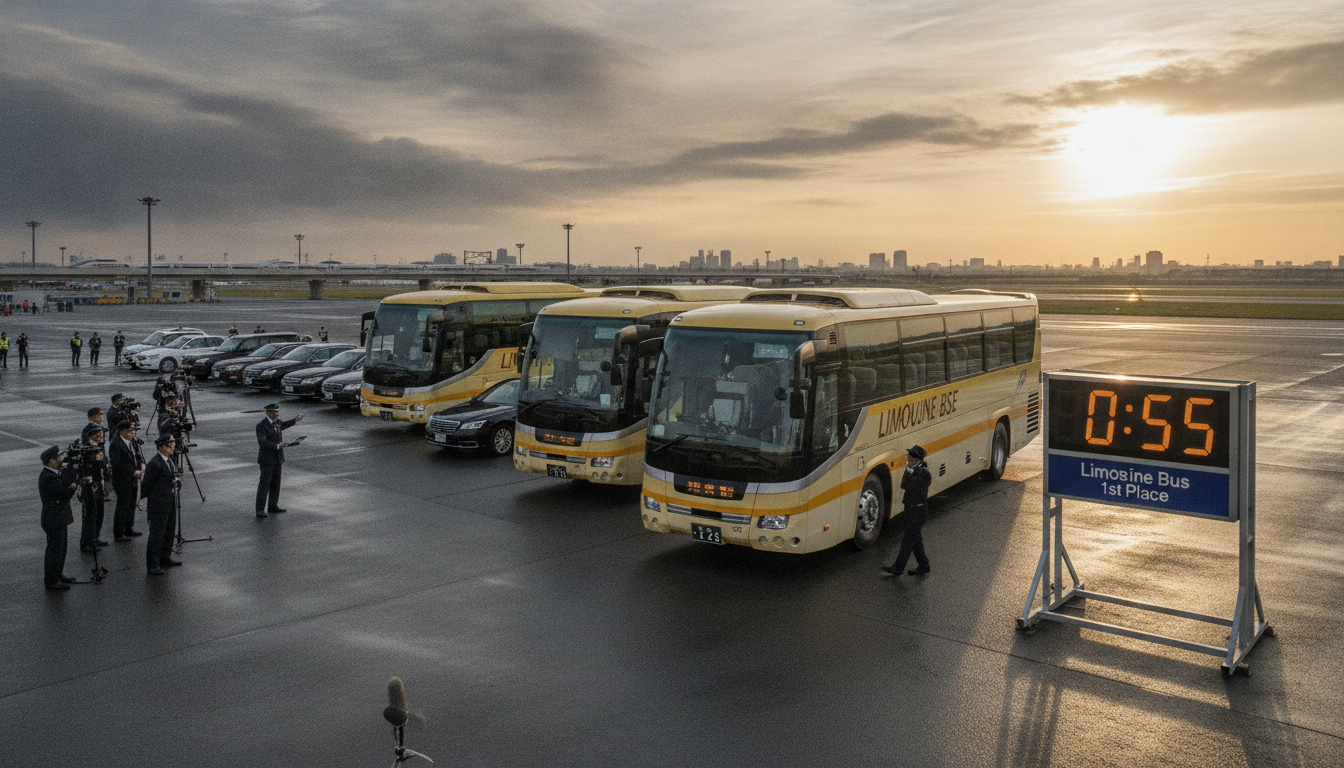
A June 2026 field assessment rated transfer methods across comfort, luggage handling, family‑friendliness, convenience and onboard amenities to provide an overall performance score. Limousine bus and the Skyliner placed high for comfort and luggage ease, with the Limousine bus scoring especially well for loading and hands‑on baggage service. The Skyliner received top marks for speed, guaranteed seating and onboard facilities, while the Narita Express was commended for its direct JR connections despite occasional peak‑time crowding.
Budget bus services scored strongly for value and speed to central stops but were rated lower for luggage limits and onboard amenities. Shared pre‑booked shuttles scored well for door‑to‑door convenience and luggage capacity, making them an attractive option for families and groups who prioritize simplicity over the fastest transit time. These comparative results can help readers choose a transfer that matches priorities such as speed, cost or minimal handling of bags.
Practical booking guidance, luggage rules and late‑night considerations
Buy reserved Skyliner and N’EX tickets in advance when travel dates and times are fixed to guarantee seats and minimize queueing after arrival. Low‑cost buses sometimes require same‑day counter purchases and can fill early, so plan to arrive at the airport ticket counter with time to spare when choosing the budget coach. Limousine buses and many shuttle services allow online reservations; confirm luggage allowances at booking since rules for hold capacity and permitted dimensions differ by operator.
If you hold a Japan Rail Pass and intend to travel beyond Tokyo, consider activating it to cover Narita Express travel, but delay activation if you plan to stay in the city for several days and want to avoid wasting pass days. Late arrivals and overnight flights narrow options: rail services reduce frequency overnight, while taxis and pre‑booked cars remain available at all hours but will cost more. Terminal transfers are straightforward — trains and buses serve Terminals 1 and 2 directly, and free shuttle services connect to Terminal 3 where necessary.
Final practical tips for first‑time arrivals and families
If speed to central Tokyo is the priority, choose the Skyliner for the quickest scheduled rail link to north‑central stations, and use a short transfer to reach the Yamanote loop. Families and heavy packers who want minimal station transfers should strongly consider Limousine buses or pre‑booked shared shuttles, which include luggage handling and seat assignments. Budget travelers comfortable with transfers and lighter baggage can rely on regular Keisei or JR services for the lowest fares.
For return trips to Narita, verify the earliest departure times and allow generous buffer time to swap vouchers or collect pre‑booked tickets at airport counters. Always check operator luggage policies in advance, carry contact details for your accommodation, and factor in peak‑hour congestion if you have time‑sensitive connections. Finally, if you arrive very late or very early, compare the total door‑to‑door time and cost of a taxi or pre‑booked car against available overnight rail and bus services to determine the most practical choice.
This guide synthesizes on‑the‑ground testing and up‑to‑date fare and timetable patterns to give arriving travelers clear, comparable options for getting from Narita Airport to Tokyo.

