
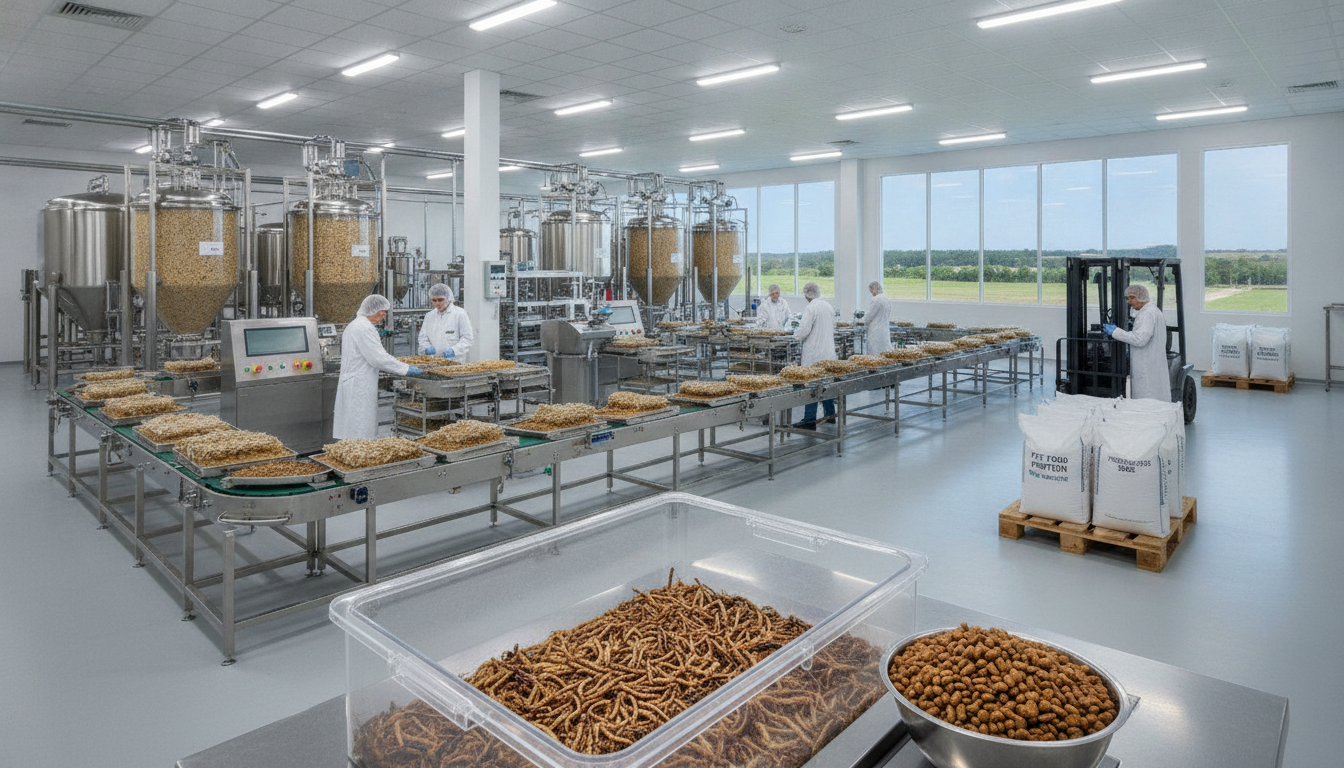
Insect protein gains traction as firms turn black soldier fly larvae into feed and probiotics
Asian companies scale insect protein production from black soldier fly larvae for animal feed, pet food and probiotics as sustainable protein alternatives.
Full Circle Biotechnology in Thailand and a growing number of startups across Asia are ramping up production of insect protein, harnessing black soldier fly larvae to supply animal feed, pet food and novel probiotic ingredients. The shift toward insect protein reflects interest from livestock producers and pet-food makers seeking lower-impact protein sources compared with conventional soy and fishmeal. Entrepreneurs say the sector can address supply-chain pressures while creating new revenue streams from byproducts such as oils and chitin.
Full Circle Biotechnology expands processing and quality controls
Full Circle Biotechnology, pictured inspecting protein meal made from black soldier fly larvae at a facility in Thailand, exemplifies an emerging manufacturing model that combines breeding, processing and laboratory testing. Companies operating such facilities are emphasizing quality assurance, including pathogen screening and nutrient analysis, to meet feed-sector standards. Investment in processing lines and on-site labs is intended to reassure buyers and accelerate adoption among feed formulators.
Animal feed and pet food manufacturers test formulations
Livestock and aquaculture firms are trialing insect protein as a partial replacement for fishmeal and soybean meal, driven by volatile commodity prices and sustainability targets. Pet-food brands are also incorporating insect protein into dry kibble and treats, marketing it to consumers concerned about allergies and environmental footprints. Early adopters say insect-based formulations can deliver comparable amino-acid profiles for many applications, though acceptance varies across markets and species.
Startups turn larvae into probiotics, oils and specialty ingredients
Beyond bulk meal, companies are exploring higher-margin products derived from larvae, including probiotic blends, functional oils and chitin derivatives for nutraceutical and agricultural uses. Entrepreneurs describe a "biorefinery" approach that separates proteins, lipids and fiber to create diversified product lines and improve unit economics. Some firms are collaborating with academic labs to investigate probiotic strains and fermentation processes that could add value to insect-derived ingredients.
Regulators and safety authorities weigh approvals and standards
Regulatory frameworks for insect protein remain uneven across jurisdictions, creating a patchwork of rules for feed and food use. Authorities are focused on feedstock safety, production hygiene and traceability, asking producers to demonstrate that larvae are reared on approved substrates and are free from contaminants. Industry groups and manufacturers are engaging with regulators to define testing protocols and to secure approvals that will enable wider commercial sales.
Investment, partnerships and supply-chain challenges
The insect-protein sector is attracting interest from venture capital, impact investors and feed conglomerates seeking to secure alternative protein supplies. Partnerships between insect producers and large feed buyers can provide offtake certainty and financing for scaling facilities. Nonetheless, companies cite challenges in standardizing offspring supply, reducing production costs and integrating with existing feed mills, all of which require continued investment and operational refinement.
Environmental claims face lifecycle scrutiny and adoption hurdles
Proponents of insect protein point to lower land and freshwater requirements and the ability to upcycle organic byproducts as advantages over traditional protein crops and wild-caught fish. Lifecycle analyses are under way to quantify greenhouse-gas emissions and resource use relative to soy and fishmeal, and results vary depending on rearing methods and energy inputs. Analysts caution that realizing environmental benefits at scale will depend on improving energy efficiency, sourcing safe feed substrates and expanding collection and processing infrastructure.
Market observers say the commercial trajectory for insect protein will be determined by a combination of cost competitiveness, regulatory clarity and buyer confidence in product consistency. As companies like Full Circle Biotechnology scale operations and diversify output, the industry aims to move from pilot projects to commercial supply chains capable of serving regional feed and pet-food markets.
Consumer acceptance, certification schemes and strategic investment will shape how rapidly insect protein becomes a mainstream ingredient in animal nutrition and specialty products. The next phase for the sector will likely hinge on demonstrating reproducible safety and nutrition outcomes while continuing to drive down production costs.

