
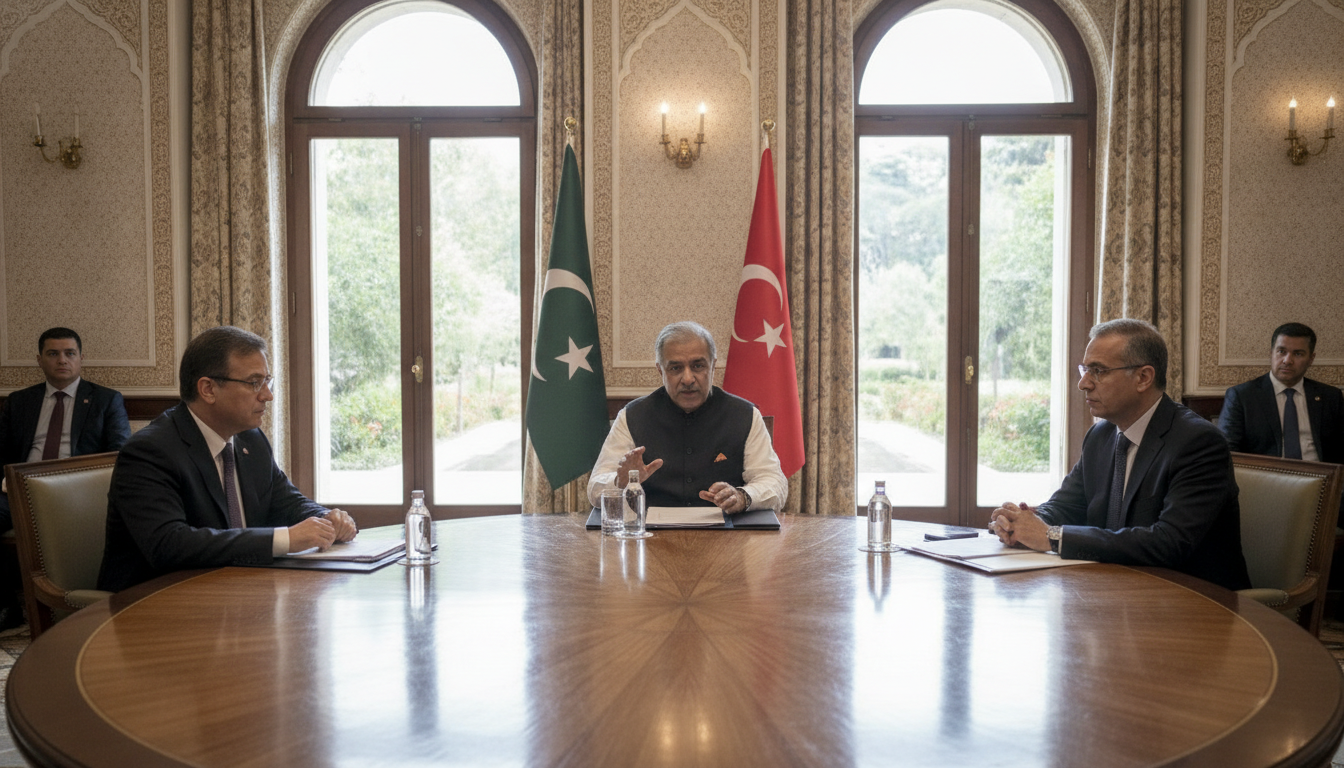
Pakistan Opens Mediation in Libya Between Rival Eastern and Western Administrations
Pakistan has launched mediation in Libya between rival eastern and western administrations, broadening its diplomatic role beyond Asia after recent U.S.–Iran de‑escalation efforts.
Pakistan has quietly begun mediating between Libya’s rival eastern and western administrations, a move that signals an expansion of its diplomatic footprint beyond South Asia. The engagement follows Pakistan’s recent involvement in facilitating contacts linked to U.S.–Iran tensions and comes as both Libyan sides seek outside interlocutors. Senior Pakistani military and diplomatic figures are reported to be taking leading roles in shuttle diplomacy aimed at reducing political and security frictions in Libya.
Pakistan’s Role and Objectives
Pakistan’s mediation in Libya appears focused on building confidence and opening channels for political talks between the competing administrations. Officials close to the effort frame the initiative as pragmatic diplomacy intended to stabilize a conflict that has drawn regional and international concern. The mediation is being presented as a non‑partisan effort, with Pakistan positioning itself as a facilitator rather than a party to Libyan disputes. Observers say the goal is to secure incremental agreements on prisoner exchanges, ceasefire monitoring, or technical arrangements that could pave the way for broader talks.
Military Leadership Taking Lead in Talks
Field Marshal Asim Munir, Pakistan’s Chief of Army Staff, has been visible in recent diplomatic activity and is reported to be involved in the Libya mediation. Munir attended a quadrilateral meeting near Lake Lucerne, Switzerland, on June 21, where U.S., Iranian, Pakistani and Qatari officials discussed de‑escalation efforts. Pakistan’s military leadership and foreign ministry are coordinating to leverage established security contacts and diplomatic channels, using military diplomacy alongside traditional statecraft to engage Libyan interlocutors.
Connection to Pakistan’s U.S.–Iran Engagement
Diplomats link the Libya initiative to Pakistan’s recent role in easing tensions between the United States and Iran, suggesting accumulated trust from that process now underpins a broader outreach. Pakistan’s participation in the June 21 quadrilateral meeting raised its profile as a discreet intermediary in sensitive disputes. By building on that momentum, Pakistani officials hope to demonstrate the country’s ability to contribute to conflict management beyond its immediate neighborhood while preserving a low‑profile approach acceptable to multiple external stakeholders.
Responses from Libya’s Eastern and Western Authorities
Representatives from both eastern and western Libyan administrations have reportedly agreed to preliminary contacts mediated by Pakistan, though each side retains substantive reservations. Eastern authorities emphasize security guarantees and international recognition of their political institutions, while western authorities have signaled interest in arrangements that protect civilian governance and restore state services. Libyan actors continue to seek international backstopping that is perceived as balanced, and Pakistan’s neutral posture has been cited by some Libyan figures as a reason for engaging.
Regional and International Implications
Pakistan’s outreach to Libya has attracted attention from regional powers and international organizations that have long been involved in Libya’s stabilization. Some states view Pakistan’s mediation as a useful supplementary track that could complement U.N. efforts, while others are cautious about any external initiative that might alter existing diplomatic dynamics. Analysts note that Pakistan’s move could encourage other middle powers to offer mediation in protracted conflicts, potentially broadening the range of actors engaged in peace processes across North Africa and the broader Middle East.
Practical Challenges and Risks Ahead
Mediators face entrenched divisions, competing security forces, and a fragmented political landscape in Libya that complicate prospects for quick breakthroughs. Any Pakistani‑brokered progress will depend on securing buy‑in from local powerholders, managing external patron sensitivities, and translating confidence‑building steps into durable arrangements. There is also a risk that setbacks or perceived bias could undermine Pakistan’s credibility as a neutral facilitator, underscoring the need for careful, incremental diplomacy and clear communication with key international stakeholders.
Pakistan’s engagement in Libya underscores how states are recalibrating their diplomatic activities in a multipolar environment where non‑traditional mediators can play consequential roles. If Islamabad can shepherd modest agreements that reduce tensions and open space for broader U.N.‑led talks, it will mark a notable expansion of Pakistan’s international peacemaking profile.

