
Hideki Noda Brings Humorous Inquiry on the Cost of Scientific Progress to London Stage
Hideki Noda’s new play asks London audiences to weigh the ethical cost of scientific progress, blending satire and drama at Sadler’s Wells and sparks debate.
Japanese playwright and director Hideki Noda is touring a new stage work in London that uses humor to test how a scientifically advanced society responds to uncomfortable ethical questions. The production, presented at Sadler’s Wells, frames scientific ambition and its human cost as subjects for both laughter and reflection. Noda said he is curious to see whether audiences accustomed to technological progress will accept satire that highlights moral trade-offs. The play’s arrival in the British capital has generated attention for its topical focus on science, ethics and public responsibility.
Noda debuts the work at Sadler’s Wells
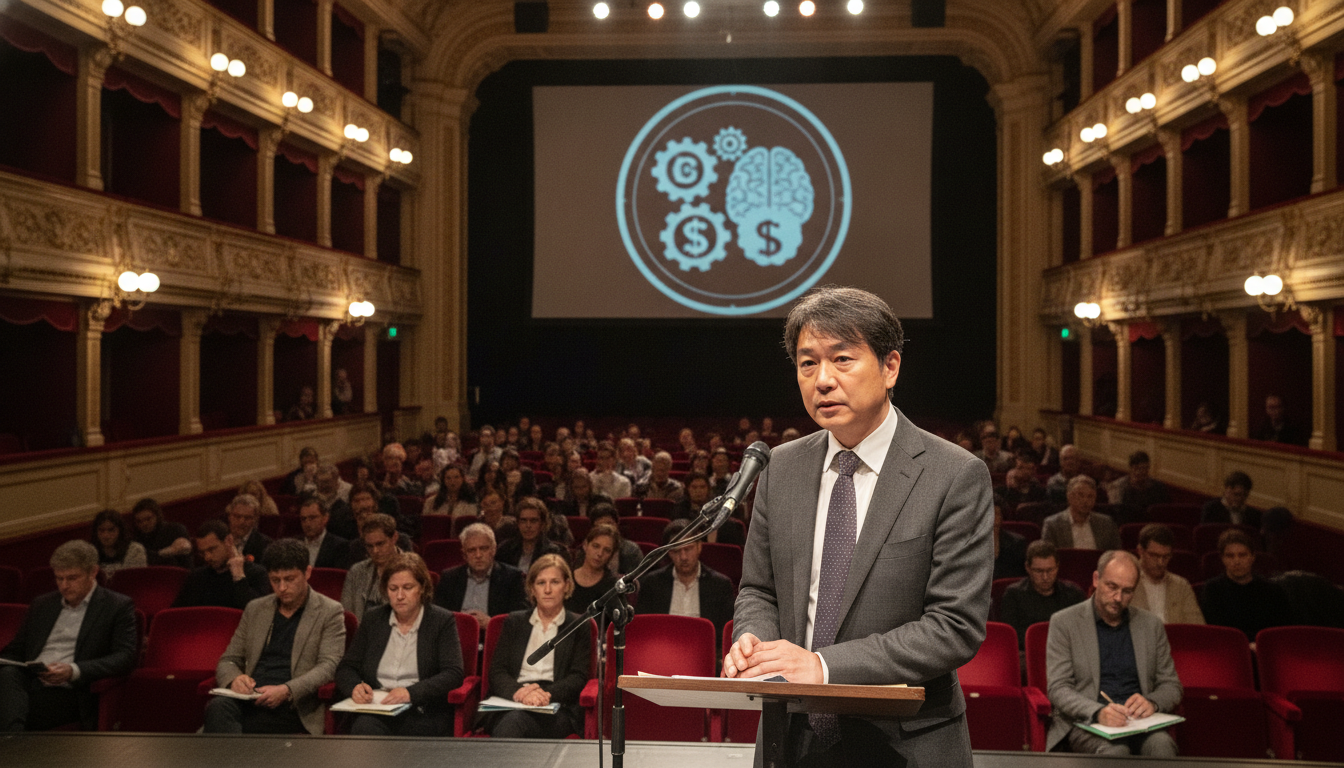
The production opened with a high-profile photocall at Sadler’s Wells, where Noda and members of the creative team posed for photographers. The setting underlined the company’s intention to reach international audiences beyond Japan. Organizers described the staging as a cross-cultural experiment, inviting viewers in London to engage with questions that resonate globally. The decision to bring the piece to this venue reflects the theatre’s reputation for presenting innovative international work.
Director frames the play around scientific ambition
At the core of the production is a theatrical meditation on the cost of scientific progress, approached through satire rather than polemic. Noda’s direction emphasizes comic moments that reveal human fallibility and institutional blind spots. By foregrounding humor, the play aims to disarm audiences and open space for harder questions about accountability and consequence. This tonal choice positions the piece between fable and social critique, asking viewers to judge the costs as well as the benefits of innovation.
Design and performance choices underline ethical tension
Staging and design use stark contrasts to dramatize the play’s central dilemmas, with clinical lighting and everyday domestic detail placed in tension onstage. The cast moves between comedic timing and sudden seriousness, signaling shifts in moral register without breaking narrative momentum. Sound and projection elements evoke laboratories and public spaces, reinforcing the link between private ambition and public consequence. These theatrical choices help the audience track the layered argument about scientific responsibility.
Audience reaction at the London run
Early audiences in London have responded with a mix of laughter and thoughtful engagement, according to observers at the venue. Some viewers reported being surprised by how readily humor could carry serious ethical reflection, while others found the juxtaposition of levity and gravity intentionally disquieting. Post-performance discussions hosted by the company have attracted viewers from science and ethics communities, indicating cross-sector interest. The reaction so far suggests the piece is achieving its goal of provoking debate rather than delivering answers.
Critical context within Noda’s body of work
Thematically, the play sits comfortably within Hideki Noda’s reputation for mixing theatrical innovation with social commentary. Over decades he has experimented with form and language while addressing topical concerns, and this production continues that pattern. Critics have noted that Noda’s work often invites audiences to participate mentally in the drama, rather than presenting a didactic verdict. The new piece extends that method to scientific themes, inviting spectators to consider where responsibility lies when progress outpaces oversight.
International implications and future plans
Producers say the London engagement is intended as the first stop on a broader international tour that will bring the piece to additional European and Asian venues. The company hopes the play’s focus on scientific progress will resonate with audiences in cities that are hubs for research and technology. By staging the work in different cultural contexts, Noda aims to test whether responses vary by local attitudes toward science and risk. The touring strategy reflects both artistic ambition and a belief that the conversation the play initiates is globally relevant.
As the production continues its run in London, the debate it seeks to prompt — about the human and ethical costs of scientific advancement — is likely to persist beyond the theatre walls. Audiences, critics and scientific communities will watch closely to see whether a comic lens can change the terms of how societies judge progress and responsibility.

