
Miniso U.S. expansion: 100 stores planned as retailer leans on original IP to drive growth
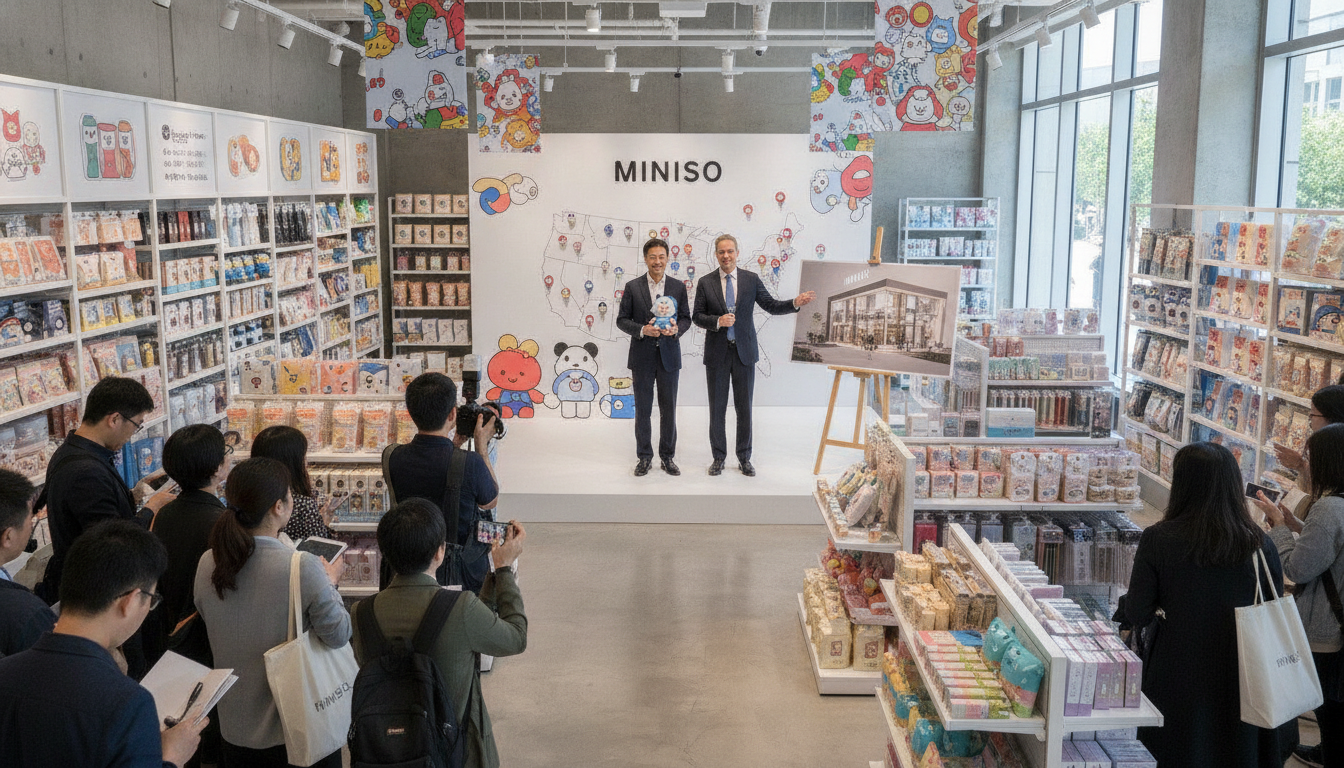
Miniso will open 100 U.S. stores this year and is pivoting to original intellectual property to propel its Miniso U.S. expansion, company executives said in New York.
Miniso announced in New York that it intends to open 100 stores across the United States this year as part of a broader overseas growth push centered on original intellectual property. The company described the strategy as a move from pure price-led retailing to building proprietary characters, products and content to deepen customer engagement. Executives highlighted new character lines being developed in-house and collaborations intended to place Miniso-branded IP at the center of store assortments.
Plans for 100 U.S. Stores
Miniso’s announced opening cadence targets a rapid rollout across multiple U.S. markets within the current year. Company officials framed the expansion as a continuation of ongoing international growth efforts and said store count would be scaled to local demand in major metropolitan areas. The plan signals a renewed emphasis on brick-and-mortar presence even as many global retailers balance physical and digital investments.
The company said new locations will carry a mix of everyday essentials and what it described as curated IP-driven merchandise. Store formats and sizing will vary by market, with an emphasis on high-traffic retail corridors and mall-based locations where impulse and gift purchases are common. Executives indicated staffing and supply arrangements would be adjusted to support the pace of openings.
Shift to Proprietary Intellectual Property
Miniso is moving toward developing its own characters and storylines to complement the products it sells, aiming to own assets that can translate into toys, apparel and multimedia. The shift to proprietary intellectual property is intended to create recurring demand beyond price promotions and to provide licensing opportunities. Company management framed IP development as an engine for longer-term brand differentiation.
This strategy contrasts with an assortment strategy focused solely on low-priced goods sourced from a broad supplier base. By investing in in-house characters and designs, Miniso expects to capture higher margins on owned SKUs and to build brand loyalty among younger shoppers. The move also opens the door to cross-border licensing and localized content tailored to regional tastes.
Leadership and U.S. Market Execution
Miniso’s New York presentation featured senior executives discussing the U.S. rollout and creative strategy, including Chief Marketing Officer Robin Liu and Miniso USA Chief Executive Tom Bartlebaugh. Company leaders said the U.S. expansion would be managed locally while aligning with global brand guidelines and IP roadmaps. The leadership team emphasized partnerships with U.S.-based retail landlords and merchandising partners to accelerate openings.
Executives noted that balancing global identity with local consumer preferences will be key to success in diverse American markets. Senior staff described ongoing recruitment for U.S. store management and regional teams, along with investments in training and visual merchandising. They also pointed to planned marketing efforts to introduce the new IP characters to U.S. audiences.
Product Examples and Character Strategy
Miniso showcased prototype plush toys and character-themed items as examples of the type of original IP it plans to roll out in stores. Company representatives described staged launches that would initially feature plush lines alongside coordinated product categories such as stationery, home goods and small electronics. The intended outcome is to make characters recognizable anchors for multiple product lines.
The company indicated that character development would be iterative, using customer feedback from initial pilot products to refine designs and storylines. Licensing opportunities with third-party manufacturers and media partners were presented as potential next steps after establishing character traction in stores. Executives said merchandising calendars will synchronize IP launches with seasonal and promotional events to maximize visibility.
Competitive Landscape and Market Challenges
Miniso’s pivot arrives as discount lifestyle and variety retailers face intense competition from both global chains and fast-moving local brands. Building original IP is one path retailers use to differentiate, but it requires upfront creative investment, marketing spend and patience for returns. Analysts caution that success depends on sustained product quality, supply chain consistency and resonance with target consumers.
Retailers that rely on low prices must also navigate margin pressures and evolving consumer tastes, particularly in the U.S. where brand loyalty can be fickle. Miniso’s strategy attempts to blend value positioning with brand storytelling, yet the company will need to demonstrate that its characters can attract repeat purchases and justify higher price points on owned SKUs. Execution risks include inventory management, licensing complexities and the time needed to build recognizable IP assets.
Timeline and Outlook for Expansion
Miniso has set an ambitious timetable for opening its U.S. outlets over the course of the year and plans to sequence launches to test formats and product reception. Early store performance and customer response to the new IP will likely shape the pace of subsequent openings and marketing investment. Company leaders said they will monitor sales metrics closely and adapt assortments based on regional preferences.
While the full effects of the Miniso U.S. expansion will become clearer over time, the company has signaled a strategic shift toward owning creative assets as a way to deepen engagement. If successful, the approach could transform parts of Miniso’s international model from a price-driven format to a brand-driven one, with proprietary characters and limited-edition drops creating recurring reasons to visit stores.
Miniso’s push to combine rapid store growth in the United States with a new focus on original intellectual property marks a high-stakes phase in the retailer’s international strategy, one that will test its ability to translate character-driven merchandising into sustainable consumer demand.

