
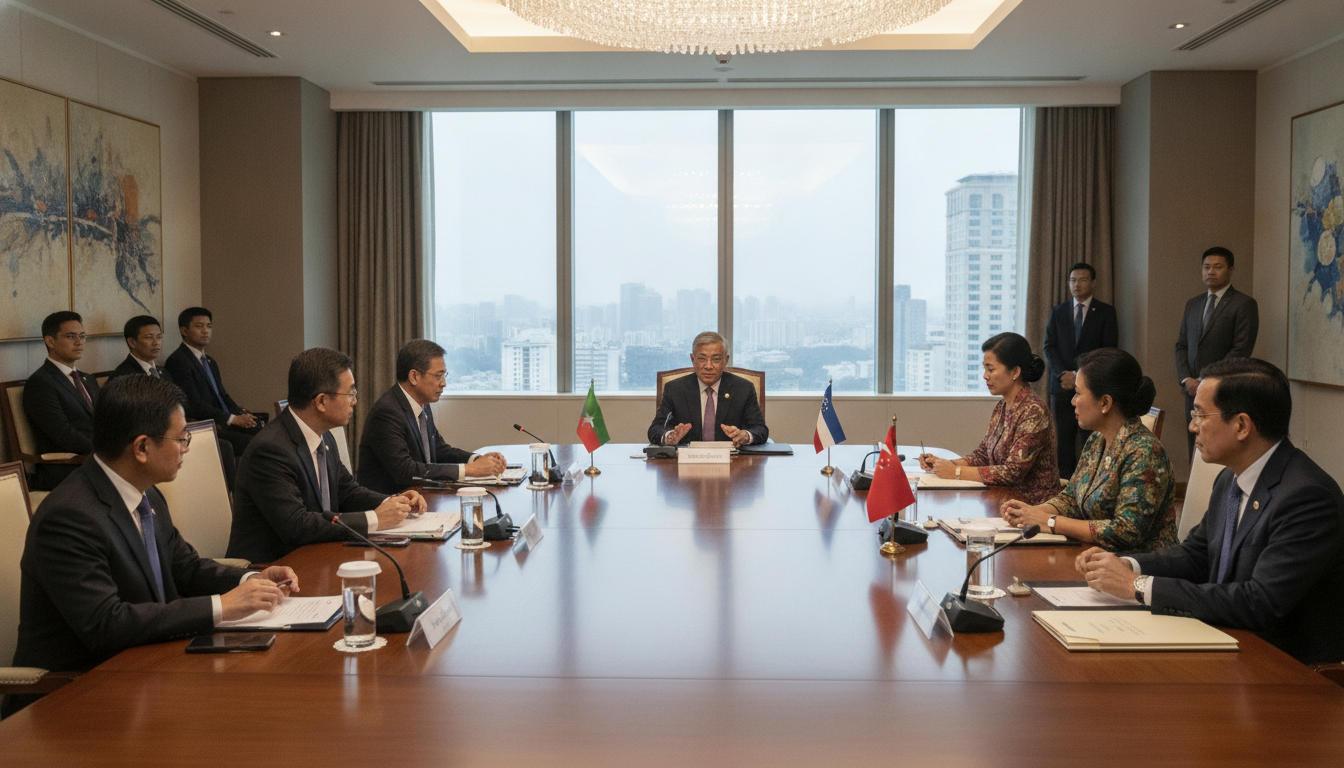
ASEAN meeting with Myanmar’s Tin Maung Swe in Bangkok marks first informal contact since 2021 coup
ASEAN meeting with Myanmar’s foreign minister Tin Maung Swe in Bangkok on July 12, 2026, marked the bloc’s first informal contact with the junta since 2021.
Myanmar’s foreign minister, Tin Maung Swe, met informally with Association of Southeast Asian Nations counterparts in Bangkok on July 12, 2026, in a rare diplomatic engagement since the military seized power in 2021. The ASEAN meeting with Myanmar focused on the continuing conflict, humanitarian access and efforts to persuade the military-backed government to accept crisis-mitigation steps. Ministers spoke candidly about the security and humanitarian fallout from a civil war that has displaced hundreds of thousands of people.
ASEAN ministers convene in Bangkok for informal session
The informal session brought foreign ministers from the 10-member bloc together for discussions that organizers described as frank but exploratory. ASEAN foreign ministers said the meeting was intended to re-establish a channel for dialogue and to press for practical measures on humanitarian relief and civilian protection.
Several ministers stressed that informal contact did not imply political recognition of the military-backed administration in Naypyidaw, but did reflect urgent regional concerns over spillover effects. The gathering in Bangkok followed months of shuttle diplomacy aimed at preventing the crisis from destabilizing neighboring countries.
Myanmar delegation presents position, calls for engagement
Tin Maung Swe used the meeting to reiterate the junta’s openness to regional mediation while defending the government’s security operations. He framed the military’s actions as responses to armed groups and insisted that any ASEAN intervention respect Myanmar’s sovereignty.
Ministers pressed for clarity on concrete steps the government would take to open access for aid organizations and to protect civilians in contested areas. Delegates also sought assurances on unimpeded humanitarian corridors and accurate reporting on civilian casualties and internally displaced persons.
Humanitarian access and ceasefire demands dominate discussions
Humanitarian access emerged as the central demand from ASEAN capitals, with ministers highlighting the scale of need in conflict-affected regions. Officials emphasized that without safe, sustained access for international and local aid groups, civilian suffering will escalate and displacement will continue.
Some ASEAN members urged the Myanmar delegation to agree to localized ceasefires and independent monitoring mechanisms to ensure aid deliveries reach vulnerable populations. Others raised concerns that continued fighting could create conditions for transnational crime and refugee flows, threatening regional stability.
Divergent views among ASEAN members on engagement strategy
ASEAN’s approach to Myanmar remains divided, reflecting differing national interests and historical ties with the country. Several Southeast Asian capitals argued for sustained engagement to pressure the junta into taking concrete measures, while others advocated a firmer posture, including targeted restrictions if progress does not follow.
These internal divergences surfaced during the Bangkok meeting, where ministers balanced diplomatic outreach with repeated calls for accountability. Some delegates highlighted the need for clear benchmarks and timelines, signalling that informal talks must translate into measurable outcomes.
International actors watching regional diplomacy closely
The informal meeting in Bangkok drew attention from major external partners who have urged constructive ASEAN involvement while condemning rights abuses. Western governments and United Nations agencies have repeatedly called for unhindered humanitarian access and accountability for violations, and they said they would monitor whether ASEAN’s contacts lead to improvements on the ground.
Regional neighbors expressed relief that dialogue resumed but cautioned that engagement alone would not resolve the complex political and security dynamics inside Myanmar. Observers noted that ASEAN’s influence depends on its ability to present unified demands and to offer credible incentives for compliance.
The Bangkok session did not produce a public agreement or a timetable for action, underscoring the challenges ahead for diplomatic efforts. Delegates agreed to continue consultations and to explore technical measures to facilitate aid, while leaving open the possibility of further ministerial meetings.
The outcome of the ASEAN meeting with Myanmar will be judged by what follows in terms of humanitarian deliveries, reductions in violence and access for observers and aid agencies. Brussels, Washington and regional capitals have signalled their expectation that any engagement must be accompanied by verifiable steps to protect civilians.
Myanmar’s future relationship with ASEAN remains contingent on whether the military-backed government accepts concrete conditions that address humanitarian needs and civilian safety. The Bangkok talks marked a cautious restart of face-to-face diplomacy, but translating conversations into outcomes will require sustained pressure, coordination among member states, and credible monitoring on the ground.
Continued attention from ASEAN and the broader international community will be essential in the coming weeks as diplomatic channels are tested and as humanitarian organizations seek to reach those most in need.

