
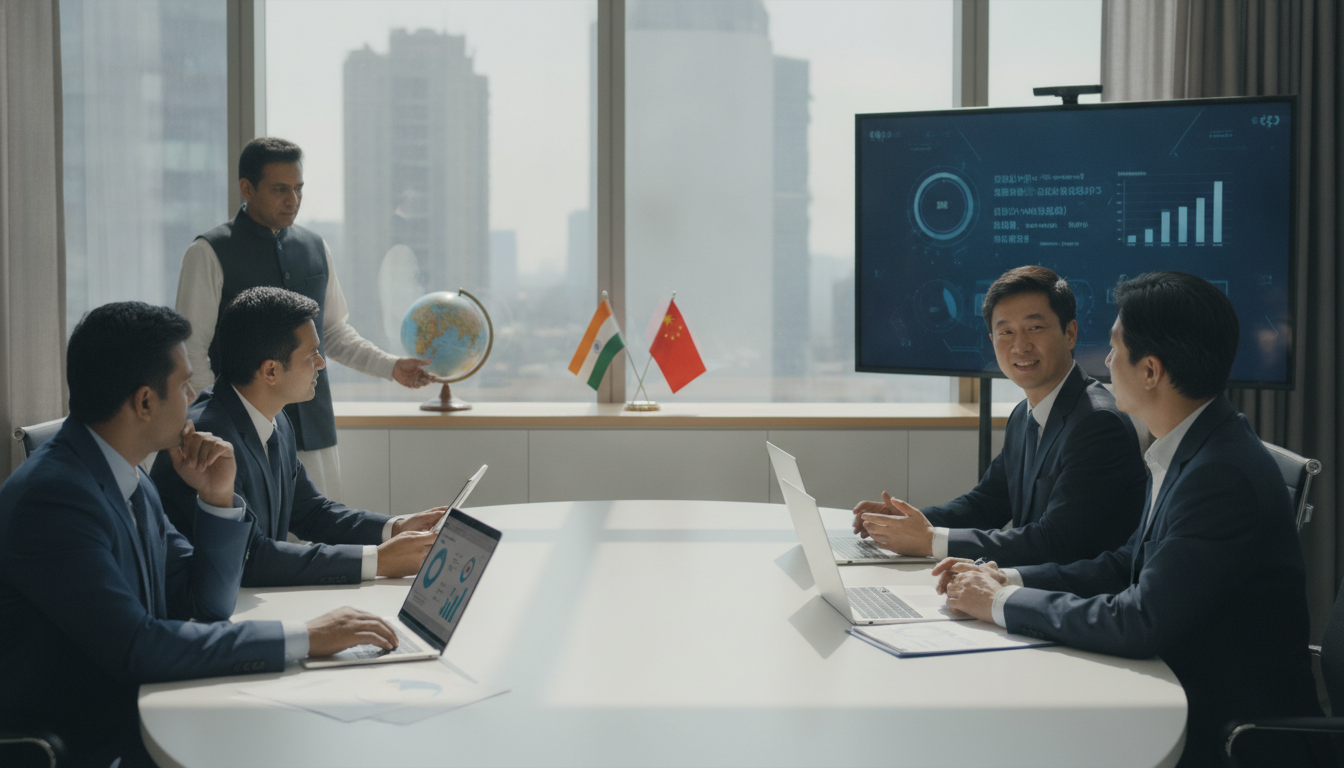
Indian Companies Turn to Chinese AI Models as Cost Pressures Mount
Indian firms are adopting Chinese AI models to rein in rising artificial intelligence expenses, sparking debate over data sovereignty and regulatory oversight.
Bengaluru firms cite cost and speed for Chinese model adoption
Indian technology and service companies in Bengaluru and other hubs have increased deployments of Chinese AI models to lower development and inference costs.
Executives and procurement officers say the models from vendors including DeepSeek, Alibaba and Moonshot AI offer competitive pricing and ready-made capabilities that accelerate time to market.
The move comes amid tighter budgets and a surge in demand for generative AI features across customer service, search, and internal automation.
Companies report that integrating pretrained models reduces engineering timelines and avoids the heavy upfront expense of training large language models from scratch.
Commercial trade-offs: performance, languages and integration
Businesses say the Chinese models deliver acceptable performance for many practical use cases and often include support for multiple Indian languages.
That localization reduces the need for costly custom data annotation and fine-tuning, making the off‑the‑shelf option attractive for mid‑sized enterprises.
Providers also offer flexible deployment options — cloud APIs, hosted clusters and enterprise licences — which let buyers optimize for cost or control.
For some buyers, the economics of inference, throughput and hosting outweigh concerns about vendor origin when immediate business needs are at stake.
New Delhi raises data sovereignty and security questions
The growing commercial reliance on Chinese AI models has prompted unease among policymakers and cybersecurity experts in India.
Officials warn that cross‑border model use can create opaque data flows and complicate governance over sensitive customer or enterprise information.
Security analysts note that model inference can leak context or training data and that vendor‑side logging may expose metadata about transactions.
These technical risks, they say, heighten scrutiny of where models are hosted, how logs are handled and what contractual safeguards are in place.
Vendor landscape: DeepSeek, Alibaba and Moonshot AI in the spotlight
Chinese firms have broadened their enterprise offerings, combining large language models with developer tooling, moderation filters and multilingual support.
DeepSeek and Alibaba market their LLMs with regionally tailored capabilities and enterprise SLAs, while Moonshot AI has been cited by buyers for competitive terms.
Local systems integrators and cloud partners often act as intermediaries, packaging models into compliant deployments and offering hybrid on‑premises options.
These partnerships have lowered barriers for firms that want Chinese model capabilities but seek greater operational control.
Regulatory responses and calls for certification
Industry groups and some lawmakers are pressing regulators to introduce certification, security audits and transparency requirements for externally sourced models.
Proposals under discussion include mandatory risk assessments, provenance declarations and limits on models processing personally identifiable or classified data.
At the same time, policymakers are advocating investment in domestic model development and compute infrastructure to reduce strategic dependence.
Officials acknowledge that developing local alternatives will take time and that a calibrated approach is needed to avoid stifling commercial adoption.
Market implications for India‑China tech ties
The trend highlights a pragmatic commercial layer beneath a geopolitically tense relationship between India and China.
Despite diplomatic frictions and supply‑chain recalibrations, private sector demand for advanced AI capabilities has kept technology channels active.
Analysts warn that prolonged reliance on offshore models could leave Indian firms exposed to regulatory shifts, export controls or sudden changes in vendor policy.
They recommend a mix of technical safeguards, contractual protections and incremental investment in homegrown models to balance innovation and resilience.
The adoption of Chinese AI models by Indian companies reflects immediate business needs driven by cost and capability, but it also forces a national conversation about security, regulation and technological sovereignty.
How India navigates procurement rules, certification regimes and support for domestic research will shape whether the current reliance becomes a temporary expedient or a longer‑term strategic dependency.

