
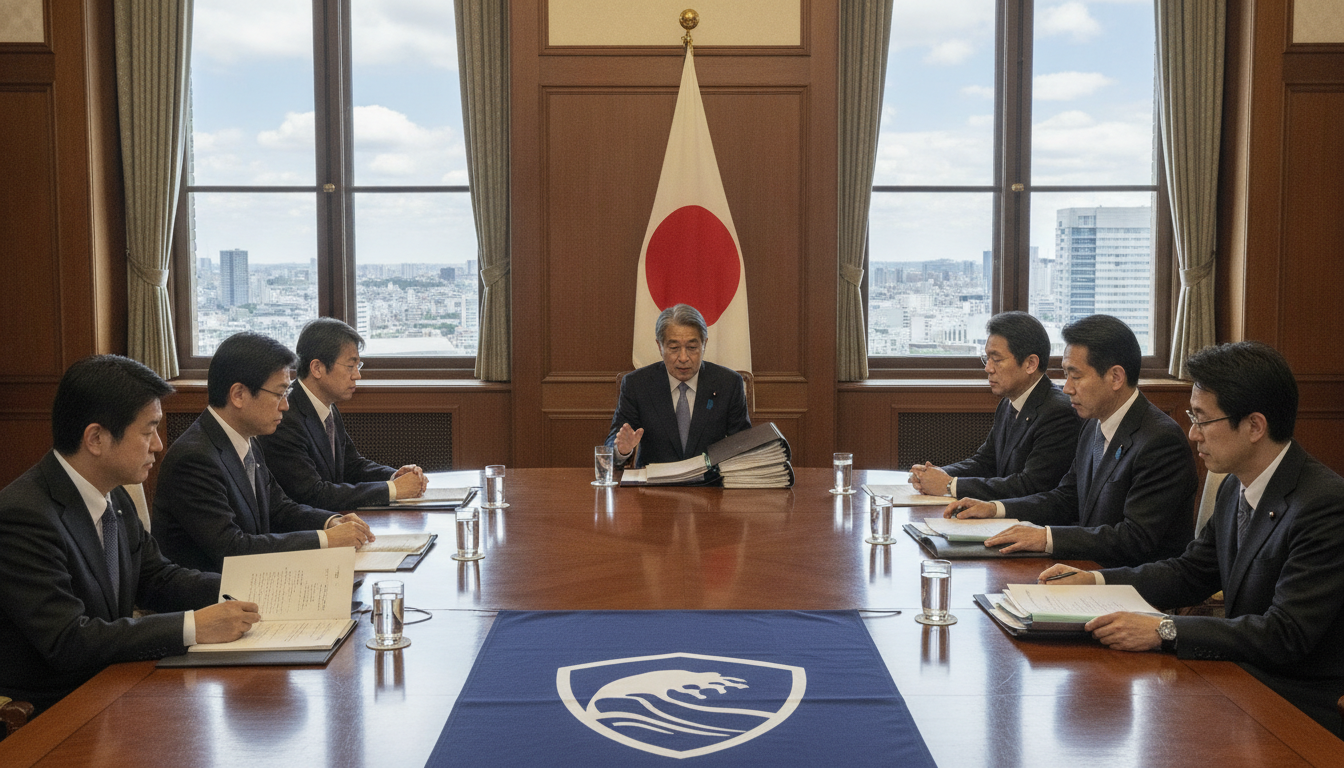
Disaster Management Agency Law Passes Upper House; Government Aims to Launch Agency by November
Japan’s parliament approved a law on July 13, 2026, to create a new Disaster Management Agency as the national command center for disaster prevention and response, with the government targeting an inaugural launch in November.
The bill passed the House of Councillors with support from the ruling Liberal Democratic Party, the Japan Innovation Party and opposition parties including the Constitutional Democratic Party, while Reiwa Shinsengumi opposed it citing insufficient funding.
The legislation mandates that the new Disaster Management Agency replace the Cabinet Office’s disaster functions, expand staff levels and establish regional hubs to handle major seismic scenarios such as the Japan Trench–Kuril Trench and the Nankai Trough earthquakes.
Parliamentary Vote and Political Backing
The upper house vote on July 13 concluded with a majority in favor, marking a rare cross-party consensus on centralizing disaster policy.
Supporters argued the agency will correct fragmented responsibilities across ministries and strengthen national command during large-scale emergencies.
Opponents limited to a single party framed their dissent around budgetary shortfalls, saying the planned resources will not meet the demands of expanded roles and regional deployment.
Lawmakers debated amendments and operational provisions during parliamentary scrutiny before the bill’s final approval.
Planned Organizational Structure and Staffing Increase
Under the new law, the Disaster Management Agency will be formed by reorganizing the Cabinet Office’s disaster functions and increasing personnel from 220 to 352.
The prime minister will serve as the agency’s top official, with designated ministers, vice-ministers and political officers assigned to its leadership team.
The bill also provides for two regional “disaster bureaus” to serve as strategic local hubs, explicitly designed to respond to catastrophic events tied to the Japan Trench–Kuril Trench and the Nankai Trough.
Officials say the staffing expansion aims to combine operational oversight, planning, and liaison capabilities previously scattered across ministries.
Authorities, Mandate and New Powers
A central feature of the law is the grant of recommendation powers to the Disaster Management Agency, allowing it to press other ministries and agencies for improvements where coordination gaps are identified.
The agency’s mandate covers the full disaster life cycle, from preparedness and mitigation through response and long-term recovery.
Legislators framed the new authority as a tool to break entrenched “vertical” administrative silos that complicated responses in past major disasters.
Proponents say the ability to issue formal recommendations will strengthen nationwide standards for infrastructure resilience, evacuation planning and information sharing.
Training, Research and Regional Readiness
The law includes provisions to consider establishing a national Disaster University to lead training and research for disaster professionals across government and local authorities.
Planners view such an institution as essential to build the specialized personnel the agency will require, and to disseminate lessons learned from past earthquakes and tsunamis.
Regional bureaus are also expected to host joint drills and coordinate local government preparedness, reflecting lawmakers’ intent to integrate national strategy with on-the-ground capabilities.
Experts who testified during Diet debates emphasized long-term investments in human resources, data systems and community-level outreach as key to the agency’s effectiveness.
Implementation Timeline and Operational Challenges
Although the legislation sets establishment by the end of the year, government officials are preparing for a possible November launch to expedite operational readiness before the winter season.
Key implementation tasks include recruiting and training staff, setting up the two regional centers, and finalizing interagency protocols and budget allocations.
Observers note practical hurdles remain, such as securing sustained funding, aligning prefectural disaster frameworks with the new national command, and ensuring information systems operate in real time during crises.
The ministry-level adjustments and legal clarifications required to activate the agency’s recommendation powers will be closely watched in the coming months.
The passage of the Disaster Management Agency law represents a significant shift toward centralized disaster governance in Japan, aiming to provide a single national command for the full spectrum of disaster management.
As preparations move from legislative approval to operational set-up, the agency’s success will depend on translating legal authorities into robust staffing, effective regional coordination and meaningful investment in training and infrastructure resilience.

