
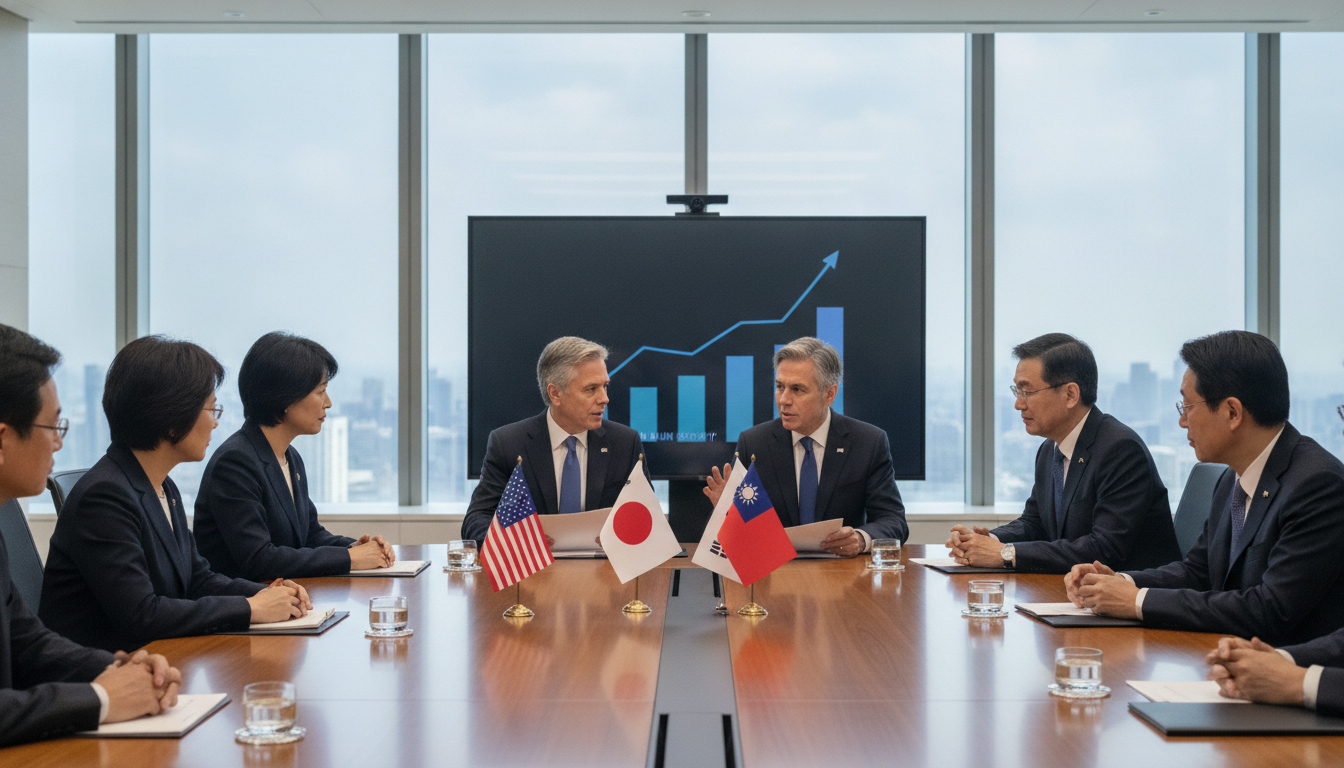
U.S. helium exports rise as Japan, South Korea and Taiwan shift supply amid global squeeze
U.S. helium exports surge to become the main supply source for East Asian chipmakers as Middle East conflicts and Chinese limits tighten global stocks.
The United States has become the primary supplier of helium to Japan, South Korea and Taiwan, according to an analysis of customs data, prompting semiconductor firms and governments in the region to recalibrate procurement strategies. U.S. helium exports, crucial for chipmaking processes that require ultra-pure, inert gas, have risen as disruptions in traditional sources reduce available global volumes. The shift comes as armed conflict in the Middle East and tighter export controls from a major producer constrict supply chains for this essential industrial gas.
U.S. supply overtakes traditional exporters
An examination of recent trade flows shows U.S. shipments now outpace other exporters to the three East Asian economies that host many advanced semiconductor fabs. The change reflects both increased production capacity and a rapid reorientation by buyers seeking reliable deliveries. Importers have turned to longer-term supply agreements and larger cargoes from U.S. terminals to avoid spot-market fluctuations.
Middle East fighting and Chinese export curbs tighten market
Regional instability in the Middle East has constrained pipeline and liquid helium exports that previously fed global markets, while export restrictions from a significant East Asian producer have further limited available volumes. These simultaneous disruptions have produced a sharper, more immediate squeeze than industry observers expected. The combined effect has elevated the strategic value of alternate sources, notably helium produced and shipped from the United States.
Implications for semiconductor manufacturing in Japan, South Korea and Taiwan
Helium is indispensable for multiple stages of semiconductor fabrication, including cooling, leak detection and creating inert atmospheres for precision etching and deposition. The increased reliance on U.S. helium exports has reduced immediate disruption risk for fabs but introduced new logistical and pricing considerations. Chipmakers say ensuring uninterrupted supply is essential to maintaining production yields and meeting delivery commitments to global customers.
Logistics, contracts and price volatility
Shippers and buyers are adapting to longer transit distances and storage constraints by renegotiating contracts and arranging more frequent deliveries. Spot-market volatility has driven some firms to expand on-site inventories or to secure fixed-price clauses in supply agreements. Industry sources report that freight scheduling and cryogenic handling capacity have become as important as raw gas availability in determining how quickly supply shifts can be implemented.
Industry measures to reduce exposure
Facing higher supply risk, some semiconductor firms are accelerating investments in helium recycling systems and on-site recovery units to reduce net consumption. Companies are also diversifying suppliers and exploring bulk storage solutions to bridge short-term shortages. Research into substitute gases and process refinements that lower helium dependence has gained renewed attention, although such technical adjustments typically require months to years of validation.
Policy responses and strategic stockpiling
Governments in the affected economies are treating helium as a strategic industrial input and are consulting with private industry on options to strengthen resilience. Possible measures under discussion include strategic stockpiles, incentives for domestic recovery projects, and diplomatic engagement with major producers to secure long-term contracts. Officials stress that predictable access to helium is now part of broader semiconductor supply-chain security planning.
The near-term outlook points to continued prominence for U.S. helium exports in East Asian markets, but industry experts caution that the situation remains fluid. Supply adjustments, infrastructure upgrades and policy actions will shape how smoothly fabs can operate through the current squeeze. In the months ahead, companies and governments will likely balance near-term sourcing from the United States with longer-term investments aimed at reducing reliance on volatile international flows.

