
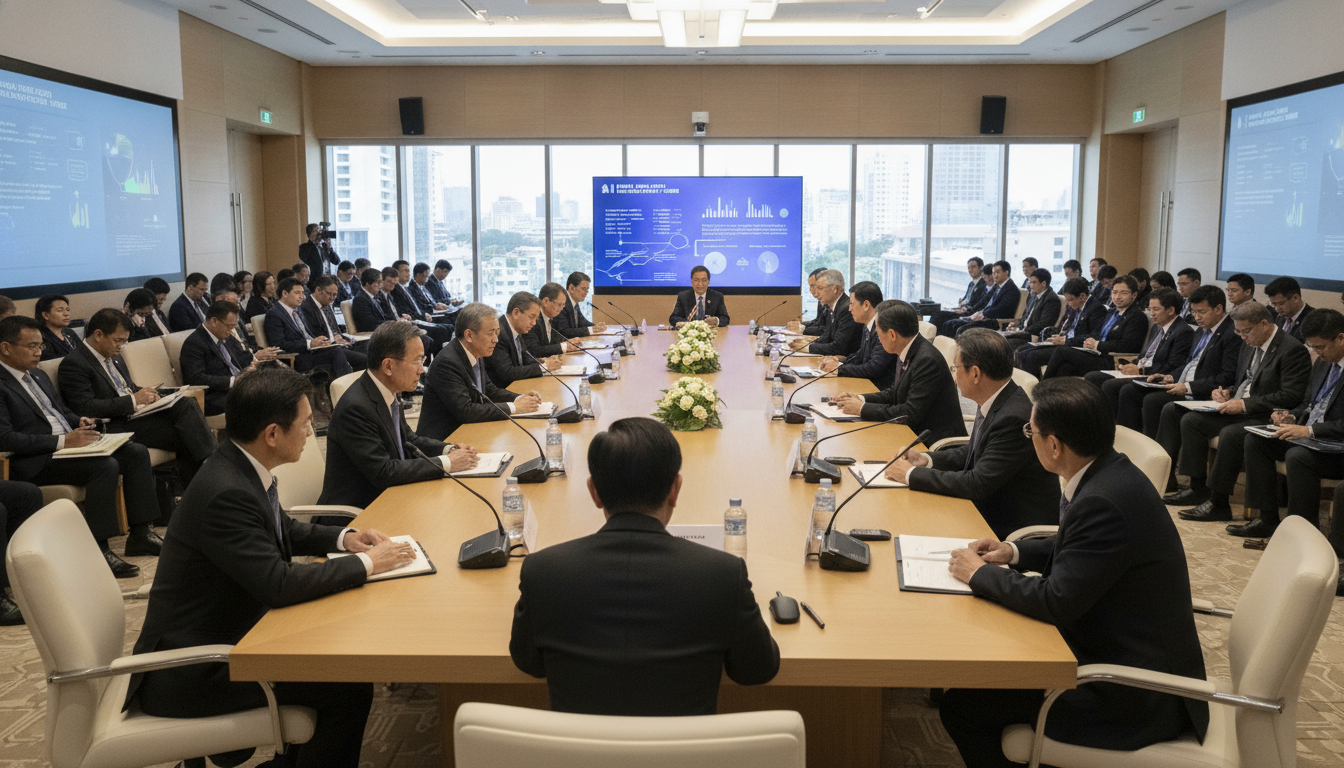
Nikkei Business Forum in Bangkok Brings Asia-Pacific Leaders Together on Energy, Mobility and AI
Nikkei business forum Bangkok brings 20 Asia-Pacific leaders to tackle energy crisis, mobility shift and the future of AI, shaping regional investment.
Forum opens in Bangkok
The Nikkei business forum in Bangkok opened this week, convening senior corporate and political figures from across the Asia-Pacific to discuss pressing regional challenges. Organizers said the event will cover topics from the energy crisis and transportation innovation to the governance and commercial implications of artificial intelligence.
The conference features panels, bilateral meetings and closed-door roundtables designed to spur public-private cooperation and investment. Delegates are expected to use the forum to map strategic priorities for the coming year and to signal policy and market intentions to investors.
Senior figures and corporate leaders attending
More than 20 company and political leaders from Japan, Thailand and other Asia-Pacific economies are participating in the forum. Among those present are Sony Group Executive Chairman Kenichiro Yoshida and senior Thai cabinet members, reflecting the cross-sector composition of attendees.
Thai Deputy Prime Ministers Ekniti Nitithanprapas and Sihasak Phuangketkeow are taking active roles in sessions that link economic policy and diplomatic strategy. Corporate delegations include executives from major technology, energy and automotive firms, signaling the private sector’s interest in regional cooperation on investment and infrastructure.
Agenda centers on energy security and mobility innovation
A central strand of the forum’s programme is the energy crisis, with sessions focused on supply resilience, transition strategies and regional trade in fuels and renewables. Panelists will examine near-term responses to volatility as well as longer-term decarbonization pathways that require coordinated policy and capital flows.
Mobility and transport innovation constitute a second major thread, encompassing everything from electric vehicles to smart infrastructure and urban planning. Speakers plan to discuss how public policy can accelerate deployment of new mobility technologies while maintaining affordability and access.
Future of AI and governance discussions
Artificial intelligence features prominently on the agenda, with debates slated on regulation, corporate responsibility and cross-border data governance. Participants will probe how governments and firms can balance innovation incentives with safeguards for competition, privacy and national security.
Sessions will also address workforce impacts and investment in skills, as industry leaders and policymakers seek practical steps to integrate AI into industries such as manufacturing, logistics and financial services. The forum aims to surface policy options that can be implemented at national and regional levels.
Thailand’s role as host and strategic partner
Thailand is using the forum to underscore its role as a regional hub for investment and dialogue, bringing together diplomatic and economic leadership with private-sector actors. The presence of top Thai ministers signals Bangkok’s intent to align domestic policy initiatives with broader Asia-Pacific priorities.
Officials outlined plans to leverage infrastructure projects and targeted incentives to attract technology and clean-energy investment. By hosting multinational discussions, Thailand aims to both showcase opportunities and help coordinate cross-border initiatives in energy and mobility.
Business and investment implications for the region
For corporate participants, the forum provides a venue to test partnership propositions and to signal investment plans to peers and policymakers. Market analysts say the event can catalyze deal-making by clarifying regulatory expectations and identifying areas where public funding can de-risk private capital.
Investors will be watching for concrete announcements on infrastructure, public-private partnerships and regulatory roadmaps for AI and electric mobility. Outcomes from the forum could influence financing timelines and the allocation of capital across the Asia-Pacific in the months ahead.
Follow-up mechanisms and Nikkei’s convening role
Organizers emphasized follow-up mechanisms, including working groups and task forces that will take forward proposals developed during the forum. Nikkei, as host, intends to maintain momentum through reporting and supplementary events that translate discussion into action.
The forum’s structure — panels, closed-door sessions and bilateral meetings — is designed to move beyond debate to practical collaboration. Stakeholders said sustained engagement will be necessary to convert high-level consensus into policy and commercial projects.
The Nikkei business forum in Bangkok is positioned as a focal point for charting cooperative responses to shared challenges across the Asia-Pacific, with energy security, mobility and AI at the core of the agenda. Observers will be watching to see which policy initiatives and private-sector commitments emerge from the meetings and how they reshape regional investment patterns.

