
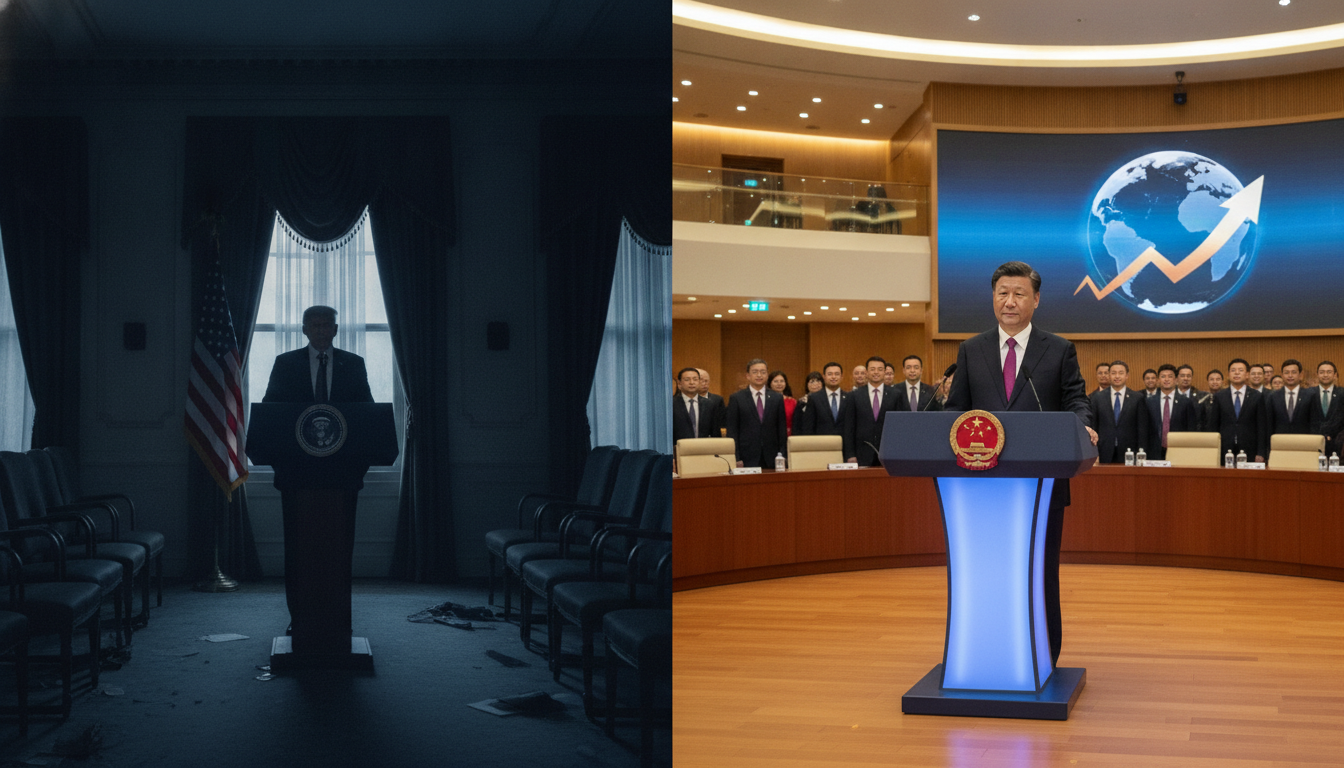
Survey Finds Eroding Confidence in U.S. as Global Democracy Backsliding Accelerates
Tokyo experts and a survey warn of global democracy backsliding, citing falling trust in the U.S. and rising confidence in Xi amid tech-driven authoritarianism.
Global democracy faces mounting pressure, experts told a conference in Tokyo this week, as a new international survey documented declining trust in U.S. leadership and growing confidence in China’s Xi Jinping. The survey and specialists argued that two decades of democratic backsliding, combined with more coordinated and technologically adept authoritarian strategies, have placed liberal systems on a precarious trajectory. Policymakers in Asia and beyond were urged to reassess democratic resilience in light of shifting public perceptions and tools of influence.
Experts Sound Alarm in Tokyo
A panel of political scientists and regional analysts met in Tokyo to outline trends they said are eroding democratic norms worldwide. They pointed to weakening institutions, shrinking civic space, and electoral irregularities as long-term drivers of democratic decline.
Speakers highlighted that the current pattern is not isolated to one region but emerges from a mixture of domestic governance failures and external statecraft. The Tokyo meeting framed the issue as both structural and strategically amplified by rivals that leverage new technologies.
Survey Shows Waning Trust in U.S. Leadership
The international survey at the center of the discussion found a measurable drop in public confidence in the United States, especially in countries that had previously viewed the U.S. as a stabilizing democratic model. Respondents cited perceptions of political polarization, policy inconsistency, and weakened democratic norms as reasons for diminished trust.
Analysts at the conference argued that declining confidence in U.S. leadership creates openings for alternative governance models to gain traction. They cautioned that perception shifts, even if temporary, can translate into policy choices that favor non-democratic partners.
Confidence in Xi Jinping Rises in Multiple Regions
Survey data showed increasing approval of Chinese leadership in several regions, a trend conference participants linked to Beijing’s emphasis on economic partnerships and state-led development successes. Officials in some countries expressed pragmatic support for closer ties, citing trade, infrastructure, and investment benefits.
Experts stressed that rising confidence in Xi Jinping does not imply wholesale endorsement of Chinese political practices, but rather reflects competitive framing by China and effective messaging around governance stability. That dynamic, they warned, could normalize authoritarian governance as a viable alternative in policy debates.
Technology and Coordination Strengthen Authoritarian Strategies
Speakers singled out technology as a force multiplier for authoritarian regimes, noting advances in surveillance, social media manipulation, and data-driven persuasion. These tools, they argued, enable tighter domestic control and more subtle influence operations abroad.
The panel described how coordinated information campaigns and targeted economic inducements are being used to undermine democratic norms and electoral confidence. They also warned that democracies’ slower regulatory responses have allowed authoritarian techniques to migrate across borders.
Implications for Democracies and Policy Responses
Conference participants urged democratic governments and civil society to prioritize resilience measures, including stronger electoral safeguards, media literacy programs, and enforcement of transparency rules for political advertising online. They also recommended closer coordination among democratic allies to present coherent policy alternatives.
Several analysts advocated for renewed investment in public services and anti-corruption measures to rebuild citizens’ faith in democratic institutions. They emphasized that restoring trust requires tangible policy outcomes as well as effective communication about democratic values.
The Tokyo discussion underscored the urgency of adapting democratic practice to contemporary challenges. Panelists suggested that while democratic systems are adaptable, the window for corrective action narrows if perceptions continue to shift away from democratic actors and toward authoritarian models.
Authorities, think tanks, and advocacy groups were urged to treat the survey’s findings as a call to action rather than a foregone conclusion. The experts at the event stressed that reversing backsliding will require sustained public engagement, cross-border cooperation, and strategic use of technology to bolster transparency and civic participation.
The conference concluded with a consensus that the struggle over governance models is both ideological and practical, playing out in elections, trade negotiations, and digital spaces. Stakeholders were advised to combine policy reform with outreach to communities most affected by governance failures, ensuring that democratic renewal addresses everyday concerns that drive public disillusionment.

