
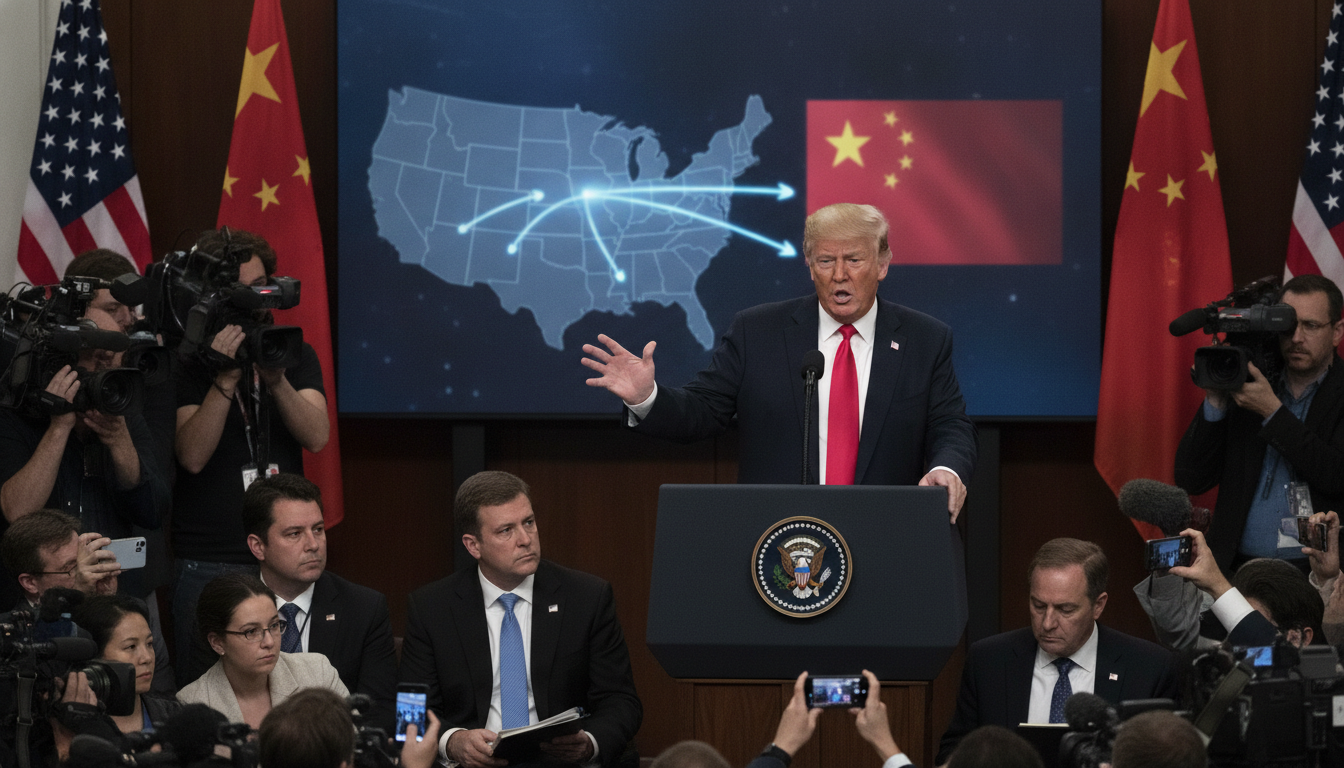
Trump Accuses China of Stealing U.S. Voter Data, Deepening US-China Tensions
President Trump accused China of illicitly obtaining election data on hundreds of millions of Americans, alleging a clandestine cover-up that could intensify US-China tensions ahead of the midterms.
Trump’s Accusation During a White House Address
President Donald Trump said in an address from the White House East Room on July 16 that China had illicitly obtained election-related data on hundreds of millions of Americans. He framed the allegation as a national security and election integrity crisis, asserting that elements within the U.S. government obscured the incident.
The claim, delivered in a high-profile speech, immediately injected a new flashpoint into already fraught US-China relations. Mr. Trump did not disclose detailed technical evidence in the address, and his allegations have prompted demands for further information from officials and lawmakers.
Alleged Scale and Nature of the Data Theft
Trump described the haul as involving "election data" on a very large scale, implying the records could affect ballot integrity and voter privacy. He suggested the data reached hundreds of millions of Americans, though he did not specify which datasets, databases, or vendors were involved.
Cybersecurity experts note that the term election data can encompass voter registration records, poll rolls, personal identifying information, and commercial profiling datasets. Independent verification and forensic analysis would be required to determine the scope, provenance and potential impact of any such breach.
Claims of a ‘Deep State’ Cover-Up
In his remarks, the president accused what he called "deep state" bureaucrats of concealing the incident from the public. He argued the alleged cover-up deprived voters of critical information ahead of upcoming elections and demanded transparency from federal agencies.
Accusations of internal concealment raise questions about interagency communications and oversight. If substantiated, such claims would likely trigger formal congressional inquiries and scrutiny of how classified and unclassified intelligence is shared with elected officials and the public.
Washington Institutions Face Pressure for Answers
The allegation is certain to draw attention from congressional oversight committees, federal cybersecurity agencies and the intelligence community. Lawmakers and investigators will be pressed to determine whether intelligence indicating foreign access to sensitive datasets existed and how it was handled.
Federal departments that manage election security and cyber defenses, including the Department of Homeland Security and national intelligence entities, typically coordinate with states and private firms on data protection. Officials will come under pressure to disclose what they knew and to outline steps taken to mitigate any exposure.
Beijing’s Response and Diplomatic Ramifications
China did not issue an immediate, detailed response to the accusation following the White House address. Beijing historically denies allegations of state-sponsored cyber intrusions when they are raised publicly, and it often calls for evidence or engages through diplomatic channels.
The charge risks heightening bilateral friction across multiple fronts, from trade and technology controls to diplomatic engagement in Washington and Beijing. Accusations of direct Chinese involvement in a data theft targeting U.S. voters would complicate ongoing negotiations and could prompt retaliatory measures or additional sanctions.
Potential Impact on Midterm Politics and Election Security Debate
Trump framed his allegation in political terms, warning it could affect the forthcoming midterm contests. Claims of foreign access to voter information are likely to shape campaign narratives, deepen partisan divisions over election administration, and amplify calls for tougher cybersecurity measures.
Beyond immediate politics, the episode is likely to accelerate discussions about the role of private data brokers, the security of state voter files, and the resilience of election infrastructure. Policymakers and technology firms may face renewed pressure to tighten data protections ahead of the 2026 midterms.
The U.S. will now face a twofold task: establishing the factual basis for the president’s claims through technical investigation, and managing the diplomatic fallout with China if evidence points to state involvement. Transparency from federal agencies and clear reporting of findings will be essential to restore public confidence.
In the days ahead, congressional committees, cybersecurity authorities and international partners will seek verification and may request classified briefings. The outcome of those inquiries will determine whether the accusation remains an unresolved claim or becomes a pivotal moment that reshapes U.S. strategies on data security and relations with Beijing.

