
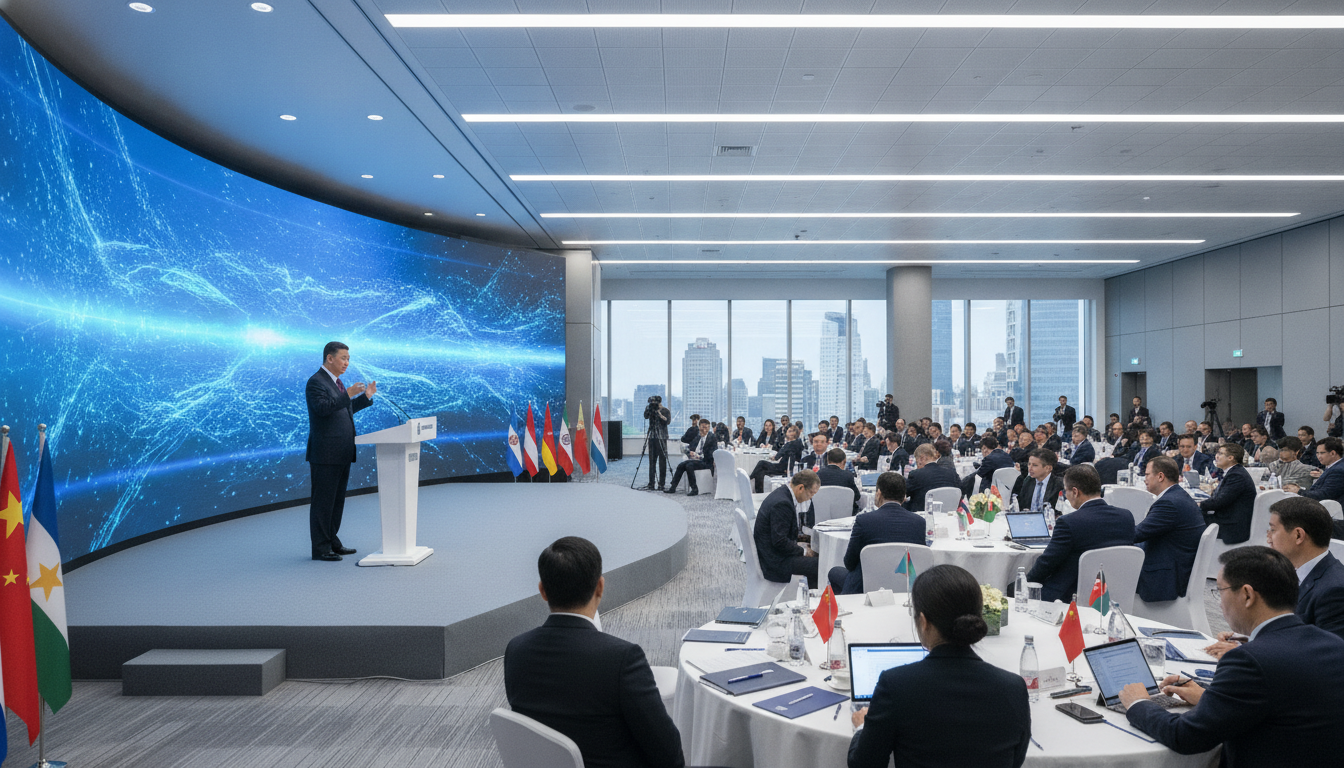
Xi Jinping urges AI cooperation among developing countries at World AI Conference in Shanghai
Chinese president calls for greater AI cooperation to close the technology gap, pitching Beijing’s vision at the World AI Conference in Shanghai on July 17, 2026.
Opening remarks in Shanghai
Chinese President Xi Jinping on July 17 called for increased AI cooperation among developing countries to narrow the international technology gap, using the World AI Conference in Shanghai as a global platform.
Xi framed enhanced collaboration as a means to boost shared development and to ensure that artificial intelligence benefits are more evenly distributed across regions.
The speech came as the conference drew senior political figures and industry leaders, underscoring Beijing’s effort to present China as a leading voice on AI governance and capacity building.
Leaders and delegations at the conference
A number of foreign leaders and senior officials attended opening events, signaling broad interest in the Shanghai gathering.
Photographs from the ceremony showed Cambodian Prime Minister Hun Manet, Kazakhstan’s President Kassym-Jomart Tokayev, Thailand’s Prime Minister Anutin Charnvirakul and UN Secretary-General António Guterres alongside Xi.
Their presence alongside business executives and researchers highlighted the WAIC’s role as a meeting point for diplomacy, investment talks and technical exchange.
China’s pitch for closing the technology gap
Xi emphasized cooperation as a strategy to close what he called an “international technology gap,” urging joint efforts in research, talent training and infrastructure.
Beijing’s argument centers on mobilizing resources to raise AI capacity in lower-income countries and to foster partnerships that reduce dependency on a narrow set of suppliers.
The president’s remarks suggested a policy mix of state-led investment and international collaboration aimed at boosting both domestic and partner-country ecosystems.
Policy context and geopolitical backdrop
The call for AI cooperation comes against a backdrop of frictions between China and Western governments over technology transfer and export controls.
In recent years, restrictions on advanced chips and software have intensified debates over supply chains and the need for alternative partners and standards.
By promoting cooperation with developing countries, Beijing appears to be seeking allies for new technical standards and market ties while promoting resilience in its own technology sectors.
Industry response and opportunities for developing countries
Business groups and researchers at the WAIC responded with cautious interest, noting the potential for joint research hubs, training programs and testbeds.
Industry participants said cooperation could accelerate deployment of AI in health, agriculture and public services in countries that have lagged behind.
Experts also warned that effective cooperation will require transparent governance, safeguards for data privacy, and investments in local skills rather than one-way technology transfers.
Implications for global AI governance
Xi’s appeal highlights a contest over the rules that will govern AI development and use on a global scale.
If Beijing successfully advances cooperative frameworks with a wide group of developing states, it could shape technical norms, standards and procurement practices in its favor.
At the same time, international organizations and a growing number of countries are calling for multilateral rules to manage risks around safety, fairness and security.
China’s broader strategy at the World AI Conference combines technological showcase, diplomatic outreach and economic opportunity, with officials promoting both homegrown AI capabilities and expanded international partnerships.
The tone set by Xi and the attendance of global figures at the event indicate that AI cooperation will remain a focal point in discussions this year, influencing investment flows, standard-setting debates and bilateral ties across Asia, Africa and beyond.

