
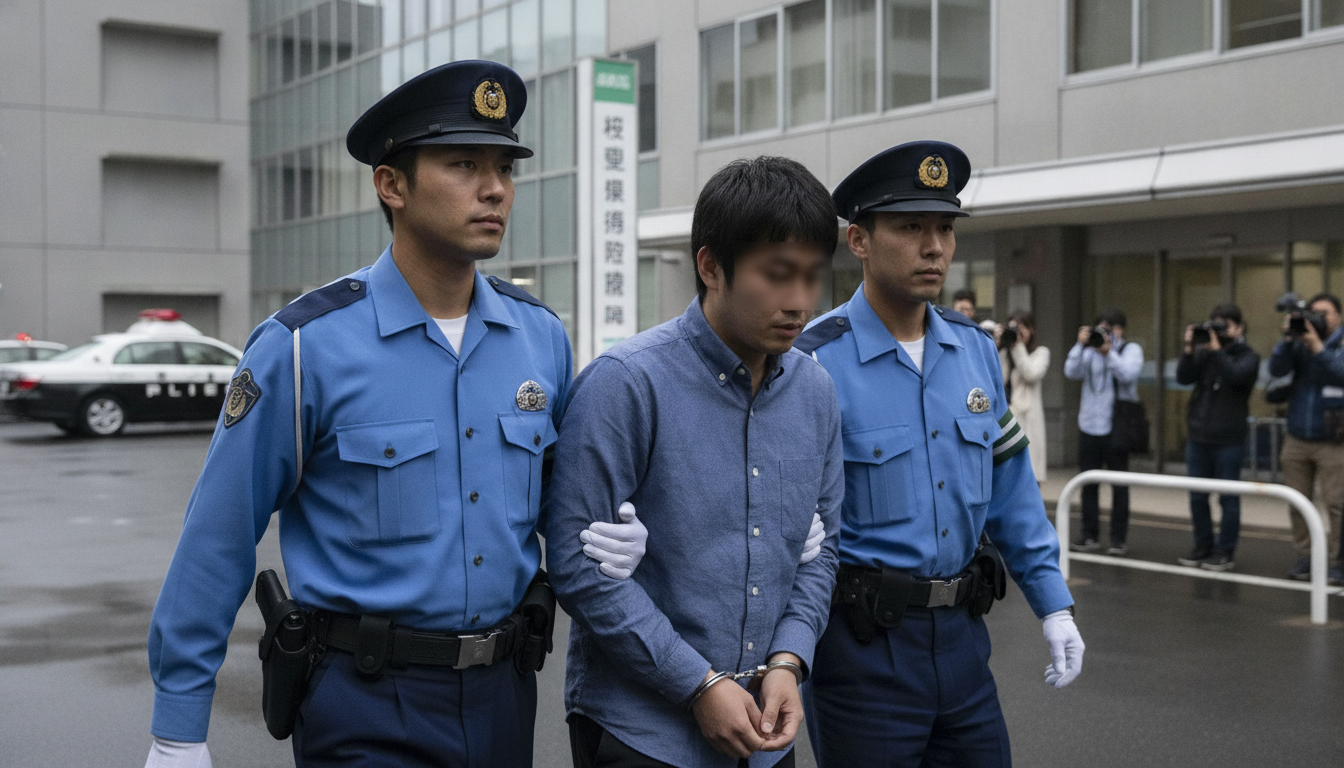
Former hospital worker arrested in Kashiwa on suspicion of IV tampering that killed patient
A former hospital employee in Kashiwa, Chiba, has been arrested on suspicion of IV tampering after investigators say excrement was allegedly introduced into a patient’s intravenous drip, a move linked to the patient’s death.
Incident and arrest
A former staff member at a hospital in Kashiwa was taken into custody after police said they found evidence suggesting excrement had been placed into a patient’s intravenous line, an act investigators characterize as IV tampering linked to the patient’s subsequent death. The arrest followed interviews and on-site inquiries by hospital officials and law enforcement, who flagged unusual activity on the night of the incident. Authorities say the suspect is a former employee of the facility and has been detained while the investigation continues.
The police have framed the case as a possible criminal act rather than an accident, but investigators stressed that the probe is ongoing and the suspect remains presumed innocent until proven guilty in court. Hospital officials declined to release the names of patients or staff, citing privacy and the sensitivity of an active criminal investigation.
Night-shift movements under scrutiny
Hospital interviews and internal checks revealed that the arrested individual entered the deceased patient’s room several times during the night shift on the day of the incident. Sources said the employee was not assigned to that patient on the shift in question but nonetheless made multiple visits. According to statements taken by investigators, the former worker told colleagues and hospital staff that they had gone to the room because they were “concerned about the patient’s condition” and wanted to check on them.
This pattern of unassigned room entries is central to investigators’ focus, who say those movements could have provided opportunities for contamination of the intravenous equipment. Police are examining staff rosters, access logs, and any available surveillance footage to build a clearer timeline of the suspect’s actions that night.
Police findings and suspect’s response
Investigators say their working theory includes the possibility that the multiple room visits created chances to tamper with the IV line, but they emphasize that evidence-gathering is ongoing. Forensic teams have reportedly been involved to examine medical devices and sample evidence, while detectives continue to interview witnesses and hospital personnel. Police have not publicly disclosed all investigative details, citing the need to protect the integrity of the probe.
The arrested former employee has denied the charges, according to police statements. Authorities say the suspect maintains innocence in interviews and has offered explanations for the room entries; those explanations are being assessed against other evidence collected by investigators.
Hospital actions and internal review
The hospital where the incident occurred has launched an internal review alongside cooperating with police inquiries, hospital representatives said in response to questions from reporters. Officials told investigators they are examining shift assignments, staffing levels, recordkeeping and any lapses in protocol that might have allowed unauthorized access to patient rooms or medical equipment. The facility has also signaled that it will review infection-control procedures and the monitoring of intravenous lines.
Hospital administrators declined to provide detailed operational information publicly but indicated that patient safety and transparency are priorities. They have notified affected families and are offering support services while the criminal investigation proceeds.
Medical risks and legal implications
Contamination of intravenous solutions or lines can present acute medical dangers, including severe infection, sepsis and other life-threatening complications depending on the contaminant and the patient’s condition. Medical experts note that deliberate contamination of an IV is a rare but extremely serious breach of clinical safety standards that can have fatal consequences. Prosecutors will assess whether the actions meet the evidentiary threshold for charges such as homicide or other criminal offenses under Japanese law.
Legal analysts say the case will hinge on forensic evidence linking the suspect to the tampering and on whether investigators can establish intent and causation. If prosecutors proceed, the accused could face serious criminal penalties, but any prosecution must prove the sequence of events and motivation beyond a reasonable doubt.
Community and regulatory response
News of the arrest has prompted concern among patients and residents in Kashiwa and beyond, with calls for greater hospital oversight and clearer safeguards to protect vulnerable inpatients. Local health authorities may review the case details and determine whether broader regulatory action or guidance for hospitals is warranted. Patient safety advocates say the incident underscores the need for robust monitoring of medical devices and strict controls on room access during shifts.
Hospital stakeholders and community leaders have urged patience while investigators complete their work, emphasizing that premature conclusions should be avoided until the full facts are laid out.
Authorities continue to investigate the incident, and the case remains under active criminal inquiry. The suspect remains in custody as police and prosecutors gather further evidence and interview additional witnesses to clarify the circumstances surrounding the alleged IV tampering and the patient’s death.

