
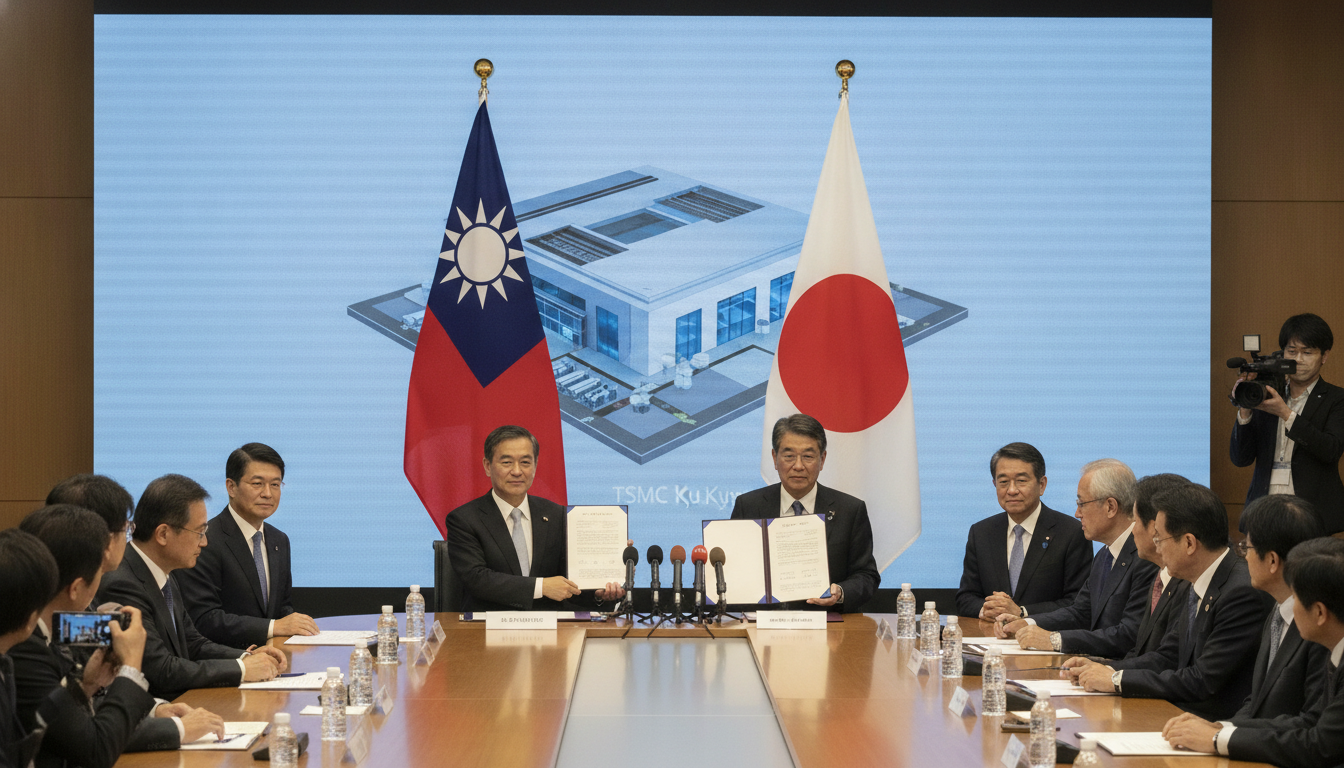
TSMC in Kyushu Sparks Investment Surge as Kumamoto Emerges into Japan’s “Silicon Island”
Taiwan’s TSMC in Kyushu has triggered a wave of investment across Kumamoto and Fukuoka, attracting banks, venture capital and startups to build a regional semiconductor ecosystem.
FUKUOKA/KUMAMOTO — The arrival of Taiwan Semiconductor Manufacturing Co. (TSMC) in Kyushu has catalyzed a rapid expansion of semiconductor activity across Kumamoto and neighboring Fukuoka, drawing capital from Taiwanese and Japanese investors and prompting a new generation of local startups to scale. The development, centered on TSMC’s Japan Advanced Semiconductor Manufacturing (JASM) operations in Kumamoto, has driven fresh funding and corporate partnerships aimed at building a domestic supply chain. (pr.tsmc.com)
TSMC’s Kumamoto Presence and Production
TSMC’s majority-owned JASM opened its first factory in the Kumamoto region and began mass production in late 2024, marking the company’s first manufacturing foothold in Japan. The site was designed to produce a range of nodes from more mature processes up to more advanced geometries, and TSMC has signaled plans for additional capacity expansions on the site. (pr.tsmc.com)
The establishment of onshore chip manufacturing has been framed by Tokyo and local governments as a strategic initiative to secure supply chains and deepen industrial ties with Taiwan. Officials and industry partners have highlighted the importance of the Kumamoto plants in supplying automotive and industrial customers in Japan. (apnews.com)
Big-name Japanese Investors Join JASM
Major Japanese companies have taken equity and partnership stakes in the JASM venture, aligning industrial customers with the new fabs. Sony, Denso and Toyota were among the Japanese firms identified as investors or strategic partners in the Kumamoto project, reflecting their interest in securing domestic foundry capacity for automotive and imaging applications. (apnews.com)
These corporate relationships have helped to de-risk supply commitments and attract follow-on investment from component suppliers and equipment makers assessing opportunities to localize production. The presence of large domestic buyers also reassures banks and institutional financiers considering regional project financing. (kyushu.meti.go.jp)
Startups Take the Stage at Kumamoto Semiconductor Venture Pitch
Local and regional startups have begun to surface with technologies aimed at supplying the new semiconductor ecosystem, showcased at the inaugural Kumamoto Semiconductor Venture Pitch held in February 2026. The pitch event spotlighted early-stage companies working on everything from bonding and packaging innovations to circuit design tools and materials science. (prtimes.jp)
LINK-US, a Kumamoto-based venture that demonstrated a novel metal-joining technique with potential cost and performance benefits for chip manufacturing, was among the prize winners at the event and has used the exposure to accelerate partnerships and investor discussions. Organizers say the pitch was intended to connect local inventors with both domestic and Taiwan-based capital. (prtimes.jp)
Banks and Venture Capital Mobilize Funding
Regional banks and Japan’s venture capital community have responded to the opportunity by increasing financing tailored to semiconductor supply-chain companies and startups. Local financial institutions are offering loans and credit facilities to suppliers expanding capacity near the Kumamoto cluster, while specialized funds are targeting early-stage hardware and materials startups that can serve TSMC’s ecosystem. (kyushu.meti.go.jp)
Taiwanese investors and corporate venture arms have also shown willingness to back Japanese startups, creating cross-strait funding channels that leverage Taiwanese experience in semiconductor manufacturing. This capital mix is helping bridge the financing gap between prototype development and commercial-scale production for local firms. (pr.tsmc.com)
Supply Chain Growth and Real-world Impacts
The industrial build-out around the Kumamoto area has generated measurable economic ripple effects, including increased demand for industrial land, logistics services and skilled labor. Local reports and market analyses show rising commercial and residential values in municipalities near the plant, while suppliers relocating to the region report faster procurement cycles and reduced logistics costs. (tanikan.co.jp)
Training programs, university partnerships and technical internships are expanding to meet hiring needs, with local governments and industry groups emphasizing workforce development as a priority to sustain long-term growth. Officials expect that a deeper regional talent pool will both attract more suppliers and boost startups that rely on specialized engineering skills. (shiten.agi.or.jp)
Challenges and Timelines Ahead
Despite the momentum, industry observers caution that full ecosystem formation will take years and depend on timely investments in second-tier facilities, clean-room services and advanced packaging capacity. Reports have flagged possible delays and the technical challenge of upgrading fabs to newer process nodes, which could shape the pace of supplier expansion and product road maps. (tomshardware.com)
Regulatory approvals, infrastructure upgrades and coordinated public-private financing will be critical to sustaining investment momentum, particularly for capital-intensive projects such as equipment manufacturing and large-scale packaging operations. Stakeholders stress that policy continuity and clear procurement pipelines from large domestic customers will help convert early interest into long-term industrial commitments. (kyushu.meti.go.jp)
The clustering effect in Kyushu, anchored by TSMC’s JASM operations, has already shifted investor attention and resource allocation toward southern Japan, creating a plausible pathway for Kumamoto to develop into a self-sustaining semiconductor hub. Continued coordination between industry, financial institutions and local governments will determine whether the region can translate initial capital flows and startup enthusiasm into a durable supply-chain ecosystem supporting Japan’s broader technology ambitions.

