
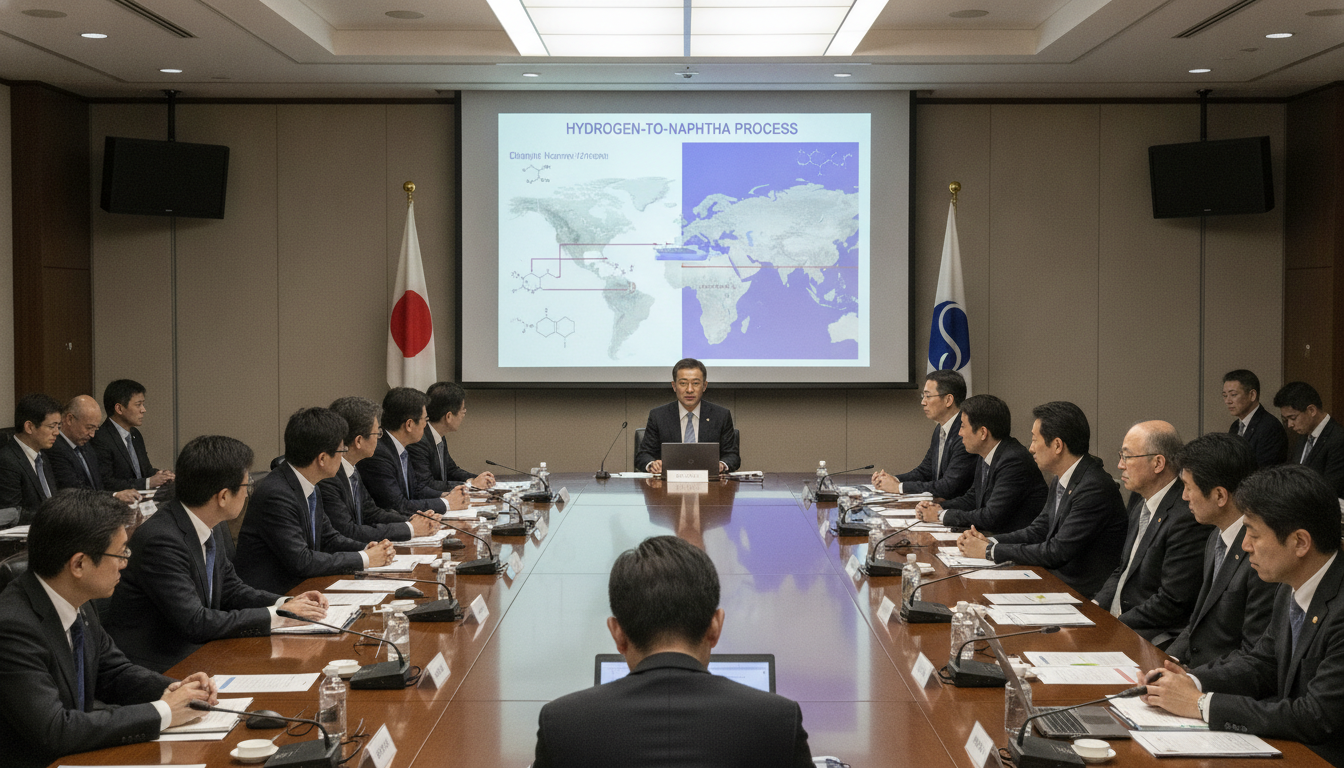
Kawasaki Heavy Proposes Hydrogen-Derived Naphtha as Hormuz Closure Strains Supply
Kawasaki Heavy proposes hydrogen-derived naphtha to offset Strait of Hormuz disruptions, pushing Japan’s petrochemical sector toward new synthesis technologies.
Kawasaki Heavy Industries has begun pitching alternative production routes to make naphtha from hydrogen as Japan’s petrochemical feedstock supply faces disruption from the ongoing closure of the Strait of Hormuz. The company is advancing concepts that would use hydrogen as a primary input to synthesize naphtha-range hydrocarbons, aiming to reduce reliance on crude-oil-derived feedstocks used across plastics and inks. The move comes as manufacturers and policy makers weigh options to secure domestic supplies and maintain output at refineries and petrochemical plants.
Kawasaki Heavy’s proposal and industrial rationale
Kawasaki Heavy Industries is positioning hydrogen-derived naphtha as a strategic alternative to imported naphtha amid sustained transit disruptions through the Strait of Hormuz. The company has been working on hydrogen infrastructure projects, including a liquefied hydrogen terminal in Kobe, and says the current supply shock has accelerated interest in onshore synthetic routes. For Kawasaki, adapting existing engineering expertise in gas handling, liquefaction and petrochemicals offers a pathway to commercialize technologies that pair hydrogen with carbon feedstocks.
Technical pathways under consideration
Engineers propose producing synthetic naphtha by converting hydrogen into longer-chain hydrocarbons with the aid of captured carbon dioxide or other carbon sources. Industry discussions indicate a combination of hydrogen generation, CO2 capture and chemical synthesis—using established catalytic processes—would be needed to reach naphtha-range molecules suitable for refinery crackers and chemical plants. Kawasaki and others stress that scalable electrolysis capacity, reliable CO2 supply and robust catalyst systems are prerequisites before such routes can substitute materially for crude-derived naphtha.
Impacts on Japan’s petrochemical supply chain
Japan’s petrochemical sector relies heavily on naphtha as a feedstock for producing ethylene and propylene, precursors to a broad range of plastics and industrial chemicals. Disruption to sea lanes that carry crude and refined products into Japan has raised the prospect of tighter feedstock availability, elevated costs and the need for emergency sourcing strategies. A domestic synthetic naphtha option would reduce exposure to chokepoint risks and give manufacturers a backup source, but switching supply chains and plant configurations would take time and coordinated investment.
Infrastructure and investment hurdles
Scaling hydrogen-derived naphtha requires major infrastructure buildout, from large-scale electrolyzers and renewable power to CO2 capture systems and synthesis plants capable of producing stable, refinery-ready hydrocarbons. Port facilities and storage for liquid hydrogen—such as the Kobe terminal Kawasaki constructed—would also need expansion to handle increased flows. Industry analysts caution that capital intensity and long lead times mean near-term relief for petrochemical feedstock shortages is unlikely without public support or accelerated private-sector commitments.
Environmental and regulatory considerations
The environmental credentials of hydrogen-derived naphtha depend on how the hydrogen and carbon inputs are sourced. If hydrogen is produced via electrolysis powered by renewable electricity and paired with responsibly captured CO2, lifecycle emissions can be substantially lower than conventional crude-based routes. Regulators will face decisions on classification, incentives and standards for synthetic hydrocarbons, which will shape investment signals and the pace of adoption. Clearer policy frameworks and certification systems will be critical to mobilize financing and industrial uptake.
Market reaction and policy options
Petrochemical companies and downstream manufacturers are monitoring Kawasaki’s proposals while evaluating inventory, alternate imports and retrofit options to maintain production continuity. Government agencies may be urged to consider emergency measures, including subsidies for domestic synthesis projects, streamlined permitting for hydrogen and carbon infrastructure, and strategic reserves targeting feedstocks. Financial markets and commodity traders are likely to price in both the short-term disruption and the medium-term potential of alternative-feedstock projects as more technical assessments and pilot results emerge.
The proposal from Kawasaki Heavy underscores how energy and industrial strategy are intersecting with national security concerns, as Japan looks to diversify feedstock sources and build resilience against maritime disruptions. Continued dialogue among industry, regulators and technology providers will determine whether hydrogen-derived naphtha can move from engineering studies to a viable component of Japan’s petrochemical supply mix.

