
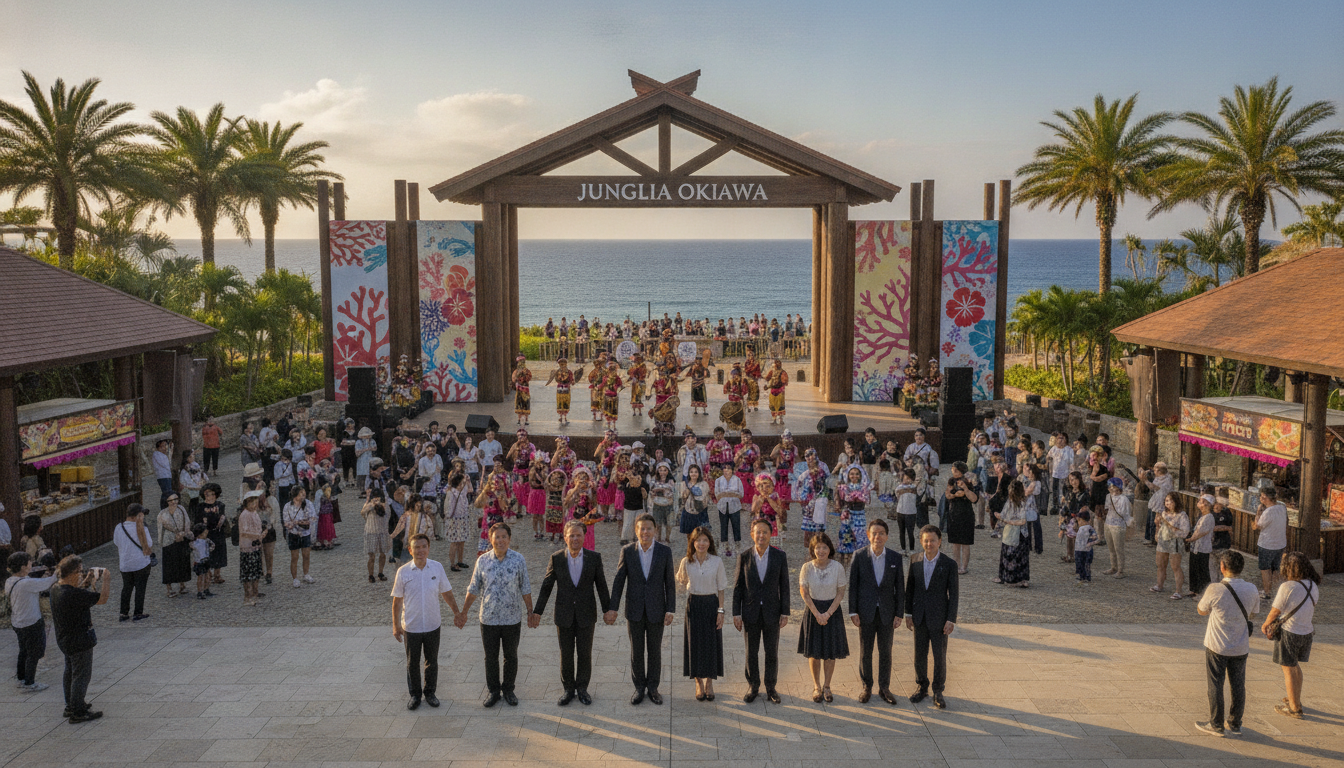
Junglia Okinawa Marks First Anniversary, Turns to “Okinawa-ization” to Boost Attendance
Junglia Okinawa faces attendance pressure after year one; the park will lean into Okinawa-focused experiences and local partnerships to revive visitor numbers.
Junglia Okinawa reached its first anniversary on July 25, drawing fresh attention to both its early promise and subsequent attendance challenges. The large-scale theme park, positioned as a northern Okinawa tourism hub, has been the subject of social media posts showing sparse crowds, and operators say their response is to deepen the park’s Okinawa identity. Management and investors are now betting that a sharper local focus will help stabilize visitor flows in year two.
First anniversary highlights and social media scrutiny
A one-year milestone that began with high expectations has been tempered by mixed public perception. While opening generated major media attention and an initial surge of visitors, posts on social platforms later showed empty walkways and raised alarm among local stakeholders. Those images prompted questions from investors and regional officials about whether the park can sustain its role as a draw for the island’s less-visited north.
New attractions and on-site visitor experience
Park officials pointed to recent additions and operational improvements as signs of progress. The "Yanbaru Tornado," which launched in April, was observed in mid-July weekdays with roughly 30 percent of its circular seating occupied, producing audible screams and cheers when it operated. Jungle-themed rides such as the off-road "Dinosaur Safari" remain central to the park’s appeal, while mature plantings have increased the sense of being in a genuine jungle environment.
Scale, cost and regional investment
Junglia occupies about 60 hectares—equivalent to roughly 13 Tokyo Domes—and was built at a reported total cost of ¥70 billion. The project was driven by Japan Entertainment (JE), whose largest shareholder led the park initiative, and roughly 70 percent of investors are said to be companies based in Okinawa. That local financial backing has reinforced expectations that the facility will contribute to the economic development of the island’s northern communities.
Management strategy and marketing leadership
The park’s operational strategy has attracted attention because of the marketing team behind it. A marketing firm known as "To," led by Morioka Tsuyoshi, is cited as a key adviser in the park’s promotion and direction. Morioka’s firm is widely recognized for its role in turning around earlier large-scale attractions, and JE has positioned Junglia as a countermeasure to the “pass-through” tourism problem in Okinawa’s northern area by creating a sustainable reason to stop and stay.
Summer operations and visitor comfort measures
Management has emphasized practical measures to improve guest comfort during Okinawa’s summer heat. The park has installed parasol lending stations, large misting fans and additional water refill points across the grounds. Visitors touring in mid-July remarked that these steps reduced worries about heat and hydration, making longer stays more feasible for families and older guests.
Attendance concerns and the “Okinawa-ization” response
Faced with social media images of quiet periods and investor unease, park leaders say the corrective path is clearer integration with Okinawan identity. The term the park uses—translated as “Okinawa-ization”—signals a shift toward programs, partnerships and experiences that reflect local culture and community ties. Officials argue that emphasizing Okinawa’s distinctiveness will differentiate Junglia from urban theme parks and better connect it with regional tourism flows.
While proponents frame the strategy as a logical refinement, analysts and local business leaders say execution will be decisive. They point out that aligning attractions with authentic local culture, enhancing promotion to mainland and overseas visitors, and strengthening transport links to the island’s north will all be needed to translate the new focus into sustained attendance gains.
Local businesses and municipal authorities have stressed the importance of coordination if Junglia is to anchor broader northern Okinawa tourism. The park’s investors are reportedly watching attendance patterns as it moves into its second year, looking for measurable improvements that justify continued investment and operational adjustments.
Adjustments underway include targeted marketing, seasonal programming and operational tweaks intended to improve day-to-day guest flow. Management says it will monitor visitor data and social feedback closely to adjust capacity and promotional efforts ahead of peak travel periods.
The coming months will test whether the park’s pivot toward Okinawan themes and community engagement can convert episodic interest into steady visitation. With substantial local investment and a high-profile marketing team at the helm, Junglia’s second year will be a critical period for proving that a large, regionally rooted theme park can thrive on Okinawa’s northern shore.

