
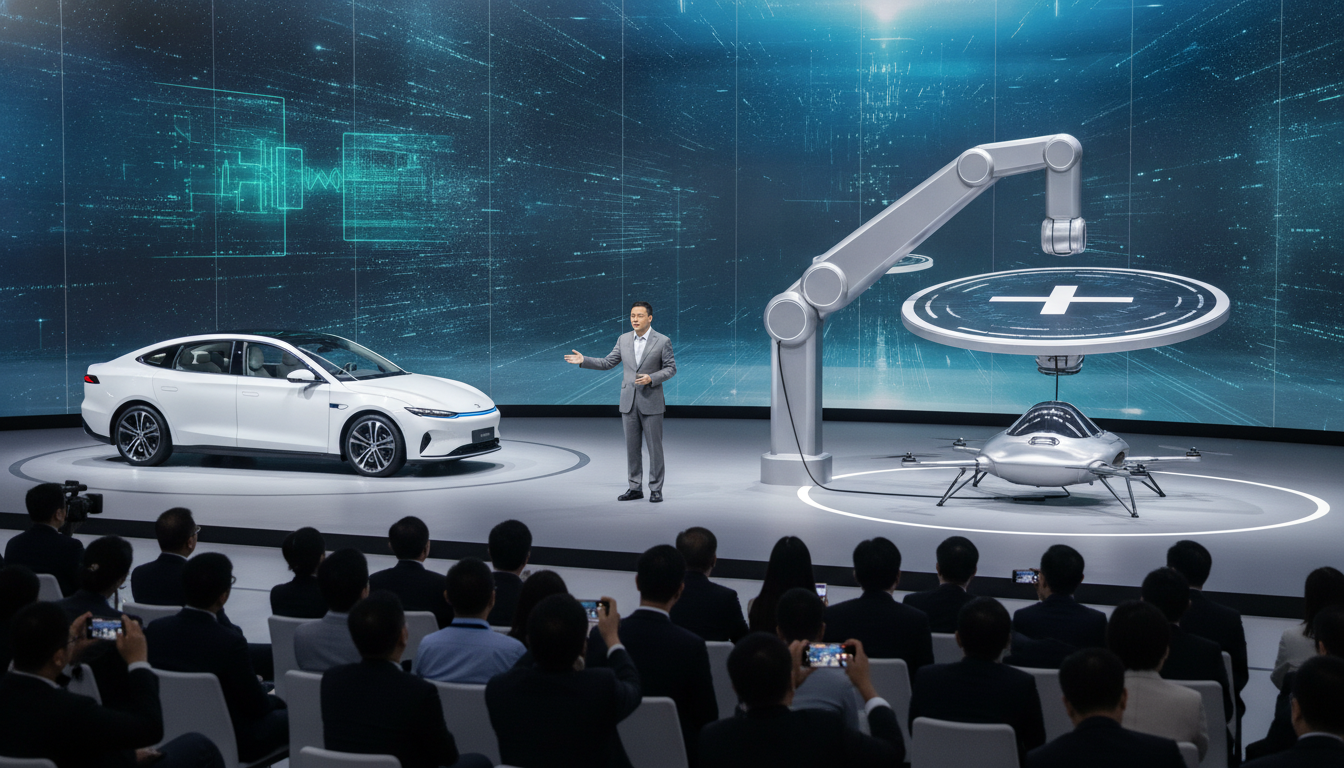
Xpeng pushes beyond electric cars at Munich brand day with ‘physical AI’ and flying‑car chargers
Xpeng unveils L03 range‑extender, humanoid ambitions and infrastructure plans at Munich global brand day, highlighting its push into “physical AI” across electric vehicles and mobility services.
MUNICH — Chinese automaker Xpeng used its global brand day in Munich to cast itself as more than an electric‑vehicle maker, presenting a portfolio that spans software‑defined cars, on‑vehicle power modules and prototypes for charging infrastructure intended for aerial vehicles. The event underscored Xpeng’s emphasis on what it calls “physical AI,” a strategy to embed advanced software and hardware in vehicles and adjacent products.
The company staged a high‑profile presentation that blended product demonstrations and theatrical elements, prompting some observers to quip that humanoid robots might take the stage. Instead, Xpeng focused on tangible engineering concepts, including the L03 sedan with an optional small combustion generator that recharges batteries but does not drive the wheels.
Demonstrations in Munich highlighted hardware and software fusion
The Munich showing put Xpeng’s technology narrative front and center, with vehicles and prototypes arrayed to illustrate integrated systems rather than single products. Company executives framed the displays as examples of “physical AI,” where on‑board computing, sensors and actuators work together to deliver advanced driver assistance and new mobility functions.
Attendees saw the L03 and other models intended to demonstrate the firm’s software backbone, along with mockups and concept hardware designed to show how the company imagines future charging and mobility networks. The presentation emphasized iterative updates and the role of over‑the‑air software in improving vehicle capability over time.
L03 range‑extender option aims to ease charging anxiety
Xpeng drew attention to the L03’s optional small combustion engine, which the company positions as a range‑extender: a generator that charges the car’s battery rather than directly driving the vehicle. Company materials and demonstrators said the system is intended to provide flexible energy options in regions where fast‑charging networks remain limited.
The range‑extender concept is a pragmatic complement to battery electrification, offering a temporary source of power for longer journeys or in areas with sparse infrastructure. Xpeng presented the option as an interim solution while it ramps up its own charging footprint and software services.
“Physical AI” frames Xpeng’s ambitions beyond mobility hardware
At the core of Xpeng’s message was the concept of “physical AI,” the company’s umbrella term for applying artificial intelligence to control mechanical systems and deliver new user experiences. Executives described this approach as a differentiator that links vehicle hardware, autonomous driving algorithms and cloud services.
The strategy signals a shift from selling cars as discrete products toward offering an evolving suite of software and hardware capabilities. Xpeng seeks to monetize continuous improvements through feature updates, subscription services and integrated energy solutions that work across its vehicle lineup.
Charging for the skies: concepts for flying vehicles and urban air mobility
One of the more speculative elements at the Munich event was Xpeng’s concept work on charging hardware for flying‑car prototypes and urban air mobility platforms. The company displayed proposed charging interfaces and ground infrastructure designs intended to support short‑range aerial vehicles.
Xpeng framed these concepts as long‑term investments in multi‑modal transport rather than immediate commercial products. The company argued that urban air mobility will require new approaches to charging and energy management, and showcased engineering work aimed at future regulatory and operational challenges.
Humanoid robotics as brand theater and technology showcase
Although some guests anticipated humanoid robots, the event kept robotics largely at the conceptual level, using the idea of humanoids more as a statement of capability than a product roadmap. Executives and materials referenced robotic development tangentially, describing potential overlaps in perception, control and actuation technologies shared with autonomous vehicles.
Observers noted that invoking humanoid robots helps signal Xpeng’s broader engineering ambitions, even if practical deployments remain distant. The company’s staged presentation blended showmanship with technical demonstrations to reinforce a technology‑centric brand image.
Industry reception and questions about execution
Market analysts and journalists at the Munich gathering reacted with cautious interest, praising the coherence of Xpeng’s technology narrative while flagging execution risks. Observers pointed out that moving from concept to mass deployment will require scaling manufacturing, securing regulatory approvals and proving long‑term software reliability.
Xpeng’s push into energy products, charging systems and mobility services places it in competition with specialist suppliers and established automakers pursuing similar strategies. The company will need to demonstrate tangible customer benefits and clear commercial pathways to validate its broader ambitions beyond selling electric cars.
Xpeng’s Munich brand day showcased a company attempting to redefine itself as a physical‑AI platform provider for mobility, combining vehicle hardware, software and speculative infrastructure projects in a single narrative. The breadth of the agenda underscores Xpeng’s intent to expand its role in future transport ecosystems while inviting scrutiny about when and how these concepts will reach everyday drivers.

