
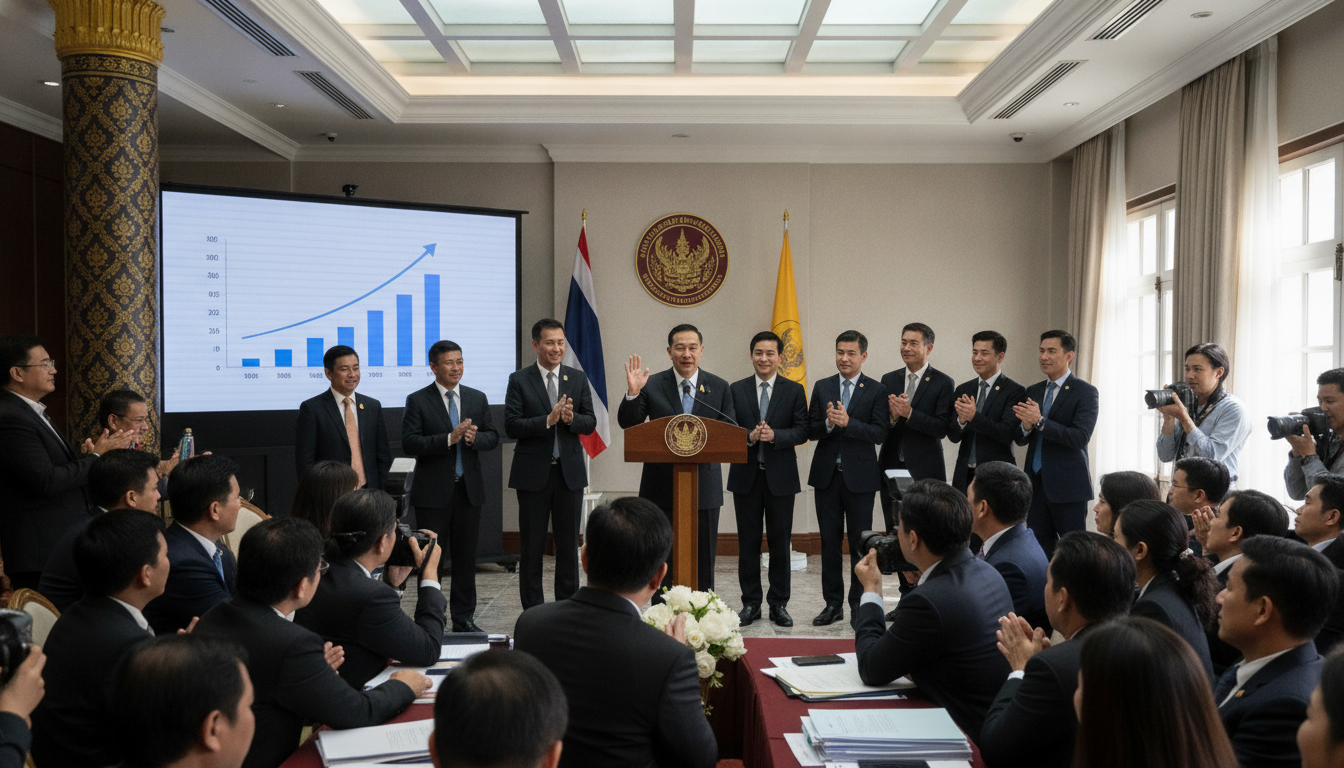
Thailand investment surges 37% to $43.6bn in H1 2026 as AI-driven digital sector fuels growth
Thailand investment rose 37% to $43.6 billion in H1 2026, driven by digital and AI projects that boosted foreign inflows and reshaped the country’s economic landscape.
Thailand’s new foreign and domestic investment jumped 37% year on year in the first half of 2026 to $43.6 billion, official data released on Thursday showed, with the digital sector and AI-related projects cited as major drivers. The surge marks one of the strongest mid-year inflow performances for the country in recent cycles and underscores growing global interest in Southeast Asia’s technology and manufacturing hubs. Policymakers and private-sector leaders said the inflows are reshaping investment patterns across metropolitan and regional centres.
Investment Surge in Numbers
The official figures show total committed capital of $43.6 billion for January through June 2026, a marked increase from the same period in 2025. The 37% rise reflects both large strategic projects and a wider pickup in smaller-scale technology ventures. Observers note the tempo of approvals and announcements accelerated in the second quarter, lifting the half-year tally.
The data combine foreign direct investment with domestic project commitments and cover a broad array of industries. While headline numbers focus on aggregate flows, underlying activity reveals concentration in sectors linked to digital infrastructure and high-value manufacturing. This combination helped push the overall investment total sharply higher than many analysts had projected earlier in the year.
Digital and AI Projects Leading Inflows
Investment in software development, cloud services, data centers and AI-related R&D featured prominently among newly announced projects. Global demand for AI compute and data handling capacity has prompted multinational firms to expand facilities and partnerships in the region. Local startups also attracted capital for AI-driven applications, contributing to the broader upswing.
Industry sources said the digital wave included commitments to build or expand cloud and edge facilities, as well as funding rounds for AI-focused firms. While precise breakdowns for each subsector were not provided in the released summary, the overall pattern aligns with a global redirection of capital toward technologies that enable generative AI, machine learning and enterprise digitization.
Foreign and Domestic Contributions
Both foreign and domestic investors contributed to the rise, with multinational corporations increasing strategic commitments and local companies expanding capacity to serve regional markets. The combined nature of the figure highlights how international capital and domestic reinvestment are reinforcing one another. Analysts point to a virtuous cycle: foreign projects create supplier demand and skills transfer that spur local investment.
Regional headquarters and export-oriented manufacturers were among the higher-profile drivers, according to market contacts. At the same time, venture capital and private equity activity in Bangkok and other urban centres lifted smaller-scale funding totals, broadening the base of investment beyond megaprojects.
Policy Measures and Investor Incentives
Policymakers have been promoting Thailand as a destination for technology and advanced manufacturing, offering incentives intended to lower operating costs and speed approvals. Government promotion and targeted incentive schemes were cited by officials and industry representatives as factors that helped convert proposals into formal commitments. Regulatory clarity and streamlined permit processes were also credited with improving the investment climate.
Investor outreach campaigns focused on digital transformation and supply-chain resilience have intensified, attracting attention from regional and global firms seeking alternatives to saturated hubs. While incentives alone do not guarantee project delivery, they appear to have played a role in tipping investor decisions during the first half of the year.
Regional Impact and Job Creation
The inflows have implications beyond headline GDP numbers, with several projects promising factory expansions, data-centre construction and new corporate offices that will require skilled labour and technical services. Local suppliers, logistics providers and service firms stand to benefit from both construction phases and ongoing operations. Authorities expect parts of the investment surge to translate into employment gains in urban and industrial zones.
However, the distribution of benefits will vary by sector and geography, and some projects will take years to reach full operational scale. Observers caution that near-term employment effects are likely to be concentrated in construction and installation, while longer-term job growth depends on firm-level strategies and training initiatives.
Economic Outlook and Risks
The investment surge strengthens Thailand’s near-term growth narrative but comes with risks that could temper momentum. Global shifts in interest rates, supply-chain disruptions or a cooling of the AI investment cycle could slow new commitments. Additionally, competition from neighbouring economies for AI and digital projects remains intense, requiring Thailand to sustain policy support and infrastructure investment.
Analysts advise monitoring project implementation rates and the composition of announced investments to assess how much will convert into actual capital spending. High headline totals are promising, but sustained economic gains will depend on delivery, workforce development and integration with broader economic planning.
Thailand’s mid-year investment rebound signals renewed confidence among investors drawn by the digital and AI opportunity set. Whether the trend continues through the remainder of 2026 will hinge on global technology demand, domestic policy follow-through and the pace at which announced projects move from commitment to operation.

