
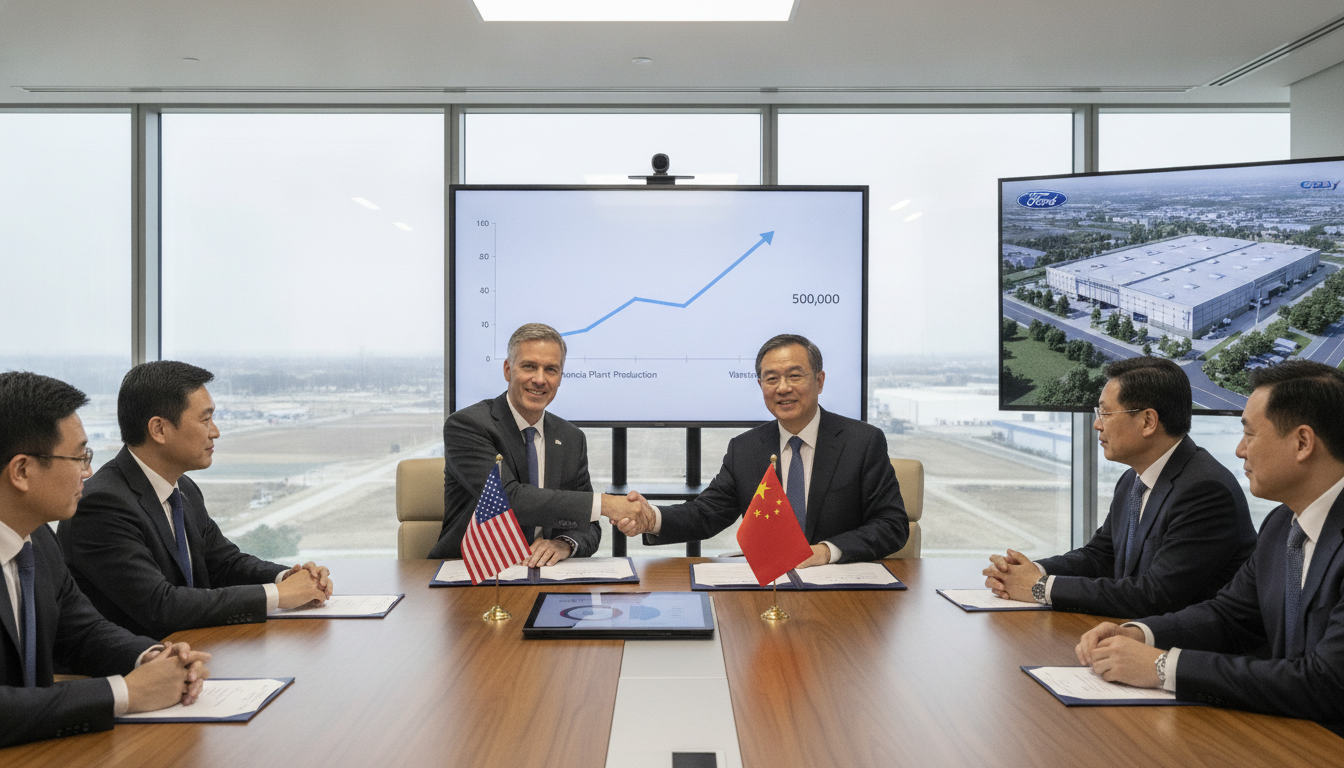
Ford-Geely joint venture to revive Valencia plant, aims for 500,000-unit annual output
Ford-Geely joint venture will share production at Ford’s underused Valencia plant after an overhaul, targeting 500,000 units and closer Asia-Europe industrial ties.
Geely Automobile and Ford Motor have agreed to a joint production arrangement that will put shared lines into Ford’s underutilized Valencia factory in Spain, the companies said on Thursday. The Ford-Geely joint venture aims to ramp the site to a capacity of roughly 500,000 vehicles a year after a planned overhaul of the plant, signaling a major shift in transnational carmaking cooperation. The deal highlights growing industry moves to combine Western brands and Asian capital and technology to bolster manufacturing efficiency in Europe.
Deal terms and production targets
Geely and Ford confirmed the framework of the agreement, which will see the two automakers share manufacturing capacity and coordinate investment at the Valencia facility. The partnership sets a clear midterm target of about 500,000 units annually once upgrades are completed and new production schedules are aligned. Neither party disclosed full financial terms in initial statements, but both described the transaction as a strategic use of idle capacity rather than a straight asset sale.
The arrangement is structured to allow each company to allocate models and components across shared lines while maintaining separate branding and market channels. Company officials emphasized that the plan is intended to shorten lead times, improve cost competitiveness and better match output with changing European demand. Ford will retain ownership of the factory site, while Geely’s involvement will bring additional product pipelines and manufacturing know‑how.
Valencia plant overhaul and timing
The Valencia factory, long a pillar of Ford’s European manufacturing footprint, has seen fluctuating utilization in recent years as demand and product strategies have evolved. Under the joint plan, the plant will undergo an operational overhaul to modernize production lines and integrate flexible tooling that can switch between vehicle families. The upgrade schedule is expected to include both physical refits and software-enabled production systems to support multi‑brand assembly.
Sources close to the negotiations say an initial phase of refurbishment could begin within months, with a staged ramp-up of shared production over one to two years. The companies intend to coordinate investments to limit downtime and preserve employment levels through the transition. Local authorities and supply‑chain partners have been notified, and discussions are ongoing to align logistics and component sourcing.
Strategic rationale for both automakers
For Geely, the move represents a rapid path to build manufacturing scale in Europe without the lead time required to construct new facilities from scratch. Access to Ford’s Valencia plant gives Geely a foothold in the European production network and the ability to respond more nimbly to regional demand. The partnership also provides an opportunity to leverage Geely’s engineering and software capabilities alongside Ford’s dealer reach and brand recognition.
For Ford, the deal addresses persistent underutilization at the Valencia site and reduces fixed‑cost burdens by sharing capacity with a committed partner. The collaboration allows Ford to concentrate investment on priority platforms while retaining strategic production capability in Spain. Executives framed the arrangement as a pragmatic response to market fragmentation and the capital intensity of next‑generation vehicle technologies.
Market and supply‑chain implications
Analysts say the agreement could prompt wider industry moves toward joint use of plants, particularly for companies seeking to reconcile high fixed costs and uncertain EV transitions. Shared factories can improve economies of scale, but they also require careful sequencing of production and robust supplier coordination. The Valencia deal will test whether two distinct corporate cultures and engineering standards can be harmonized on common lines.
Suppliers around Valencia may see increased demand for parts and logistics services, creating short‑term opportunities for regional firms. At the same time, the integration of new platforms could shift sourcing patterns toward partners able to support dual‑brand production. European policymakers and trade groups will be watching for impacts on local employment, supplier contracts and industrial strategy.
Regulatory and labor considerations
Spanish regional authorities and labor unions were engaged early in talks as both companies assessed the social and regulatory environment for the joint venture. Maintaining employment and minimizing plant downtime have been key negotiable points, according to industry contacts. The firms have committed to consult with worker representatives on the timetable for upgrades and any changes to shift patterns or workforce composition.
Regulatory approvals will be required for specific investment and operating changes, particularly if the joint venture alters production volumes or supply contracts materially. National and European competition authorities typically review arrangements that affect manufacturing capacity or market access, and the partners said they will comply with necessary filings. The transparency of those reviews and the outcome could influence similar deals in the region.
Outlook for models and regional manufacturing strategy
While the companies have not published a detailed product matrix, observers expect the Valencia lines to be used for a mix of models tailored to European tastes, with flexibility to accommodate future technology shifts. The joint venture’s success will hinge on achieving consistent quality standards and maintaining separate brand identities while sharing infrastructure. If the partners reach the 500,000‑unit target, the deal would mark one of the largest capacity revitalizations driven by a cross‑border manufacturing partnership in recent years.
The Ford‑Geely arrangement underscores a broader strategic recalibration in the auto industry as manufacturers seek new combinations of capital, technology and market access. For Valencia and the surrounding supply chain, the agreement promises a renewed industrial rhythm and a potential boost in employment stability as the plant moves into its next phase.
The coming months will be crucial as the companies finalize investment plans, secure approvals and begin physical upgrades that will determine how quickly shared production can begin.

