
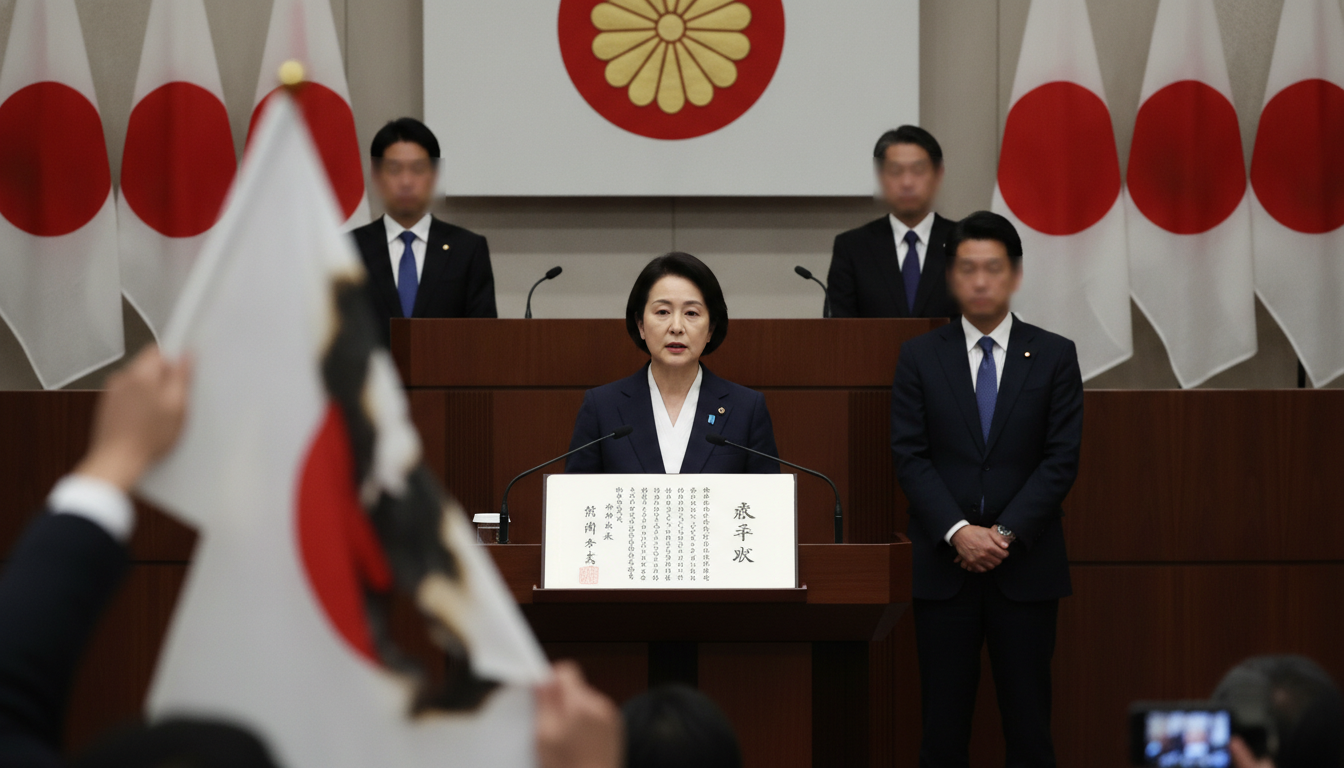
Takaichi Cabinet Accused of Disregarding Parliament as Controversial Laws Passed
Japan’s Takaichi Cabinet has been accused of sidelining the Diet while pushing through amendments to the Imperial Household Law and a new flag-desecration offense, experts say.
The Diet session entering its final days on July 23, 2026, has highlighted what three constitutional and political scholars describe as an unusually Parliament-averse Takaichi Cabinet that moved quickly to enact divisive measures without extended debate. The experts—Professor Atsushi Sugita, Professor Yoko Kato, and Professor Yasuo Hasebe—warn that the administration’s reliance on legislative majorities has narrowed public deliberation on changes affecting symbols and civil liberties. Their concerns center on both the substance of newly passed measures and the cabinet’s conduct in the parliamentary process.
Final days of a contentious Diet session
Lawmakers completed votes this month on bills that scholars say split public opinion and received limited scrutiny in committee. Critics note that debates were truncated and that procedural time for opposition questioning was constrained, producing legislation that many argue lacks thorough public justification. The three experts observed that the combination of a strong ruling-party majority and an executive reluctant to engage in extended public debate produced an accelerated legislative timetable.
Observers also point to the timing of votes and the way key provisions were negotiated largely within ruling-party ranks rather than through cross-party compromise. That pattern, they say, reduced opportunities for technical and constitutional review before enactment. The result is a body of law that may face significant legal challenges and public backlash in the months ahead.
Populist leadership and parliamentary absence
Professor Sugita characterized Prime Minister Sanae Takaichi as fitting a model of a populist leader who treats electoral victory as a license to bypass parliamentary deliberation. He argued that once elected in a decisive contest, the administration intensified reliance on numerical superiority instead of cultivating broader consensus. That posture, Sugita said, tends historically to produce governance that marginalizes legislative oversight.
Professor Hasebe added that Takaichi’s relatively limited attendance at Diet proceedings, compared with predecessors, symbolizes a deeper institutional problem: a head of government who appears unwilling to engage adversaries in substantive debate. He warned that avoiding public contestation in parliamentary settings shortens leaders’ effective tenure by insulating them from corrective input that could prevent policy missteps.
How the flag-desecration offense was framed
Internal deliberations within the ruling party evaluated several rationales for criminalizing flag desecration, experts reported, including national prestige, the flag’s role in social cohesion, and the maintenance of public order. Sources within party discussions ultimately favored an argument rooted in popular sentiment about the national flag, a choice the scholars say risks leaving the law open to vague interpretation. That ambiguity, they cautioned, heightens the potential for selective enforcement against dissenting political expression.
The new offense is presented by supporters as a protective measure for a national symbol, but detractors contend it could chill protest and artistic speech. Legal analysts will now scrutinize how the statute’s definitions and penalties are drafted and applied in practice.
Historical comparisons and legal alarm
Professor Kato drew a cautious parallel between current legislative tactics and past statutes that expanded state power with vague terms, notably the Peace Preservation Law enacted in 1925. She noted that earlier compromises in lawmaking sacrificed clarity for political expediency, producing instruments that later enabled suppression of political thought. Kato urged lawmakers to heed history’s lessons and ensure rigorous legal drafting and procedural checks moving forward.
The scholars underscored that imprecise legal concepts tied to "public sentiment" or "national unity" have historically been manipulated in ways that went beyond their stated aims. Such precedents, they warned, make contemporary safeguards for civil liberties and judicial review especially important.
Constitutional prospects in the courts
When asked whether Japan’s judiciary could strike down legislation deemed unconstitutional, Professor Hasebe expressed cautious optimism that courts might issue such rulings. He argued that Japanese courts have in the past shown willingness to confront government action that substantially conflicts with constitutional protections. However, Hasebe also noted that the path from litigation to final judgment is lengthy and that immediate social effects of contested laws may persist while cases proceed.
Legal scholars will likely focus on whether the new statutes contain sufficiently specific elements to meet constitutional scrutiny, including protections for freedom of expression and procedural fairness. Pending litigation could determine whether the recent legislative push withstands judicial review or prompts revisions.
Political fallout and public debate ahead
The combination of high-stakes symbolic legislation and a perceived sidelining of parliamentary debate is already intensifying public discussion about democratic process and civil liberties. Opposition parties and civic groups have signaled plans to challenge aspects of the new laws through legal and political channels. Analysts predict that the way courts, civil society, and local governments respond will shape the political calculations of the ruling coalition going into the next electoral cycle.
Scholars interviewed emphasized that robust public debate and transparent legislative procedures are essential to preserving constitutional governance. They urged both the government and the Diet to restore avenues for detailed deliberation and to clarify statutory language to minimize risks of abuse.
The last weeks of the July 2026 Diet session have thus not only produced contested legal changes but also raised enduring questions about the balance between majoritarian power and institutional checks in Japan’s parliamentary democracy.

