
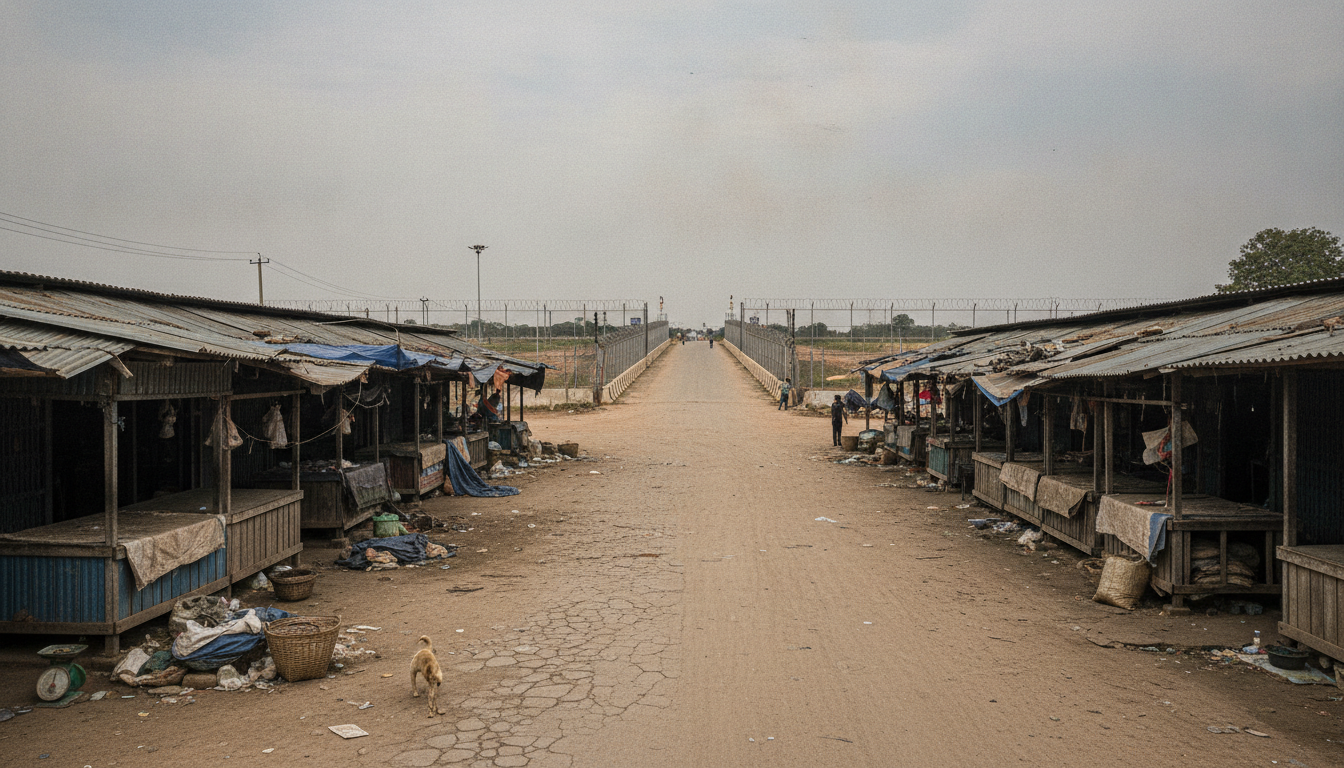
Poipet border closure in June 2025 shutters markets and displaces migrant workers
Poipet border closure in June 2025 has halted cross-border trade, emptied markets and left thousands of migrant workers and traders facing economic hardship.
POIPET — The Poipet border closure in June 2025 has abruptly halted the flow of people, goods and remittances between Cambodia and Thailand, leaving once-bustling marketplaces and transit services eerily quiet. Workers who had made daily livelihoods helping migrants with passports, permits and transport now face unemployment and uncertainty. Local traders report a sharp drop in customers and income as checkpoints remain tight and commercial traffic has slowed to a trickle.
Border shutdown and military clashes
Local residents said the border closure followed a period of rising tensions that culminated in military clashes in June 2025, prompting authorities on both sides to restrict crossings. The shutdown has included tighter visa processing and increased military and police presence at key crossings. Officials have described the measures as necessary for security, but the impact on ordinary cross-border commerce has been immediate.
Business owners in Poipet reported that transport companies canceled scheduled runs to Thailand and back, while visa service offices saw demand collapse overnight. Many small operators in the transport and logistics chain lack the financial reserves to weather prolonged stoppages, increasing the risk of permanent closures.
Empty markets and visible patriotism
Photographs from Poipet show empty stalls beneath banners and signage expressing support for the Cambodian government and military leadership. Market vendors who once relied on shoppers from across the border now sit idle, with produce and goods unsold. The juxtaposition of patriotic displays and commercial abandonment underscores the complex social mood in the border town.
Market managers said rental income has fallen sharply, forcing some retailers to leave stalls vacant rather than pay for stock they cannot move. Observers say such visible signs of state support are intended to reassure the public, but they have thus far done little to revive day-to-day trade.
Lives disrupted: migrant workers and service providers
Many of the people most affected are migrant workers and the intermediaries who arranged short-term permits and travel documents for them. Nget Nhean, who until the closure helped migrants apply for Thai permits and passports, lost his job when cross-border movement stopped. He and others in similar roles now depend on dwindling savings and ad-hoc work.
Migrant workers who used Poipet as a transit point report delays in returning home or reaching employment in Thailand, while those who remained in Cambodia face reduced income and limited support. Community groups and local charities are trying to identify vulnerable families, but resources are constrained.
Economic ripple effects across the region
Traders say the interruption in movement has also disrupted supply chains that link small producers to larger markets in Thailand and beyond. Perishable goods that depended on daily cross-border shipments are at heightened risk of spoilage, creating losses for farmers and merchants. Local service industries — food stalls, lodging and vehicle repair shops — have seen foot traffic decline sharply.
Economists warn that protracted closures could depress regional growth and reduce remittance flows that sustain household consumption in border provinces. Small towns like Poipet, which developed around cross-border trade, are particularly exposed to such shocks.
Local responses and humanitarian concerns
Local authorities have reported increased monitoring and some assistance programs for displaced workers, but officials acknowledge the scale of need outstrips available funds. Community leaders are calling for targeted support for families who have lost primary incomes and for measures to prevent exploitation of stranded migrants. Humanitarian groups say accurate needs assessments are essential to channel aid effectively.
Those on the ground also cite concerns about health and education access for households whose incomes have fallen, noting that reduced cash flow can quickly affect school attendance and medical care. Aid groups have urged both governments to allow humanitarian crossings and streamlined channels for essential goods.
Diplomatic pressure and calls for negotiation
Regional diplomats and trade partners are reportedly pressing for a de-escalation and a return to negotiated crossings to restore commercial flow. Business associations on both sides of the border have urged authorities to prioritize reopening trade corridors while maintaining necessary security checks. Observers say a phased reopening tied to confidence-building measures could limit further economic damage.
Analysts caution that any sustained political impasse will carry long-term costs for border communities, making quick diplomatic engagement in the interest of regional stability and livelihoods. They also note that transparent communication with affected communities would mitigate some immediate anxieties.
The closure of Poipet’s border in June 2025 represents more than a strategic pause; it has severed a vital economic lifeline for thousands of people who rely on daily trade and cross-border work. Unless diplomatic progress allows for a safe, orderly resumption of movement, the town and its residents face a protracted period of hardship with consequences for the wider border region.

