
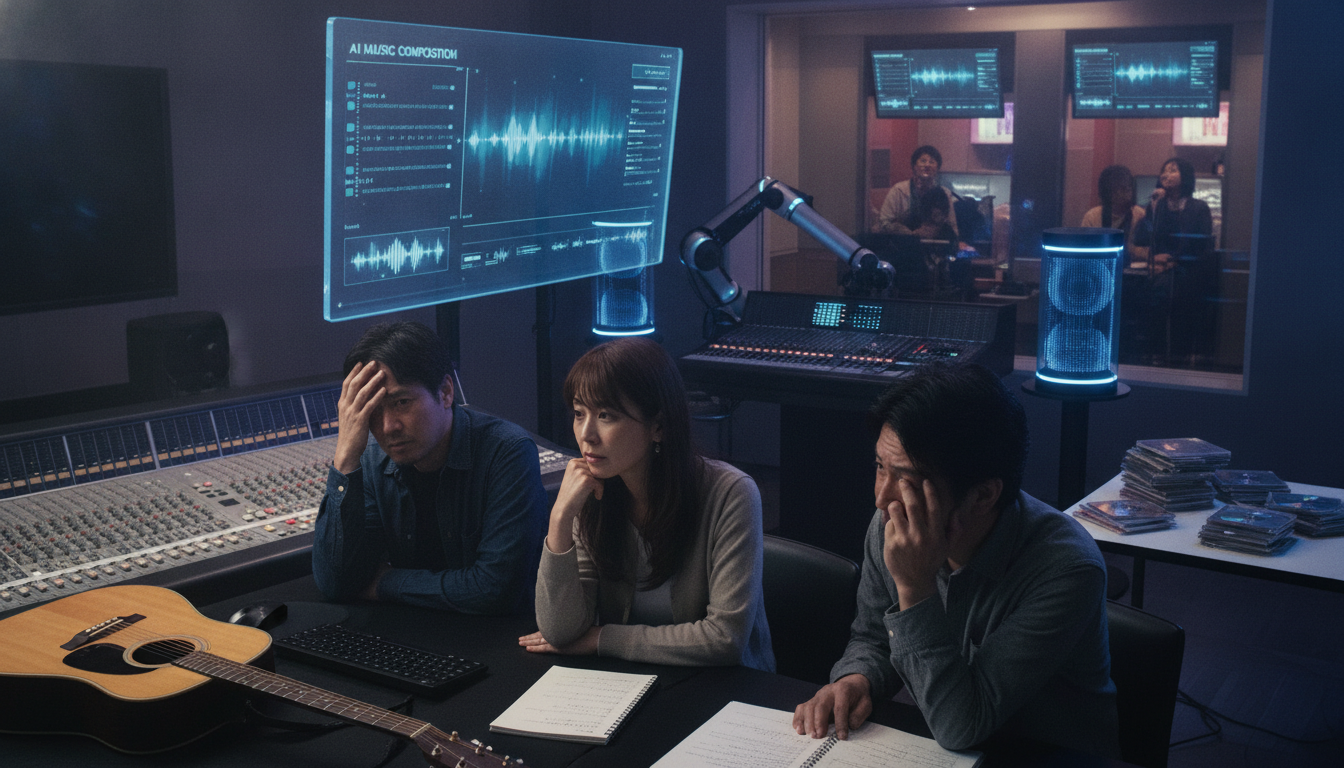
AI-generated music accelerates into Japan’s market as karaoke and copyright debates intensify
AI-generated music reshapes Japan’s music market as a Kochi golf course song made with Suno highlights rapid production, copyright concerns and industry shifts.
AI-generated music used to produce Kochi golf course image song
A short promotional song for Greenfeel Golf Club in Hidaka, Kochi Prefecture was produced largely by AI, illustrating how AI-generated music can be deployed for local marketing. The track, voiced and arranged by an AI model, was produced by Ryo Yoshioka of Kochi-based production company Kuuchu Hassaku during a lunch break. He wrote lyrics from staff interviews and online reviews, fed them into the Suno music generator with genre prompts, and completed a usable song after several quick iterations. The episode highlights how AI tools are shortening the time from idea to finished track while delivering results that can satisfy non-specialist listeners.
How the track was created and the role of prompt design
Yoshioka combined simple stylistic prompts—terms such as “J-pop,” “pop rock” and “acoustic”—with the new lyrics and asked the AI to produce a full arrangement and vocal performance. The initial output required several retries to align phrasing and tempo with the lyrics, and the team refined prompts ten times before settling on a version they felt matched the course’s image. The process took roughly two hours from lyric draft to final audio, underscoring how streamlined prompt-based workflows have become for creating AI-generated music. Practitioners say careful prompt design and iterative adjustment are now core skills for producers using these tools.
AI-generated tracks are already appearing in the commercial ecosystem
Industry tracking shows hundreds of AI-credited tracks circulating in catalogues, with at least 475 AI-produced pieces identified in recent counts. Some of these AI-originated songs have made their way into karaoke libraries and streaming platforms, prompting concern among rights holders and service providers. The rapid influx of machine-generated recordings is changing how content is discovered, recommended and monetized, and it is forcing downstream players—from venues to playlist curators—to confront new questions about authenticity and consumer expectations.
Copyright, royalties and concerns about streaming manipulation
Copyright specialists and label representatives warn that AI-generated music raises thorny legal and commercial issues about authorship, ownership and payment flows. There is particular alarm over possible “streaming manipulation” tactics and whether machine-created works should be treated like traditional compositions for royalty distribution. Policymakers and industry bodies are examining whether new guidelines or registration rules are needed to ensure transparent attribution and to prevent automated content from unfairly diverting revenue from human creators. The debate also touches on the moral rights of performers and the need to identify whether a human or an algorithm is the principal creative agent.
Market differentiation and the future value of human-made music
Many industry voices predict a bifurcated market in which mass-produced AI-generated music serves routine commercial needs while human-made works become premium offerings. Some music professionals compare this shift to food markets, suggesting AI tracks will supply everyday demand while handcrafted human compositions will be positioned as “high-end” products. Labels, artists and venues are already experimenting with new value propositions—limited editions, bespoke performances and explicit “human-crafted” branding—to maintain distinct appeal. At the same time, some creators view AI as a collaborative tool that can expand creative possibilities rather than simply replace human labor.
As AI-generated music gains traction, local examples like the Kochi golf course song show both the efficiency gains and the cultural questions at stake. The industry’s next steps will likely combine technical guidance on labeling and attribution with commercial strategies that preserve market diversity while accommodating rapid technological change. The balance struck between automation and human artistry will determine how audiences, platforms and policymakers define musical creativity in the years ahead.

