
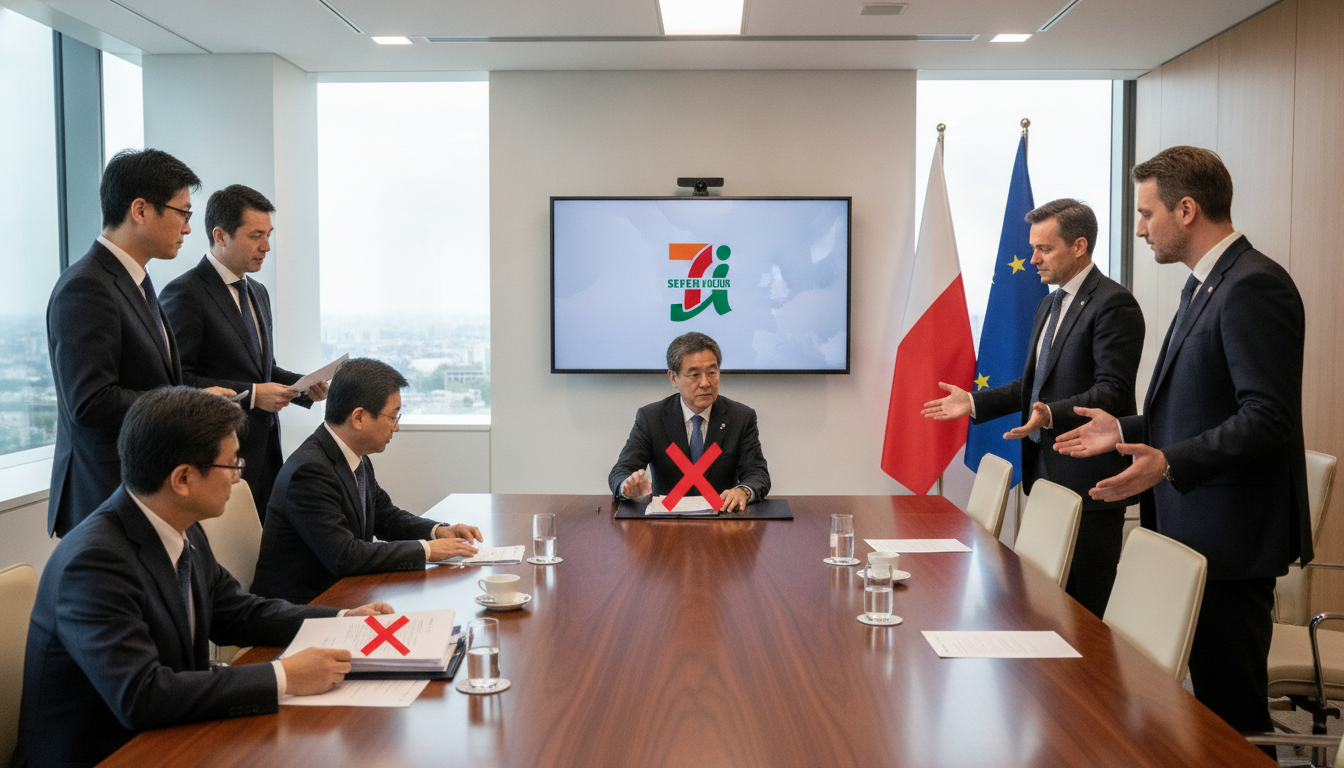
Seven & i Holdings Ends Talks to Buy Minority Stake in Poland’s Zabka
Seven & i Holdings walked away from talks on July 25 to acquire a minority stake in Poland’s Zabka Group after the companies failed to agree on the terms of the proposed investment.
Strong opening summary
Tokyo-based Seven & i Holdings announced on July 25 that it would not proceed with an investment in Zabka Group, Poland’s largest convenience chain, after negotiations over a minority stake collapsed.
The company said the two sides were unable to reach agreement on deal terms, bringing to a close what had been a period of intensive talks between the Japanese retailer and the Polish group.
Deal collapse confirmed by Seven & i
Seven & i issued a statement from its Tokyo headquarters confirming the end of discussions, saying the parties could not reconcile differences on the structure and conditions of the investment.
The announcement marks a clear rejection of the transaction that had drawn attention for linking one of Japan’s dominant convenience-store operators with a fast-growing Central European retail chain.
Negotiation issues and sticking points
Company filings and the Seven & i statement indicated that valuation, governance arrangements and commercial conditions were central to the impasse, though neither side released a detailed list of disputed clauses.
Industry observers noted such disputes are common in cross-border minority investments, where strategic control, growth expectations and exit mechanics often become difficult to reconcile late in talks.
Strategic rationale behind Seven & i’s interest
Executives at Seven & i had been reported to view a minority stake in Zabka as an opportunity to gain exposure to European convenience-store growth and to exchange retail know‑how across markets.
The planned investment fit with a broader global search by Japanese retailers for overseas growth as domestic convenience store markets mature and competition tightens at home.
Zabka’s footprint and growth profile
Zabka operates thousands of small-format stores across Poland and has expanded into adjacent markets with a focus on rapid-store formats and digital customer services.
Its performance in recent years attracted international interest from investors seeking stable retail cash flows and resilient consumer demand in Central and Eastern Europe.
Market and investor reaction
Financial markets in Tokyo and Warsaw reacted modestly to the news, with analysts suggesting the collapse may have limited immediate impact on either company’s core operations.
Some shareholders welcomed a clear decision from Seven & i, noting that protracted uncertainty can weigh on stock valuations and distract management from executing existing strategies.
Implications for future cross-border deals
The failure to reach terms underscores the complexity of negotiating minority stakes where the selling group seeks capital but also wants to preserve autonomy.
Experts say the episode could prompt both Japanese and European firms to refine negotiation frameworks and to agree earlier on core governance and valuation mechanisms to avoid late-stage breakdowns.
Potential next steps for both firms
Seven & i is likely to refocus on its domestic network and other strategic priorities, including technology investments and potential partnerships in Asia where regulatory and cultural alignment may be closer.
Zabka, meanwhile, can continue pursuing alternative investors or organic expansion, leveraging its market-leading position to attract partners with compatible terms and long-term growth plans.
Seven & i Holdings’ decision to end talks with Zabka highlights the delicate balance between strategic ambition and deal realism in cross-border retail investments, and leaves open questions about how both companies will pursue growth amid shifting global retail dynamics.

