
Citigroup and JPMorgan Join Financing for Japan-U.S. $550 Billion Investment Package
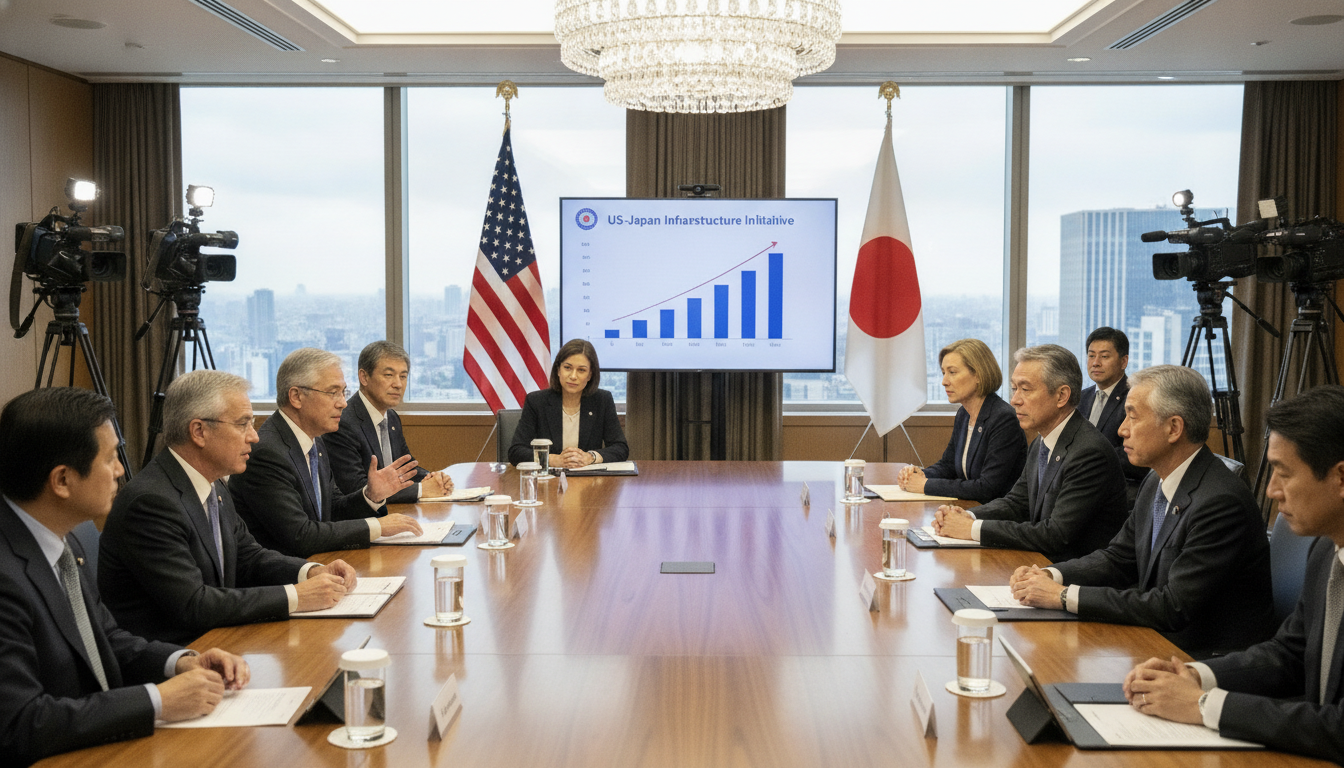
Citigroup and JPMorgan Chase will participate in financing the Japan-U.S. $550 billion investment package, extending initial loans alongside the Japan Bank for International Cooperation for a second round of power projects.
Citigroup and JPMorgan Chase have agreed to take part in financing elements of the comprehensive Japan-U.S. $550 billion investment package, people briefed on the negotiations said. The banks’ involvement is intended to help secure capital for the bilateral program and support a second round of power station projects that are central to the package’s energy component. Officials close to the talks described the move as a signal of private-sector confidence in the governments’ effort to mobilize large-scale cross-border infrastructure capital.
American Banks Join Financing Effort
Two of the largest U.S. commercial banks will extend lending commitments to the program, providing initial loans that market participants say will be critical to unlocking broader syndication. The institutions join public and private financiers already engaged in earlier tranches, and their participation is aimed at reducing financing risk for other lenders. While precise allocations have not been disclosed, the banks’ involvement is expected to provide momentum for additional commercial participants.
The decision by Citigroup and JPMorgan Chase reflects growing appetite among international banks to back government-backed international infrastructure deals. Observers say the presence of major U.S. lenders helps bridge political support in Washington with mobilization of private capital. Bank-led financing can also shorten timelines for project-level closings by offering ready funding while syndication and official credit assurances are finalized.
Second Round of Power Projects Secures Loans
The latest financing focus is a second round of power station projects that form a significant portion of the package’s energy commitments. Lenders will extend initial loans for these projects, which officials estimate could see combined costs rise to as much as $74 billion. The power projects are intended to bolster supply resilience and increase capacity in strategic locations identified by both governments.
Project sponsors and lenders are negotiating terms that reflect long-term construction and operational risk, as well as expectations for export and equipment contracts. The loans are expected to cover early-stage capital needs, with additional tranches and co-financing anticipated as environmental reviews, permitting and contractor agreements progress. Market sources say these power investments will be closely watched as a barometer for the package’s implementation speed.
JBIC and Loan Extension Mechanics
The Japan Bank for International Cooperation (JBIC) will play a coordinating role in extending and underwriting portions of the financing alongside the U.S. banks. JBIC’s participation is intended to provide official-sector credit support that can improve borrowing terms and attract additional private lenders. Officials described JBIC involvement as central to aligning Japanese public finance instruments with U.S. private-sector capacities.
Loan extension mechanics are expected to include a mix of direct lending, partial credit guarantees and structured co-financing with commercial banks. Such arrangements aim to balance risk-sharing with the need to offer competitive rates to project sponsors. Legal and due-diligence processes remain ongoing, with lenders working to harmonize cross-border contract standards and repayment frameworks.
Financial Scale and Risk Allocation
Although the headline figure for the bilateral initiative is $550 billion, the portion allocated to power station development represents only one element of a broader package that encompasses multiple sectors. The $74 billion estimate for power projects would therefore be a significant, but not dominant, share of overall commitments. Financial institutions and officials are still defining how public and private funds will be blended across sectors.
Risk allocation between public institutions and commercial lenders will be a key determinant of investor appetite. Where JBIC or other official backstops fill perceived gaps, commercial banks may be willing to provide longer tenors or higher percentages of project cost. Conversely, projects lacking clear official support may face tighter lending terms or require alternative financing structures.
Implications for Energy and Industrial Policy
The mobilization of major U.S. banks alongside Japanese official finance underscores the strategic dimensions of the package for energy security and industrial cooperation. By channeling capital into power infrastructure, the two governments aim to reduce supply bottlenecks and support industries that rely on stable electricity supplies. Policymakers see infrastructure finance as a core element of broader economic and security objectives tied to the bilateral partnership.
For companies in construction, equipment manufacturing and utilities, the deal presents new commercial opportunities but also carries heightened expectations for compliance with environmental and social standards. Project sponsors will need to reconcile commercial viability with policy-driven requirements, such as emissions targets and local stakeholder engagement.
Next steps include finalizing term sheets, completing regulatory approvals and beginning staged disbursements for approved projects. Lenders, sponsors and government agencies will continue coordinating timelines and risk allocations as work moves from negotiation to execution. The participation of Citigroup, JPMorgan Chase and JBIC marks an important juncture in efforts to translate the $550 billion package from a diplomatic agreement into on-the-ground projects that deliver tangible energy and industrial benefits.

