
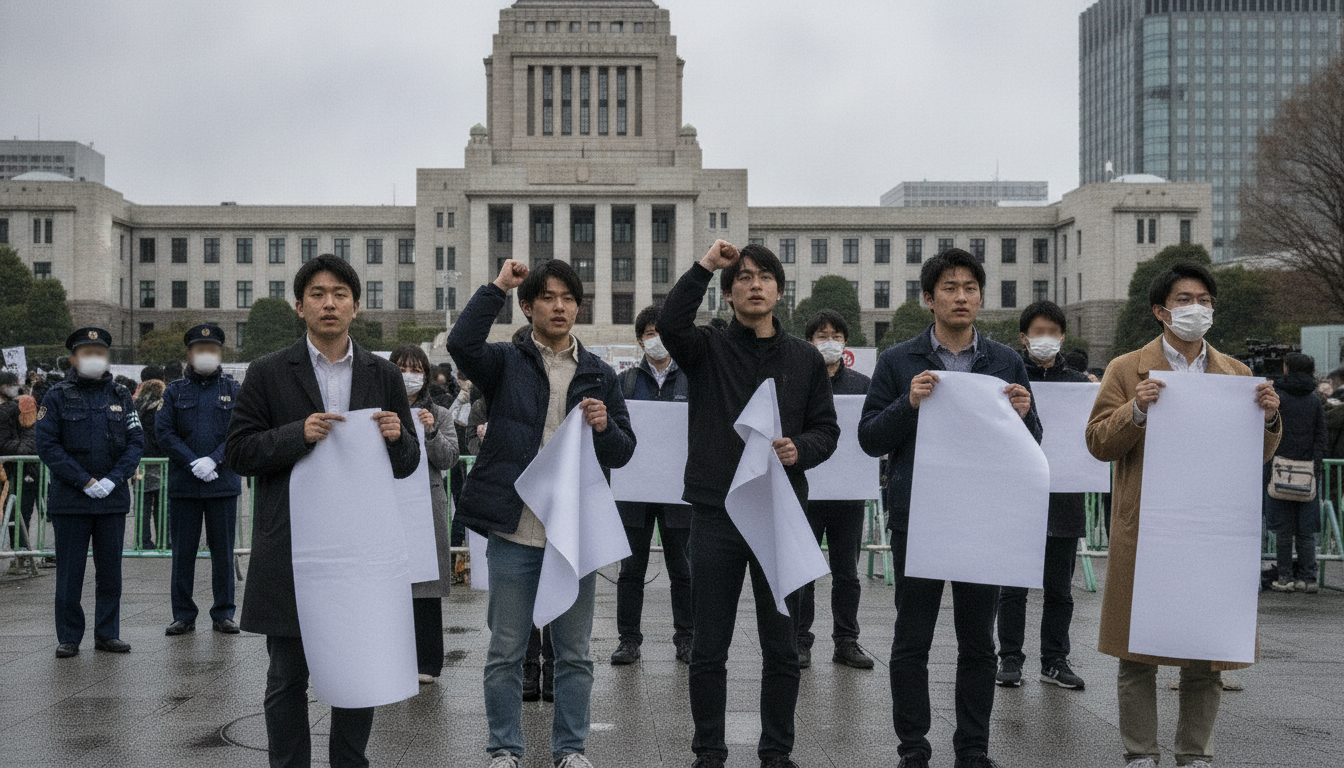
Diet protest in Tokyo: Youth-led rally accuses government of "parliamentary contempt"
Thousands gather outside the Diet in an emergency Diet protest on July 25, 2026, as young demonstrators decry hurried lawmaking and demand accountability from Prime Minister Sanae Takaichi and the ruling party.
A hastily organized Diet protest drew around 1,000 people to the plaza in front of the National Diet Building on the night of July 25, the day the special session concluded. Participants, many in their 20s to 40s, carried signs reading “Do politics for citizens” and “NO WAR” and chanted against what they called a pattern of “parliamentary contempt” by the government.
Emergency rally held outside the Diet
Participants gathered shortly after the Diet adjourned, responding to a call from a youth-led group that said it felt compelled to act. The demonstration, titled “Parliament-front Action — Protest Against Chaotic Politics,” was staged as an urgent, one-night event to voice opposition to recent parliamentary developments.
Organizers said the timing reflected frustration with the pace and substance of decisions made in the current session. Attendees used penlights and hand-made placards to draw media attention and to press for broader public debate.
Organizers and reported turnout
The rally was organized by WE WANT OUR FUTURE, a collective of citizens in their 20s to 40s formed after February’s lower-house election. The group said it emerged from concern about the government’s electoral gains and Prime Minister Sanae Takaichi’s stated interest in constitutional revision.
Organizers released a figure of about 1,000 participants; police did not provide an independent crowd estimate. Speakers at the event urged sustained civic engagement and called on older generations to join public scrutiny of parliamentary processes.
Allegations of ‘parliamentary contempt’ and ‘tyranny of numbers’
Demonstrators repeatedly criticized the ruling coalition for what they described as “disregard for parliamentary norms” and reliance on its large majority to push legislation through. Chants and signs accused the government of using its numerical advantage to sideline meaningful debate.
Several speakers singled out Prime Minister Takaichi and her party for what they said were missed opportunities to explain policies and face questions in the Diet. The crowd’s rhetoric focused on accountability and the need for transparent, deliberative lawmaking.
Contentious bills at the center of protests
Protesters pointed to a series of recently passed laws as evidence for their grievances, including amendments to the Imperial Household Law and a statute imposing penalties for desecration of national symbols. Both measures have provoked public debate and prompted legal and academic scrutiny.
Attendees and several experts quoted by the organizers argued that deliberation time on some measures was the shortest in two decades, leaving little room for detailed discussion. Critics at the rally said that rushed procedures undermined public trust in the legislative process.
Concerns over avoided Diet answers and political responsibility
The demonstrators also raised the issue of the prime minister’s avoidance of certain Diet answers, referencing a separate controversy described by participants as the “defamation video problem.” They insisted that such evasions weaken democratic oversight and the government’s responsibility to explain itself to lawmakers and the public.
Speakers called for clearer mechanisms to compel full explanations from cabinet members and for parliamentary committees to be given sufficient time to examine proposals. The demands included calls for more accessible records of deliberations and wider civic participation in legislative review.
Outlook for civic action and political debate
Organizers framed the night’s protest as part of an ongoing campaign rather than a one-off event, urging participants to maintain pressure through public gatherings, social media, and voter outreach. They said their aim is to broaden public discussion about constitutional reform, legislative procedure, and the balance between majority rule and minority rights.
Opposition lawmakers and civil society groups have previously voiced similar concerns about procedure and transparency, and the demonstration appeared designed to amplify those messages ahead of future parliamentary sessions. Whether the protest will translate into sustained political influence depends on follow-through by organizers and responses from both the ruling party and institutional watchdogs.
The emergency Diet protest highlighted rising unease among younger citizens over how key decisions are being made in the capital, and it underscored the potential for street-level activism to shape the public narrative on governance and accountability.

