
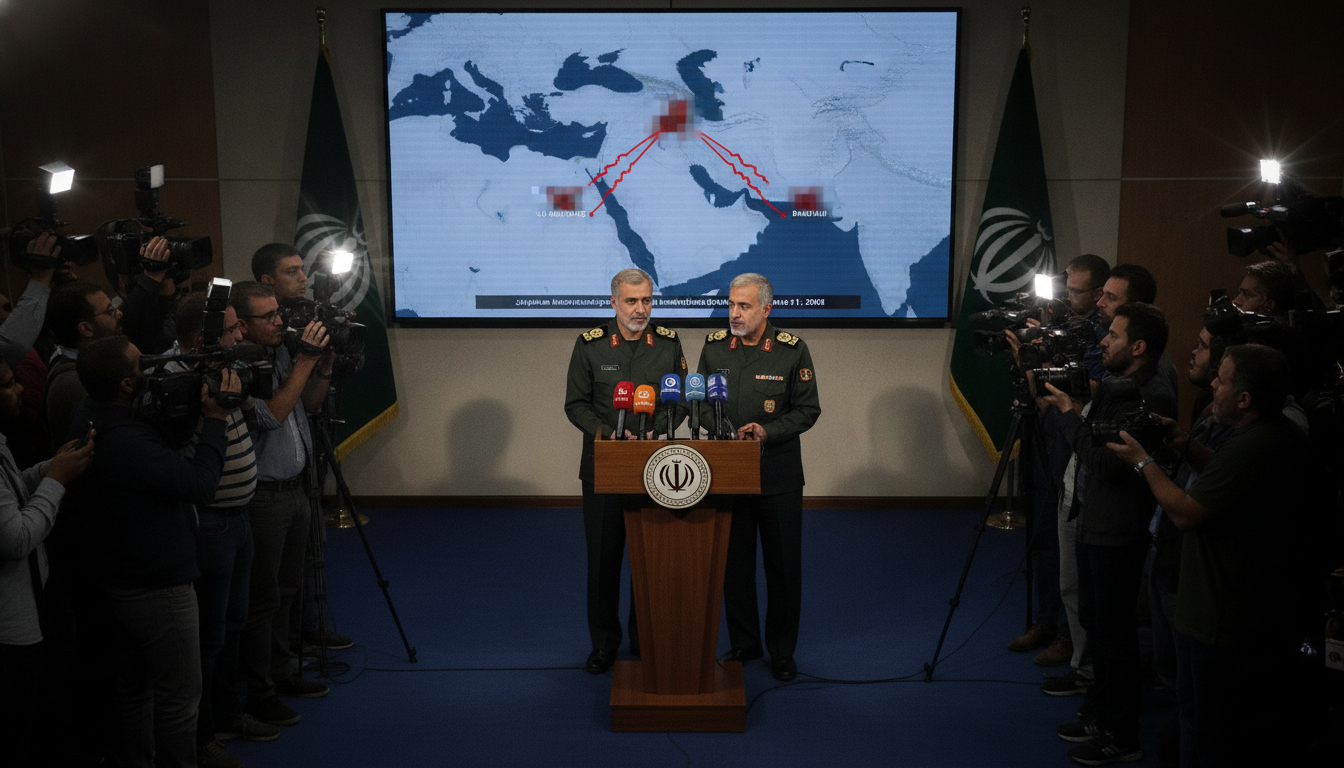
Kuwait and Bahrain Secretly Attacked Iran, WSJ Reports; Iran’s IRGC Says It Struck US Facilities
Iran’s Revolutionary Guard says it struck US facilities in Kuwait and Bahrain on July 24, 2026, following reports Kuwait and Bahrain secretly attacked Iran, sparking alarm.
IRGC Announces Strikes on US Sites in Kuwait and Bahrain
The Islamic Revolutionary Guard Corps (IRGC) announced on July 24, 2026, that it had attacked American ammunition and equipment depots in Kuwait and Bahrain. The claim was reported by Tasnim, a news agency close to the IRGC, which cited a military statement describing the operations.
A senior Iranian official overseeing military affairs was quoted as saying that for each Iranian civilian killed, a US soldier would be "sent to hell," a statement that appears intended as a deterrent and a message of retaliation. The IRGC did not provide independent verification such as footage or coordinates for the sites it identified.
Wall Street Journal Says Kuwait and Bahrain Launched Covert Strikes
On the same day, the Wall Street Journal reported that Kuwait and Bahrain had secretly carried out attacks on Iranian targets, actions that the two Gulf states had not publicly acknowledged. The WSJ account suggested a complex and covert dimension to the widening confrontation between Washington and Tehran.
The report, if accurate, would mark a notable escalation by regional U.S. partners acting directly in the shadow of the U.S.-Iran confrontation. Neither Kuwait nor Bahrain issued immediate public confirmations of the WSJ story in the early hours following the reports.
Tensions Spread Across the Gulf and Beyond
Analysts say the sequence of reported strikes and counterclaims has increased anxiety among Gulf states and international stakeholders about miscalculation and unintended escalation. The developments on July 24, 2026, followed weeks of heightened U.S.-Iran tensions, raising fears that a localized incident could trigger broader military responses.
Diplomatic channels appear to be under intense strain as states weigh public posture against covert actions. Military planners in the region must now contend with a more complex threat environment in which deniability and attribution shape both strategy and political risk.
Claims, Attribution and the Challenge of Verification
The IRGC’s assertion that it struck U.S. stockpiles in Kuwait and Bahrain focuses attention on facilities used to support coalition operations in the region. Verifying such claims is difficult, particularly when reporting relies primarily on state-affiliated agencies and a single international newspaper account.
Independent confirmation would typically come from satellite imagery, on-the-ground reporting, or official statements from host states and the United States. To date, public evidence cited in these reports remains limited, and officials in Washington, Kuwait and Bahrain have been cautious in their public remarks.
Implications for U.S. Military Presence and Regional Diplomacy
If U.S. facilities in Kuwait and Bahrain were targeted, the incidents could complicate the posture of American forces that rely on Gulf bases for logistics and operations. Both Kuwait and Bahrain host long-standing U.S. military relationships, and any attack on those facilities would prompt questions about base security and regional deterrence arrangements.
At the diplomatic level, the reports may pressure Gulf governments to clarify their roles and communications with both the United States and Iran. Allies may face domestic and international scrutiny over covert operations, while regional organizations and external powers could intensify shuttle diplomacy to prevent wider conflict.
The recent public statements and press reports underscore the fragile balance in the Gulf, where small, deniable actions can carry outsized strategic consequences. Governments now face the twin tasks of preventing further military escalation and managing the political fallout from allegations of covert strikes.
The sequence of claims on July 24, 2026, has already prompted renewed calls for de-escalation from international observers. With both Tehran and regional capitals maintaining guarded rhetoric, the coming days are likely to see intensified intelligence scrutiny, diplomatic outreach, and careful messaging as officials seek to avoid a broader confrontation.

