
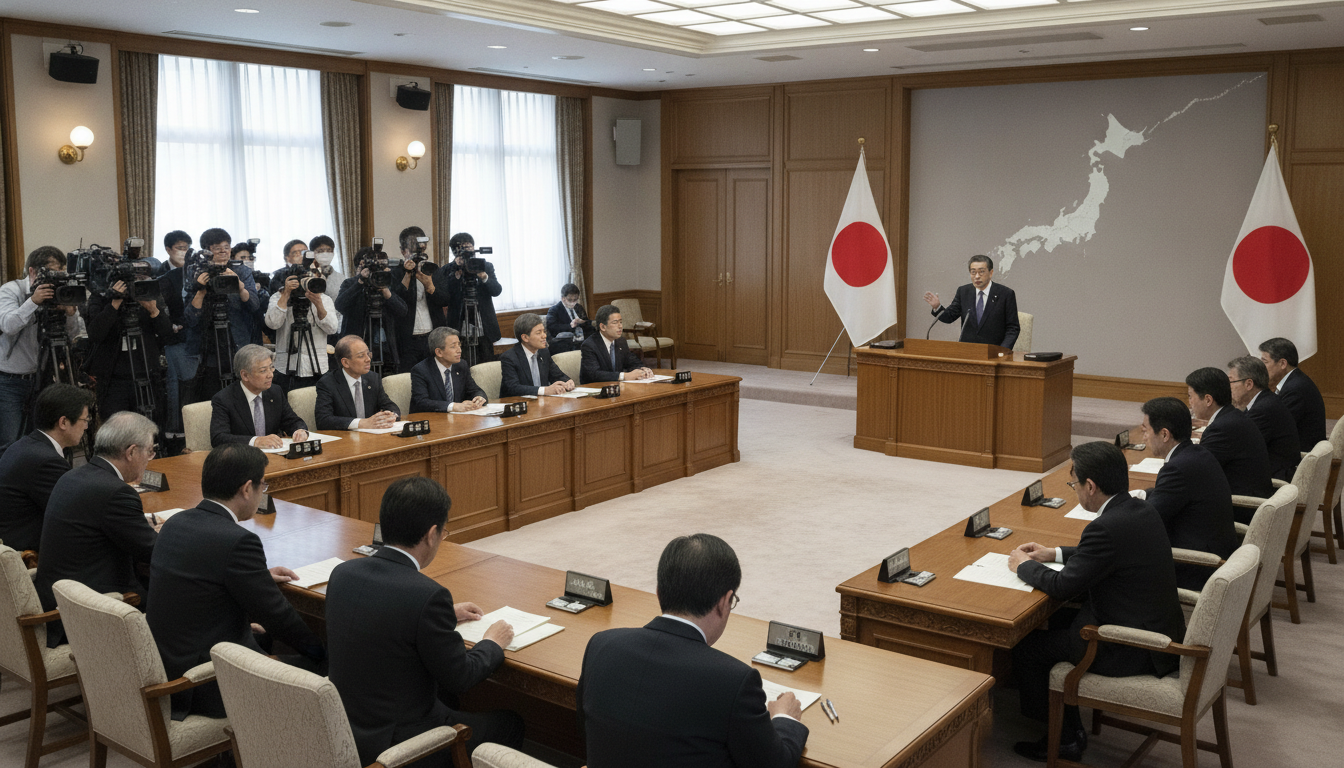
Japan approves plan for a "second capital" with Osaka emerging as front-runner
Japan’s parliament approved creating a ‘second capital’ to sustain government operations during major disasters, with Osaka emerging as the front-runner.
Japan’s parliament on Friday approved a national plan to establish a "second capital" — a redundant political and administrative center designed to keep the country functioning if a major disaster incapacitates Tokyo. The measure aims to decentralize core government functions and strengthen national resilience, and Osaka has rapidly emerged as the leading candidate despite decades of corporate outflow from the city. Lawmakers framed the move as a practical step to protect continuity of governance rather than a symbolic transfer of power.
Parliamentary approval and government mandate
The legislation passed through both houses following expedited debate, creating a statutory framework for siting, staffing and funding a secondary administrative hub. Under the law, ministries will be required to map critical functions that must be mirrored outside Tokyo and to identify facilities that can be hardened against earthquakes, storm surges and other hazards. The government has also been directed to coordinate with regional authorities and private sector partners to ensure rapid operational transfer if required.
Why Osaka is the front-runner
Osaka’s candidacy rests on its existing infrastructure, transport links and economic base in the Kansai region, which make it a pragmatic location for redundant government operations. The city hosts major airports, bullet-train connections and a concentration of corporate headquarters and data centers that could support scaled-up administrative activity. Officials cited Osaka’s geographic separation from the Kanto plain and its relatively lower concentration of nuclear and seismic vulnerabilities as factors weighing in its favor.
Infrastructure upgrades and disaster resilience
Planners envision investing in hardened communications, alternative power supplies and purpose-built governmental facilities capable of taking on full ministry workloads. Proposals include secure data centers, emergency operation centers and logistics hubs that can be activated within hours, as well as staff accommodation and transit arrangements to sustain operations for extended periods. The plan emphasizes interoperability between Tokyo and the second capital so that decision-making, information flows and public services can be shifted with minimal disruption.
Economic implications for Osaka and regions
Supporters argue the second-capital plan could reverse decades of corporate consolidation in Tokyo by encouraging businesses to strengthen regional operations and locate key functions closer to potential backup sites. Critics caution that incentives will be necessary to overcome long-standing trends of headquarters migration to the capital and to prevent merely nominal relocations that leave critical capabilities centralized. Economists and municipal leaders say the effect will depend on the scale and speed of public investment and on whether private firms follow with substantial personnel and infrastructure commitments.
Political dynamics and regional balance
The decision reflects a broader political push to rebalance economic and administrative power away from Tokyo after multiple natural disasters highlighted system vulnerabilities. Provincial governors and local lawmakers who have long advocated greater decentralization welcomed the vote, while some metropolitan politicians expressed concern about transitional costs and coordination challenges. The ruling coalition framed the measure as national security and disaster-preparedness policy rather than partisan reform, aiming to secure broad cross-party backing for implementation.
Implementation timeline and logistical hurdles
The law sets out a staged approach that will include assessments, pilot relocations and binding deadlines for ministries to identify functions to be duplicated outside Tokyo. Officials have acknowledged substantial logistical hurdles, including personnel relocation policies, procurement of secure facilities, and continuity protocols for Japan’s complex bureaucratic apparatus. Budgetary pressures and competing infrastructure priorities will shape the pace of roll-out, and the government has said it will publish a detailed implementation schedule in the coming months.
The emergence of Osaka as the front-runner for Japan’s proposed second capital comes at a time when resilience planning is climbing national and corporate agendas. Building a genuinely operational backup for Tokyo will require sustained investment, concrete private-sector commitments and rigorous testing of contingency systems. If executed effectively, the plan could reshape regional economic geography and strengthen Japan’s ability to maintain governance and services in the face of future shocks.

