
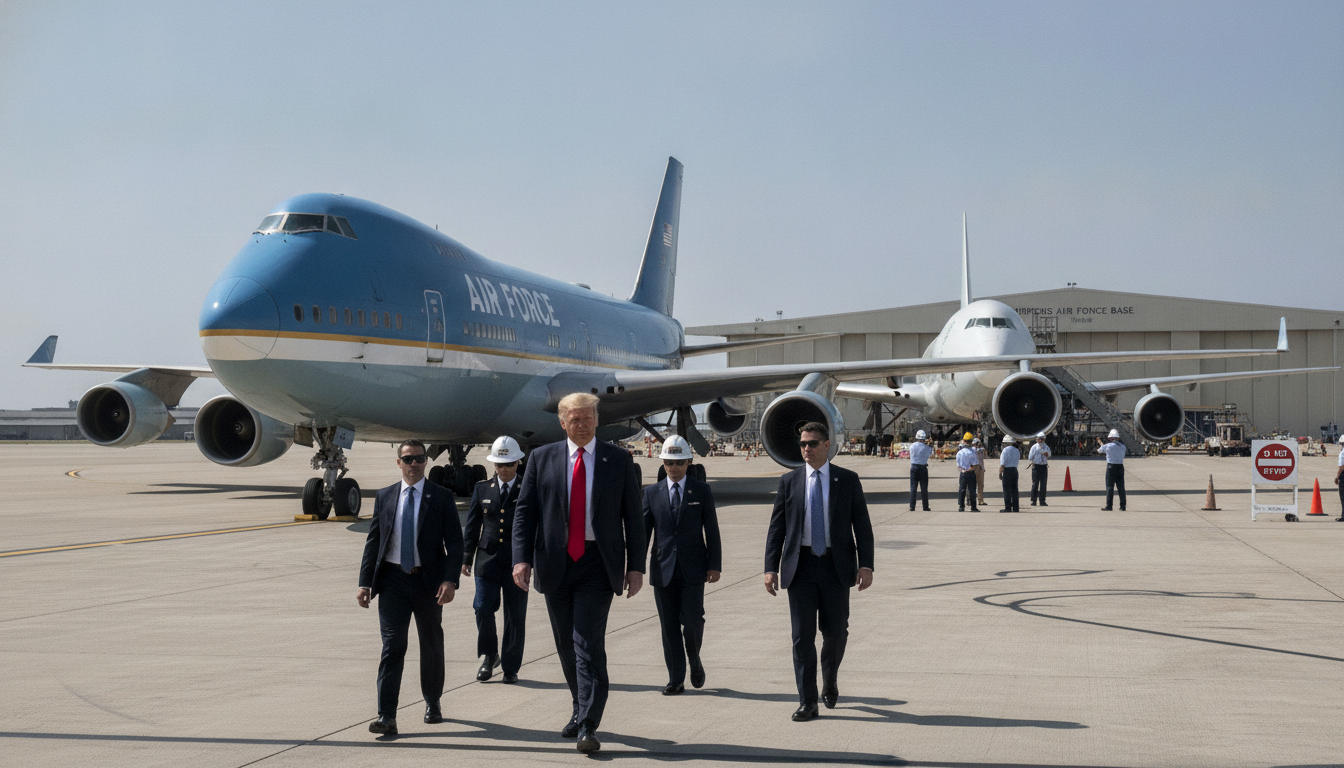
Safety Alarms Over New Air Force One Gifted to Trump Prompt Mid‑July Plane Swap
Safety concerns cloud the new Air Force One gifted to President Trump; reports of possible foreign targeting prompted a mid‑July plane swap and legal scrutiny.
The new Air Force One, a lavishly refurbished Boeing 747‑8 donated last year by a Middle Eastern monarchy, has become the focus of security and legal questions after reports raised alarms about its safety. President Trump boarded the aircraft on July 1 after the overhaul but reverted to using the previous presidential plane on his return from an overseas trip in early July. The abrupt change has prompted scrutiny from legal experts, national security officials and the press.
Gift Washed in Controversy Over Constitutional Rules
The donation of the new Air Force One triggered immediate debate about whether accepting such a high‑value gift from a foreign government could conflict with the U.S. Constitution. Legal observers noted that the transfer of an expensive state aircraft raises questions under longstanding rules intended to prevent foreign influence and improper benefits to the executive. President Trump, who publicly defended taking the plane, dismissed reluctance to accept it as foolish, saying the aircraft represented an unprecedented "flying White House" makeover.
The constitutional concern was widely reported last year when the gift was first announced, but the issue resurfaced once safety questions emerged. Lawyers and ethics specialists warned that even appearance‑based conflicts could invite investigations, congressional scrutiny or litigation, especially given the gift’s visible link to a foreign state.
Timeline of the July Trips and Plane Swap
President Trump used the new Air Force One for an outbound leg of an overseas trip on July 6, arriving at a NATO summit destination before switching back to the older presidential aircraft for the return journey on July 8. The president’s initial public boarding on July 1 came after refurbishment work was completed, but the short interval between his first flight and the subsequent swap has caught attention.
Officials who handle presidential travel typically emphasize continuity and contingency planning, but the mid‑trip change in aircraft raised unusual questions about whether operational issues, intelligence assessments or political considerations prompted the decision. The swap itself added to speculation because such alternations are rare and usually explained in frank terms by the White House or relevant defense agencies.
Reports Suggest Possible Foreign Targeting Concerns
Recent media reports indicated that intelligence assessments and press inquiries raised concerns that the new Air Force One could be viewed as a high‑value target by foreign adversaries. Those reports, citing unnamed sources and investigative coverage, suggested that Tehran or proxies might have considered the aircraft strategically significant given its prominence and newly conspicuous livery.
Reporters argued that such targeting concerns would amplify the security calculus for presidential travel, effectively placing the safety of the president at the center of any decision to use the gifted plane abroad. While those reports stopped short of documenting an active plot, their publication appears to have been a catalyst for heightened caution among national security officials.
Design, Upgrades and Public Reception
The aircraft’s exterior and interior have drawn attention for departing from the traditional sky‑blue and white scheme to a richer palette of white, red and navy tones, and for a range of top‑end refurbishments intended to evoke a “flying White House.” Boeing’s 747‑8 platform was used as the basis for the conversion, and officials involved in the overhaul described the work as extensive and costly.
While supporters hailed the new configuration as a symbol of national prestige and presidential comfort, critics pointed to not only constitutional issues but also practical questions about whether the upgrades compromised proven security features or otherwise altered the aircraft’s operational profile. The visible change in livery also transformed the plane into a more conspicuous asset in busy international airspace.
Official Responses and Information Gaps
To date, detailed official explanations for the mid‑July aircraft change remain limited. The White House and defense establishments have provided few public technical details about the safety concerns or the specific intelligence that might have influenced the decision to return the president on the older plane. That lack of public information has widened the space for media reports and congressional queries.
National security advisers and aviation experts typically handle sensitive threat assessments in closed channels; however, the public nature of the swap and questions about foreign gifts have prompted lawmakers from both parties to ask for briefings. The transparency gap has also fed speculation about whether political considerations shaped the response as much as technical or intelligence findings.
Security, Legal and Diplomatic Implications
The episode has implications across several domains: presidential travel protocols, the legal framework for accepting foreign gifts, and diplomatic ties with the government that provided the aircraft. If security agencies judged the plane to be a potential target, that assessment could influence future use and maintenance practices, as well as lead to new constraints on where and when the aircraft can fly with the president aboard.
Legally, the gift may invite renewed review by ethics officials or congressional investigators to determine whether acceptance complied with applicable laws and guidelines. Diplomatically, the donor country faces an awkward balancing act: the aircraft was intended as a gesture of goodwill, but questions over safety and propriety have complicated the intended message.
The choice to briefly operate the new Air Force One and then revert to the older plane has underscored how national security, legal oversight and public perception can collide around even highly visible pieces of state equipment. As inquiries continue, officials will be under pressure to explain both the substance of the safety concerns and the steps they are taking to protect the president while managing diplomatic fallout.

